


Jack Smith Faces Legal Reckoning for One of the ‘Worst Abuses of Government Power in Our Nation’s History’
By A.R. HOFFMAN
|Always in Sara Teasdale’s poems, even in her verse for children, beauty and joy are tempered with something complex, darker and stranger than the poems’ simple, usually quite formal surfaces let on at first.
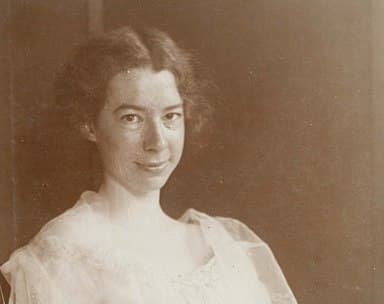
Assiduous readers of our Poem of the Day feature will, by now, have made more than a passing acquaintance with the poems of Sara Teasdale (1884–1933). In a brief career, cut even shorter by her suicide in 1933, Teasdale achieved a remarkable range of voice and form, as the examples of her poetry featured here in The New York Sun have displayed.
“Dusk in Autumn,” for example, with its close-set, hypnotic rhymes, exemplifies her gift for children’s verse, reveling in the spooky loveliness of a night near Halloween. “April,” too, is a child’s poem in its hopefulness, celebrating the coming of spring as the interior conviction of a thing not seen. “Blue Squills” articulates the almost unbearable pressure of beauty on a mind tuned, like a violin string, to a breaking point of sensitivity. And “Spring in Wartime,” the first Teasdale poem to run in this space, in March 2022, juxtaposes the fresh, familiar renewal of the year with the speaker’s awareness of horrors distant but real.
Always in Teasdale’s poems, even in her verse for children, beauty and joy are tempered with something complex, darker and stranger than the poems’ simple, usually quite formal surfaces let on at first. Today’s Poem of the Day characteristically offers the headiness of love sobered with grief and regret. Like “A Winter Blue-Jay,” which appeared as the Poem of the Day on January 9, “Summer Night, Riverside” chronicles a remembered love affair.
By A.R. HOFFMAN
|
By ALEXANDER LARMAN
|
By SHARON KEHNEMUI
|
By BRADLEY CORTRIGHT
|
By DONALD KIRK
|
By DAVID JONES
|
By GEORGE WILLIS
|
By HOLLIE McKAY
|Assiduous readers of our Poem of the Day feature will, by now, have made more than a passing acquaintance with the poems of Sara Teasdale (1884–1933). In a brief career, cut even shorter by her suicide in 1933, Teasdale achieved a remarkable range of voice and form, as the examples of her poetry featured here in The New York Sun have displayed.
“Dusk in Autumn,” for example, with its close-set, hypnotic rhymes, exemplifies her gift for children’s verse, reveling in the spooky loveliness of a night near Halloween. “April,” too, is a child’s poem in its hopefulness, celebrating the coming of spring as the interior conviction of a thing not seen. “Blue Squills” articulates the almost unbearable pressure of beauty on a mind tuned, like a violin string, to a breaking point of sensitivity. And “Spring in Wartime,” the first Teasdale poem to run in this space, in March 2022, juxtaposes the fresh, familiar renewal of the year with the speaker’s awareness of horrors distant but real.
Always in Teasdale’s poems, even in her verse for children, beauty and joy are tempered with something complex, darker and stranger than the poems’ simple, usually quite formal surfaces let on at first. Today’s Poem of the Day characteristically offers the headiness of love sobered with grief and regret. Like “A Winter Blue-Jay,” which appeared as the Poem of the Day on January 9, “Summer Night, Riverside” chronicles a remembered love affair.
Cancel anytime
By continuing you agree to our Privacy Policy and Terms of Service.
Cancel anytime