


Judge Blocks ‘Nonsensical’ Mamdani Pied-à-Terre Rollout for ‘Doxxing’ New Yorkers, Tells Mayor To Start Over
By JENNIFER DOHERTY
|A.E. Housman had a talent, as great as any in English poetry, for making formal verse seem a simple thing for expressing a thought.
For his birthday on March 26, it’s worth revisiting A.E. Housman (1859–1936). The Sun has already run three of his verses as a Poem of the Day: “When I Was One-and-Twenty,” “Epitaph on an Army of Mercenaries,” and “Loveliest of trees, the cherry now.” And in each case we noted the deep truism that simple is hard. Housman had a talent, as great as any in English poetry, for making formal verse seem a simple thing for expressing a thought.
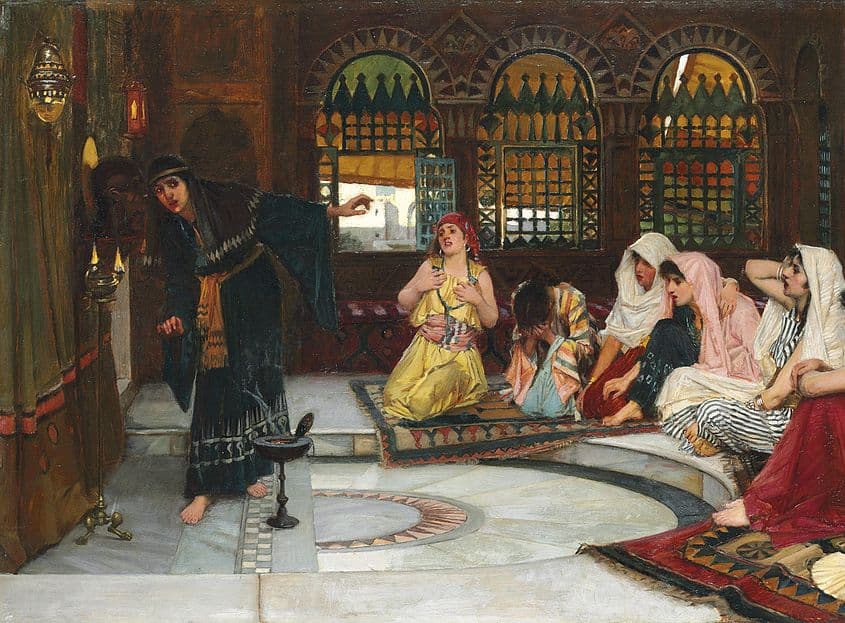
But Housman was also capable of complex thought and shifting moods. A classicist by training (one of the great Latinists of his era), Housman opens “The Oracles” with a look at the old sites of prophecy in ancient Greece, observing that they’ve all gone mute — and twisting to an ironic description of them as the places “where gods told lies of old.”
In quatrains of seven-foot iambic lines, rhymed abab, Housman makes a turn to the Romantics in the second stanza, taking his question to the inner oracle of the heart — only to twist the irony yet another step, as he mocks the inner oracle of the heart, pointing out that the news that we will die “is news that men have heard before.” And in the last stanza, irony slips away as Housman tells the story of Thermopylae, a place where men responded to the news that they must die: “The Spartans on the sea-wet rock sat down and combed their hair.”
By JENNIFER DOHERTY
|
By LAWRENCE KUDLOW
|
By ALEX ZDAN
|
By BRADLEY CORTRIGHT
|
By THE NEW YORK SUN
|
By JENNIFER DOHERTY
|
By SHAILI SINGH
|
By BENNY AVNI
|For his birthday on March 26, it’s worth revisiting A.E. Housman (1859–1936). The Sun has already run three of his verses as a Poem of the Day: “When I Was One-and-Twenty,” “Epitaph on an Army of Mercenaries,” and “Loveliest of trees, the cherry now.” And in each case we noted the deep truism that simple is hard. Housman had a talent, as great as any in English poetry, for making formal verse seem a simple thing for expressing a thought.
But Housman was also capable of complex thought and shifting moods. A classicist by training (one of the great Latinists of his era), Housman opens “The Oracles” with a look at the old sites of prophecy in ancient Greece, observing that they’ve all gone mute — and twisting to an ironic description of them as the places “where gods told lies of old.”
In quatrains of seven-foot iambic lines, rhymed abab, Housman makes a turn to the Romantics in the second stanza, taking his question to the inner oracle of the heart — only to twist the irony yet another step, as he mocks the inner oracle of the heart, pointing out that the news that we will die “is news that men have heard before.” And in the last stanza, irony slips away as Housman tells the story of Thermopylae, a place where men responded to the news that they must die: “The Spartans on the sea-wet rock sat down and combed their hair.”
Cancel anytime
By continuing you agree to our Privacy Policy and Terms of Service.
Cancel anytime