

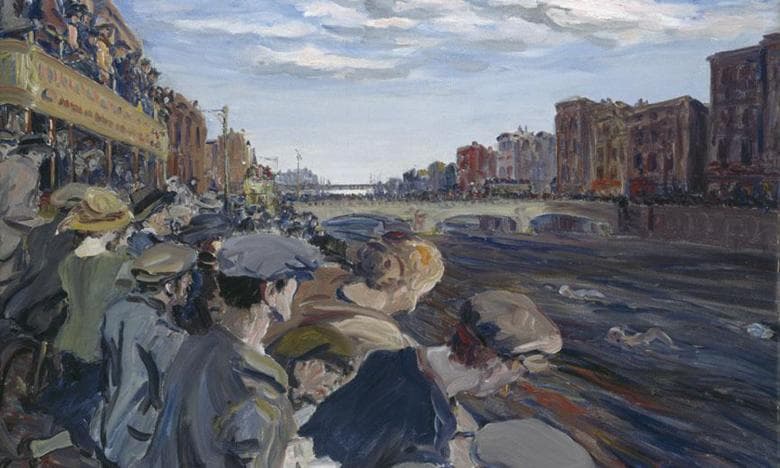
From ‘Dracula’ to ‘Ulysses,’ Ireland’s Literary Genius Enchants at New York’s Oldest Museum
By A.R. HOFFMAN
|John Keats’ preoccupation is not only with human experience as part of a whole web of creation, ebbing and flowing in response to the world around it, but with the explicit endeavor of mediating that world through his writer’s intellect.

Of the English Romantics, it’s John Keats (1795–1821) who strikes us as that mythical creature, the “poet’s poet.” It’s Keats whose preoccupation is not only with human experience as part of a whole web of creation, ebbing and flowing in response to the world around it, but with the explicit endeavor of mediating that world through his writer’s intellect.
As we’ve seen in his famous sonnet, “On First Looking Into Chapman’s Homer,” which appeared as Poem of the Day on June 19, Keats appropriates Wordsworth’s notion of the “spot of time” to inscribe reading as one of those experiences of joy that continually return to refresh the mind. His concept of negative capability, too, which informs such poems as last year’s feature, “What the Thrush Said,” revises Wordsworth’s notion of the Sublime, articulating it as the poet’s particular way of knowing.
By A.R. HOFFMAN
|
By JOSEPH CURL
|
By DONALD KIRK
|
By DAVID JONES
|
By ALEX ZDAN
|
By JOSEPH CURL
|
By DAVID JONES
|
By CARL ROLLYSON
|Of the English Romantics, it’s John Keats (1795–1821) who strikes us as that mythical creature, the “poet’s poet.” It’s Keats whose preoccupation is not only with human experience as part of a whole web of creation, ebbing and flowing in response to the world around it, but with the explicit endeavor of mediating that world through his writer’s intellect.
As we’ve seen in his famous sonnet, “On First Looking Into Chapman’s Homer,” which appeared as Poem of the Day on June 19, Keats appropriates Wordsworth’s notion of the “spot of time” to inscribe reading as one of those experiences of joy that continually return to refresh the mind. His concept of negative capability, too, which informs such poems as last year’s feature, “What the Thrush Said,” revises Wordsworth’s notion of the Sublime, articulating it as the poet’s particular way of knowing.
Already have a subscription? Sign in to continue reading
Cancel anytime
By continuing you agree to our Privacy Policy and Terms of Service.
Cancel anytime