


Bestselling Novelist Sally Rooney Chooses Palestine Action Over British Book Sales
By ALEXANDER LARMAN
|Tom Hood mocks the breathless tone of memorials and newspaper obituaries.
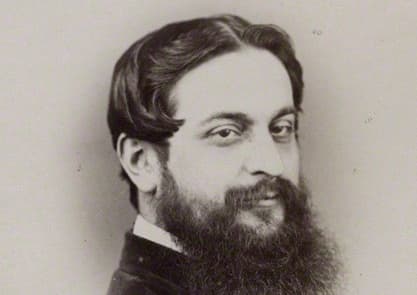
Why the Victorians should do humor so well — and so often — seems a mystery. But perhaps the mystery is lessened if we begin to question the oh-so-superior view of the Edwardians that their Victorian parents were a prissy, dour, and gloomy people, obsessed with going to funerals and outlawing sex. That Edwardian sneer, now over a hundred years old, is so baked-in, so established in social awareness and literary history, that it does, in fact, seem hard to explain how the era gave us Punch magazine. Edward Lear and Lewis Carroll. Gilbert and Sullivan’s comic operas.
Or, to offer one of many minor examples, Tom Hood (1835–1874). He was the son of the poet and author Thomas Hood (whose own word-play in “Faithless Nelly Gray” was featured as Poem of the Day here in the Sun this spring). He was one of those Victorians who did this and that, and that and this, always finding something new to do. After finishing his divinity courses at Oxford (he left without taking holy orders), he worked at the War Office and as an editor — all while pouring out comic verse and novels (of which the 1865 “Captain Masters’s Children” is the best known). Children’s books, too, often with his sister, the children’s writer Frances Freeling Broderip.
Oh, and he published French translations and wrote two books on how to compose English poetry, along with hundreds of magazine and journal pieces. Besides which, as good-humored men often do, he had a gift for friendship, reaching from the British W.S. Gilbert to the American Ambrose Bierce. His weekly dinners for friends were famous in the world of workaday British writers.
How much of his writing before his early death at 39 is memorable? Not much. But all of it was competent and all of it was fun. Deserving a look, for example, is today’s Poem of the Day, “A History.” In quatrains of common meter, four-foot lines alternating with three-foot, it mocks the breathless tone of memorials and newspaper obituaries.
By ALEXANDER LARMAN
|
By JOSEPH CURL
|
By GEORGE WILLIS
|
By LUKE FUNK
|
By JOSEPH CURL
|
By BRADLEY CORTRIGHT
|
By GEORGE WILLIS
|
By MARIO NAVES
|Why the Victorians should do humor so well — and so often — seems a mystery. But perhaps the mystery is lessened if we begin to question the oh-so-superior view of the Edwardians that their Victorian parents were a prissy, dour, and gloomy people, obsessed with going to funerals and outlawing sex. That Edwardian sneer, now over a hundred years old, is so baked-in, so established in social awareness and literary history, that it does, in fact, seem hard to explain how the era gave us Punch magazine. Edward Lear and Lewis Carroll. Gilbert and Sullivan’s comic operas.
Or, to offer one of many minor examples, Tom Hood (1835–1874). He was the son of the poet and author Thomas Hood (whose own word-play in “Faithless Nelly Gray” was featured as Poem of the Day here in the Sun this spring). He was one of those Victorians who did this and that, and that and this, always finding something new to do. After finishing his divinity courses at Oxford (he left without taking holy orders), he worked at the War Office and as an editor — all while pouring out comic verse and novels (of which the 1865 “Captain Masters’s Children” is the best known). Children’s books, too, often with his sister, the children’s writer Frances Freeling Broderip.
Oh, and he published French translations and wrote two books on how to compose English poetry, along with hundreds of magazine and journal pieces. Besides which, as good-humored men often do, he had a gift for friendship, reaching from the British W.S. Gilbert to the American Ambrose Bierce. His weekly dinners for friends were famous in the world of workaday British writers.
How much of his writing before his early death at 39 is memorable? Not much. But all of it was competent and all of it was fun. Deserving a look, for example, is today’s Poem of the Day, “A History.” In quatrains of common meter, four-foot lines alternating with three-foot, it mocks the breathless tone of memorials and newspaper obituaries.
Already have a subscription? Sign in to continue reading
Cancel anytime
By continuing you agree to our Privacy Policy and Terms of Service.
Cancel anytime