
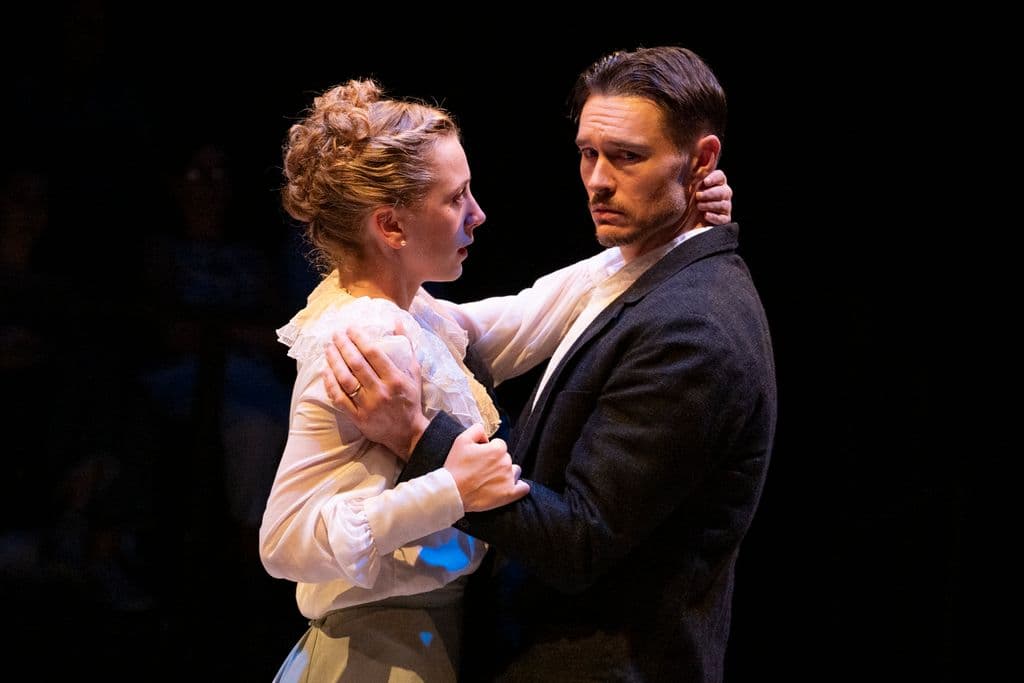
A Muddled ‘Real Ivanov’ Strains for Modern Resonance
By ELYSA GARDNER
|This article is from the archive of The New York Sun before the launch of its new website in 2022. The Sun has neither altered nor updated such articles but will seek to correct any errors, mis-categorizations or other problems introduced during transfer.

Published:
Updated:
Richard Eyre’s film “Stage Beauty” (R, 105 mins.) – based on Jeffrey Hatcher’s play “Compleat Female Stage Beauty” and adapted by him for the screen – inevitably recalls Keats’s line about beauty and truth. The setting is England during the reign of Charles II, and with the respective stage roles of men and women being redefined, truth and beauty are concepts in flux. The Elizabethan ban on women acting in plays was a curious exception to the practice in most of the rest of Europe; during Cromwell’s Commonwealth, of course, it didn’t matter, as there were no public theaters at all. But with the Restoration of 1660, the stage faced both the challenge of re-establishing itself and a shortage of young, trained male actors. Women were duly allowed to take on the female roles, and men barred from them.
By ELYSA GARDNER
|
By CARL ROLLYSON
|
By BENNY AVNI
|
By DANIEL McCARTHY
|
By GEORGE WILLIS
|
By WILL FRIEDWALD
|
By THE NEW YORK SUN
|
By THE NEW YORK SUN
|Richard Eyre’s film “Stage Beauty” (R, 105 mins.) – based on Jeffrey Hatcher’s play “Compleat Female Stage Beauty” and adapted by him for the screen – inevitably recalls Keats’s line about beauty and truth. The setting is England during the reign of Charles II, and with the respective stage roles of men and women being redefined, truth and beauty are concepts in flux. The Elizabethan ban on women acting in plays was a curious exception to the practice in most of the rest of Europe; during Cromwell’s Commonwealth, of course, it didn’t matter, as there were no public theaters at all. But with the Restoration of 1660, the stage faced both the challenge of re-establishing itself and a shortage of young, trained male actors. Women were duly allowed to take on the female roles, and men barred from them.
Already have a subscription? Sign in to continue reading
Cancel anytime
By continuing you agree to our Privacy Policy and Terms of Service.