

Biden, Backing Down From ‘Emergency’ Declaration, Will Announce Climate Actions Today
The president has come under considerable pressure to issue an emergency declaration on climate, which would allow him to redirect federal resources to bolster renewable energy programs that would help accelerate the transition away from fossil fuels.
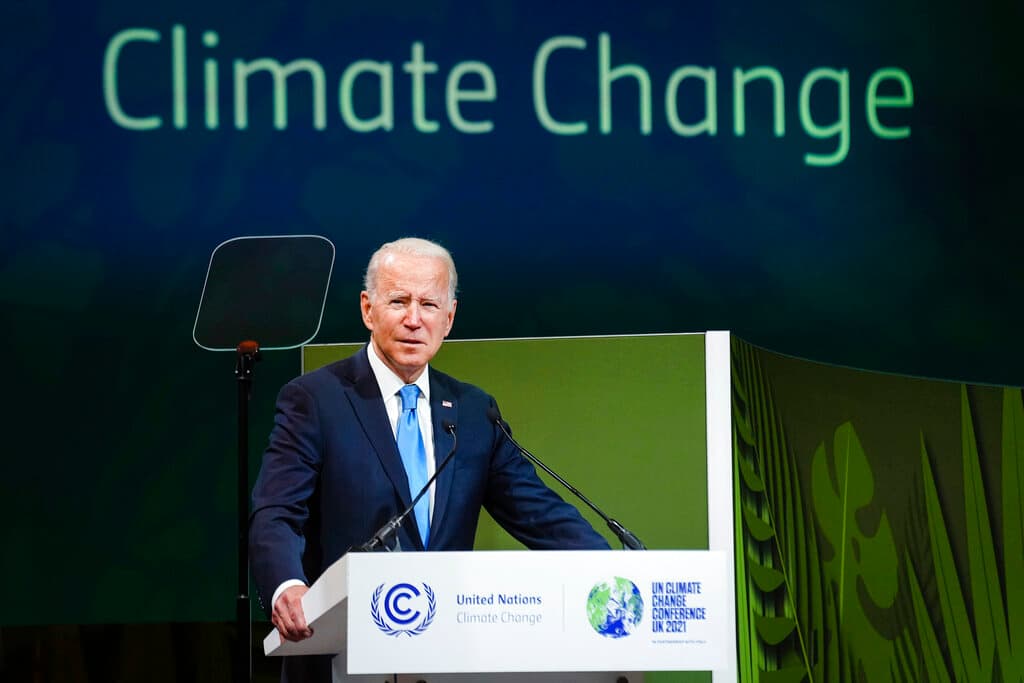
WASHINGTON — President Biden will announce today new actions on climate change that he can take on his own, but will stop short of declaring a climate emergency, just days after Senator Manchin quashed hopes for a sweeping legislative package of new environmental programs this year.
Mr. Biden is to unveil the latest efforts during a visit to a former coal-fired power plant at Somerset, Massachusetts, that is shifting to offshore wind manufacturing. It’s the embodiment of the transition to clean energy that Mr. Biden is seeking but has struggled to realize in the first 18 months of his presidency.
Wednesday’s executive actions include new initiatives to bolster the domestic offshore wind industry as well as efforts to help communities cope with soaring temperatures through programs administered by the Federal Emergency Management Agency and the Department of Health and Human Services, according to a White House official.
But the actions that Mr. Biden announces on Wednesday will not include a national emergency declaration to address the climate issue — something that has been sought by activists and Democratic lawmakers after Mr. Manchin last week scuttled talks on a legislative package.
White House officials have said the option remains under consideration, although press secretary Karine Jean-Pierre on Tuesday declined to outline a timetable for a decision aside from saying no such order would be issued this week.
Senator Markey of Massachusetts said he was “confident that the president is ultimately ready to do whatever it takes in order to deal with this crisis.”
“I think that he’s made that clear in his statement last Friday, and I think coming to Massachusetts is a further articulation of that goal,” Mr. Markey told reporters on Tuesday.
Mr. Biden has come under considerable pressure to issue an emergency declaration on climate, which would allow him to redirect federal resources to bolster renewable energy programs that would help accelerate the transition away from fossil fuels.
Ms. Jean-Pierre declined to detail internal deliberations on such a declaration, which would be similar to the one issued by Mr. Biden’s Republican predecessor, President Trump, who declared a national emergency to build a wall on the southern border when lawmakers refused to allocate money for that effort.
Mr. Biden pledged last week to take significant executive actions on climate after monthslong discussions between Mr. Manchin and the Senate majority leader, Charles “Chuck” Schumer, came to a standstill. The West Virginia senator cited stubbornly high inflation as the reason for his hesitation.
For now, Mr. Manchin has said he will only agree to a legislative package that shores up subsidies to help people buy insurance under the 2010 health care law as well as allowing Medicare to negotiate prescription drug prices that will ultimately lower the cost of pharmaceuticals for consumers.
The White House has indicated it wants Congress to take that deal, and the president will address the climate issue on his own.
“I’m going to use every power I have as president to continue to fulfill my pledge to move toward dealing with global warming,” Mr. Biden told reporters over the weekend at Jeddah, Saudi Arabia, after the talks between Messrs. Schumer and Manchin were derailed.
Mr. Biden on Wednesday will be visiting the former Brayton Point power plant, which closed in 2017 after burning coal for more than five decades. The plant will now become an offshore wind manufacturing site.