Democrats Notch Major Redistricting Wins in Virginia and California, Likely Opening the Door to Nine-Seat Gain in House

Virginia Democrats advanced their own redistricting changes shortly after a federal court allowed California’s new map to be used.


AP/Marcio Jose Sanchez
Governor Gavin Newsom at a news conference on August 14, 2025. AP/Marcio Jose Sanchez

Democrats have notched major wins in Virginia and California as part of their effort to fight back against the redistricting war kicked off by President Trump last summer. The two victories could guarantee an additional nine seats for Democrats in the coming midterm elections, which means the gains made so far by Republicans would effectively be negated. 

Mr. Trump kicked off the gerrymandering battle last summer when he demanded that Texas redraw its congressional maps to pick up five new seats for the GOP. The president said at the time that he was “entitled” to the additional seats. 

In the months that followed, Texas Republicans redrew maps to eliminate as many as five Democratic seats, though some of those new districts are not guaranteed wins for the GOP — especially given Mr. Trump’s sliding popularity with Hispanic voters since 2024. At least two Democrats could conceivably win re-election in their districts depending on how Hispanic voters break. 

Several other states followed Texas’s lead, including Missouri, where one Democratic district has been eliminated; North Carolina, which saw one Democratic district move several points to the right; Ohio, where lawmakers made two districts slightly more Republican; and Utah, where a judge ordered state lawmakers to create a new, deep-blue district centered around Salt Lake City. 

Three Republican efforts to redraw maps in Indiana, New Hampshire and Kansas failed last year, despite pressure from the White House. 

On Wednesday, Virginia Democrats advanced their own plan to significantly redraw their state’s congressional maps. Currently, five of the state’s 11 House districts are represented by Republicans. If this gerrymandering effort is successful, as many as four of those five seats could be redrawn in order to make them solidly Democratic. 

During the floor debate on Wednesday in Virginia, Democratic delegate Rodney Willett — the sponsor of the redistricting resolution — urged colleagues to “punch back” at Texas and the other GOP states which have redrawn maps.

If the resolution passes the state senate, Virginia voters will get to either approve or reject the constitutional amendment empowering the legislature to redraw the state’s maps. Under the current constitution, congressional districts are supposed to be redrawn by an independent commission. 

“We get to go back to the voters again,” delegate Marcus Simon, a Democrat, said when urging his colleagues to vote for the resolution. “They need an opportunity to see what’s going on.”

Delegate Marcia Price made a similar pitch, saying that because Virginia has been disproportionately harmed by the president’s policies regarding federal employees, it is time to “level the playing field” with Republican states. “It is time to let the voters decide,” Ms. Price said. 

On the other side of the country, California Democrats also won a major battle after a federal court ruled that their new congressional maps — approved by voters in November — could be used this year. Under Supreme Court precedent, the judges on Wednesday held that partisan gerrymandering was perfectly permissible.

“[W]e employ well-understood tools to determine the voters’ intent in adopting the Proposition 50 Map, and after reviewing the evidence, we conclude that it was exactly as one would think: it was partisan,” the judges write in declining to offer a preliminary injunction to suspend the maps. 

Two jurists — one appointed by President Obama and the other appointed by President Biden — voted to uphold the new maps. Another judge appointed by President Trump dissented. 

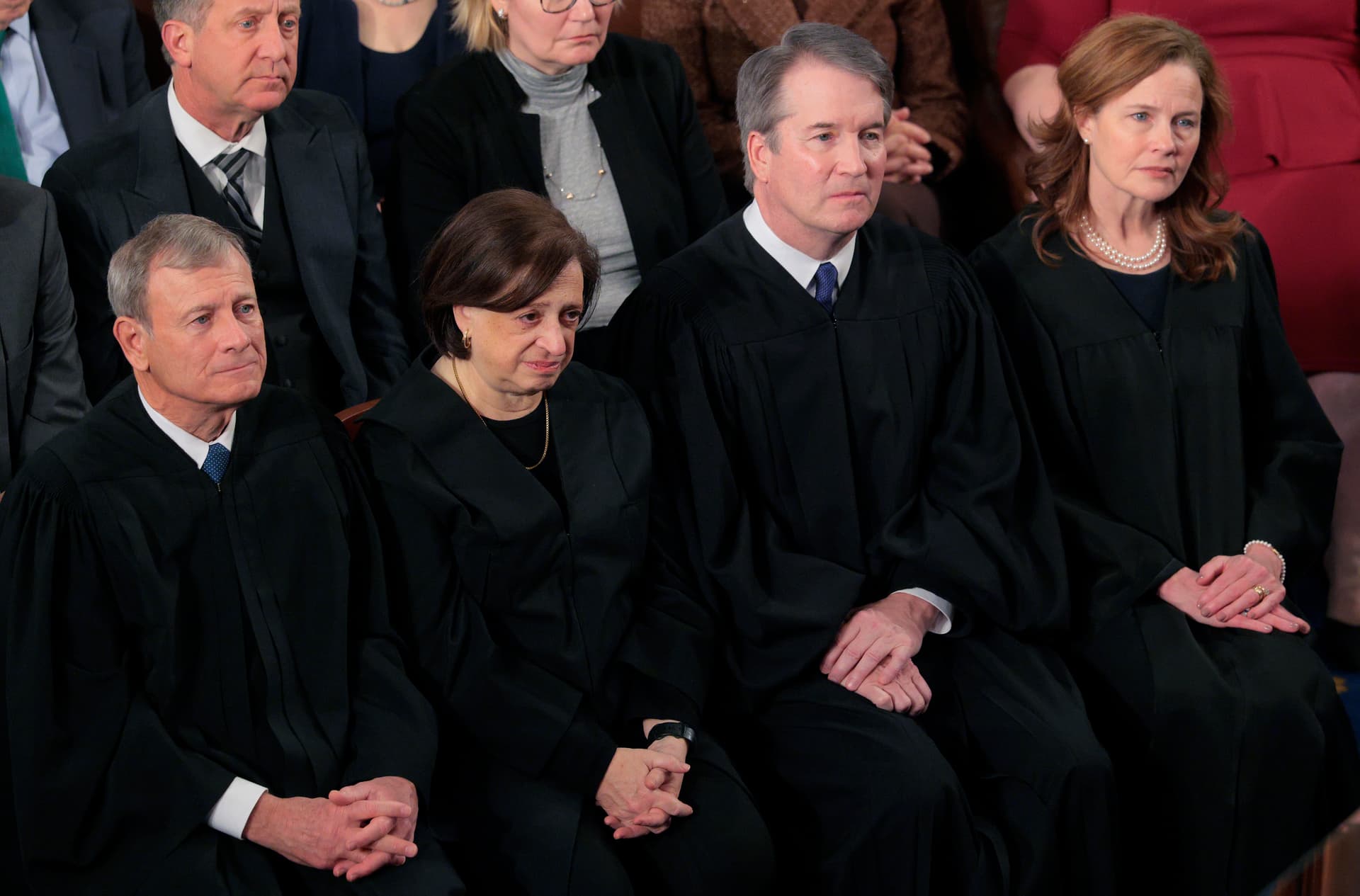
If the California map case does reach the U.S. Supreme Court in the coming months, there are clear signs that the justices would allow the districts to be used in 2026. Even Justice Samual Alito has said so. 

In writing the court’s decision to allow the new Texas maps to take effect, Justice Alito wrote for the court that the Lone Star State’s districts are drawn for partisan purposes, which is permissible in the court’s view. Justice Alito mentions, out of the blue, that Governor Gavin Newsom’s new map “was partisan advantage pure and simple,” implying that those district lines, too, would be upheld. 

The last two states which could conceivably join the redistricting fight are Florida and Maryland. Governor Ron DeSantis has already called his legislature into session to redraw the state’s map, though it is unclear exactly how many Democratic districts he will attempt to eliminate. Depending on the shifts in Hispanic voters this year, Mr. DeSantis may only be able to pick up one or two seats for the GOP. 

Maryland’s governor, Wes Moore, is pushing his legislature to also redraw his state’s maps in order to knock off its only federal Republican representative — Congressman Andy Harris. The leader of the state senate, a Democrat, has pushed back against that effort, however.


The New York Sun

© 2026 The New York Sun Company, LLC. All rights reserved.

Use of this site constitutes acceptance of our Terms of Use and Privacy Policy. The material on this site is protected by copyright law and may not be reproduced, distributed, transmitted, cached or otherwise used.

The New York Sun

Sign in or  create a free account

or
By continuing you agree to our Privacy Policy and Terms of Use