
Economic Impact of Trump Tariffs More Muted Than Many Politicians, Pundits Predicted, New Study Suggests
A variety of factors has blunted the impact of tariffs on the American economy.
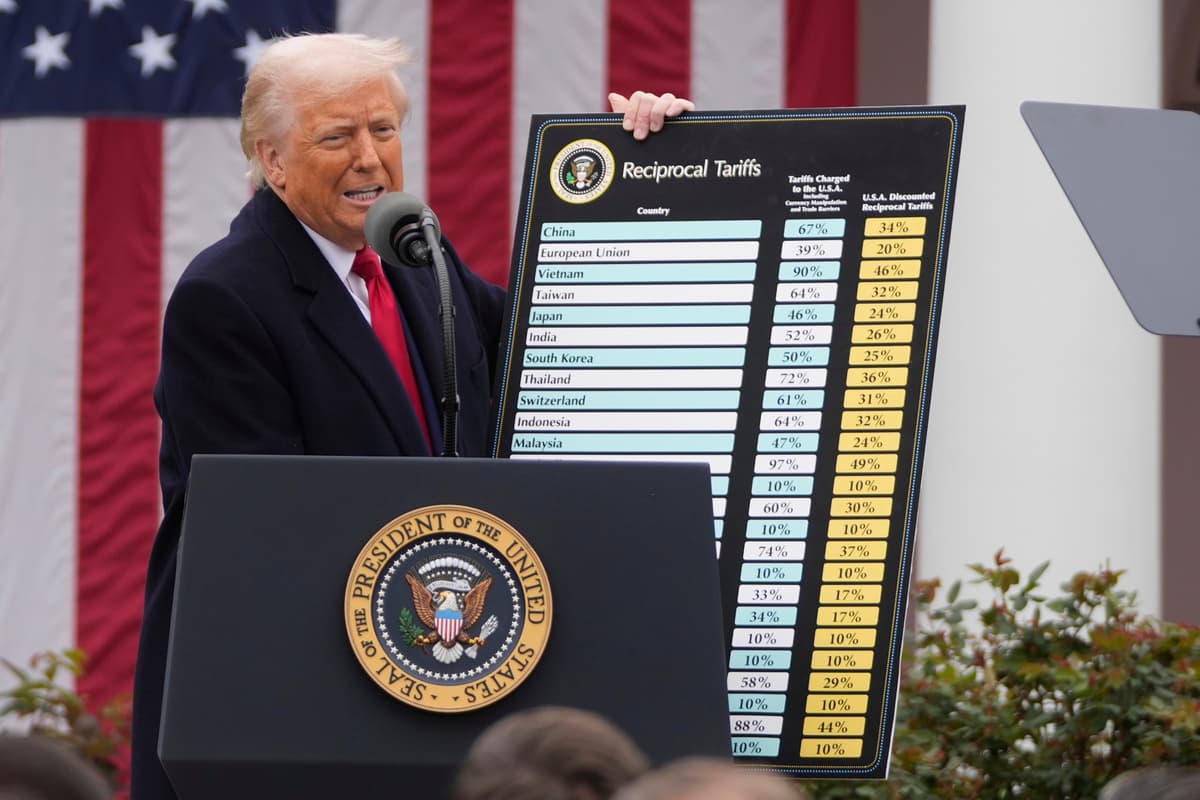
While tariffs on American imports rose to the highest levels in more than 100 years last year, a new study says the impacts have been muted because the actual rates have only been about half of the announced rates.
President Trump levied worldwide âLiberation Dayâ tariffs last April, using the International Emergency Economic Powers Act to claim it was a national emergency.
By the end of September, the average statutory rate was approximately 27 percent, but the authors of a new paper found the actual average tariff rate was around 14 percent that month.
Economists at Harvard and the University of Chicago cited a variety of explanations for the difference. Among them are shipping lags, exemptions, and enforcement gaps for moderating the impact of tariffs.
Items that were already on ships heading to America when the tariffs went into effect were exempt from the new tariffs.
Other exemptions are due to the United States-Mexico-Canada Agreement that covers a large group of imports that are not covered by the new tariffs. The 2020 agreement that replaced NAFTA puts no tariffs on many items that are mostly made in North America. There are notable exceptions, such as alcohol.
Some companies also won exemptions for specific products or by promising to build manufacturing plants in America. The paper cites the semiconductor industry as an example. Due to exemptions, semiconductors have an actual tariff rate of only 9 percent despite a statutory tariff rate of 24 percent.
The paper finds that shipment lags will dissipate over time, but the other contributors to the gap may persist or expand moving forward, helping dull the effects of Trumpâs import taxes. For instance, the authors suggest that tariff evasion will become more sophisticated by some companies illegally seeking to mask the actual value of the products or the country where they were produced.
The authors noted that America is bearing a large share of the costs of tariffs. Tariffs increased the Consumer Price Index by roughly 0.7 percent by September, with American consumers bearing up to 70 percent of the costs, followed by the businesses that imported the goods.
While that increase has helped keep the inflation rate above the 2 percent the Federal Reserve seeks as a long term goal, it has not shot up dramatically as some politicians and pundits warned.
A professor of economics at Harvard and a former deputy managing director at the International Monetary Fund and one of the authors of the report, Gita Gopinath, says thatâs not a surprise.
âI donât know many economists who predicted surging inflation. US Inflation has come in close to what was predicted by @IMFNews,â Ms. Gopinath said in an X post on Tuesday. âGiven the low share of imports in US consumption and past evidence on pass-through it was hard to make the case for âsurgingâ inflation as long as the Fed maintained sensible policies.â
Ms. Gopinath was referring to a Wall Street Journal article that claimed âmany economistsâ had feared a âmassive surgeâ in inflation.
Other recent studies looking at historical tariff data concluded that they usually donât lead to higher inflation. The Federal Reserve Bank of San Francisco published an economic letter on Monday stating that large tariff increases raise uncertainty, which can depress overall consumer demand and lead to lower inflation.
But the letter warns that higher tariffs can have another negative effect â increasing unemployment. The author suggests that the Federal Reserve could loosen monetary policy to help mitigate that.
Whatever impact the current tariffs have on the economy could be moot soon. The Supreme Court is set to decide soon on President Trumpâs authority to unilaterally levy tariffs at will.
The Trump administration claims it collected more than $200 billion in tariffs last year but it argued that the tariffs are regulatory rather than revenue-based and Mr. Trump used his authority to regulate foreign powers. Several conservative Supreme Court justices seemed skeptical of that argument during oral arguments in a case challenging their legality last year.
The courtâs decision could come as late as June but it may be much sooner due to the importance of the issue.