

Families Seek Second Shot in Search for Cures After Bernie Sanders Kills Pediatric Cancer Bill

Grieving mothers watched from the Senate Galley as the bipartisan bill to incentivize new drug discoveries was denied passage over the objections of a single senator.
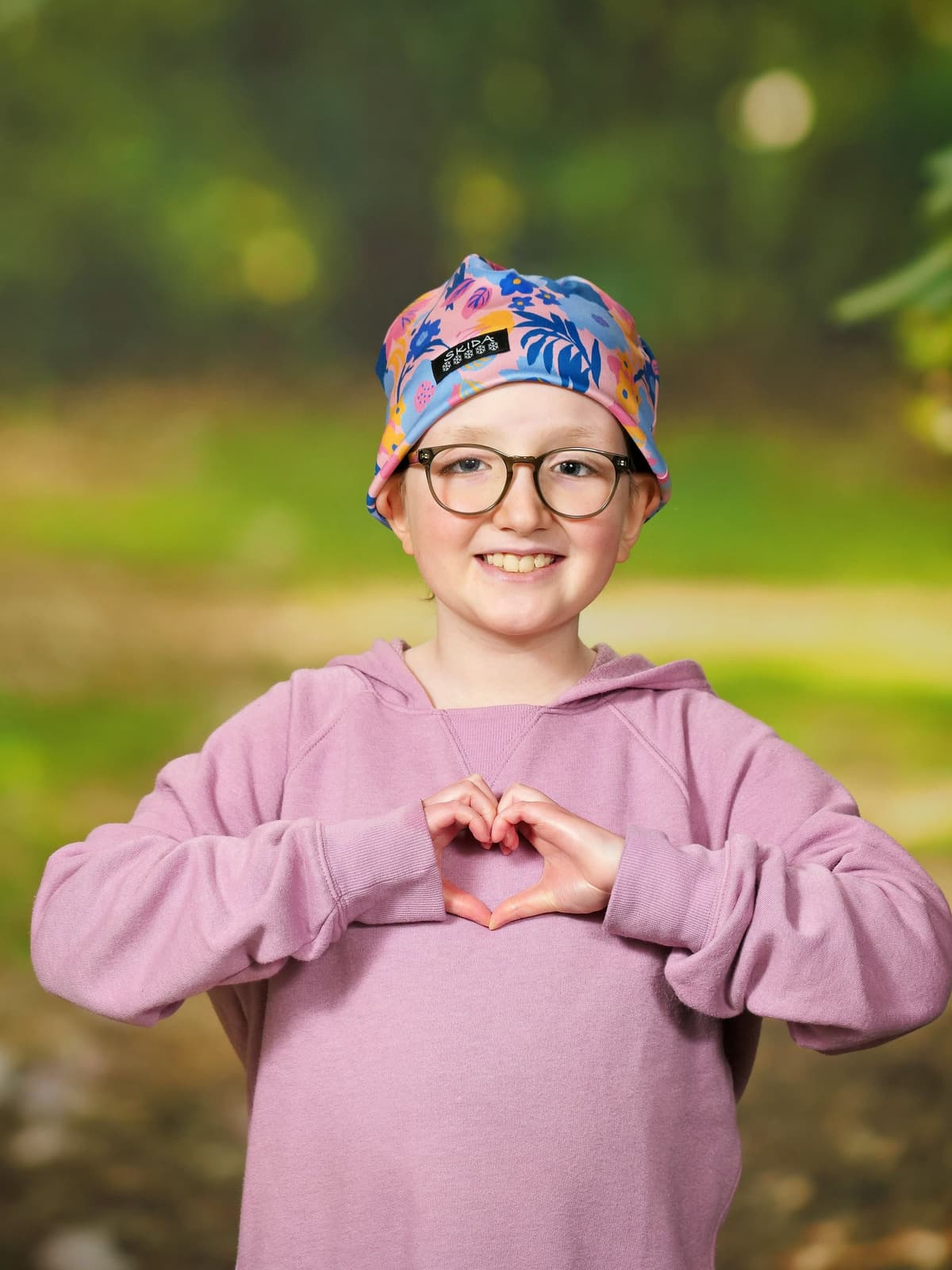
Image courtesy of Alyssa Zachmann
Ten-year-old Kasey Zachmann passed away in August 2025 after a nearly four-year fight against medulloblastoma, an aggressive form of brain cancer. Image courtesy of Alyssa Zachmann

In October of 2021, five-year-old Kasey Zachmann was diagnosed with medulloblastoma, an aggressive form of brain cancer. For the next almost four years, her mother, Alyssa, fought alongside her daughter, advocating for better treatments and fundraising for research, always hoping a miracle drug might be discovered. It never came. Kasey died in August.

Four months later, Alyssa Zachmann rushed to Capitol Hill, believing she was about to witness a moment of hope — the passage of legislation that could spare other families the anguish she had endured. Instead, she watched Senator Bernie Sanders single-handedly block the bill.

“Sitting in the gallery, I kept thinking — what if this bill had passed in 2020 when it was first created? What if something had been discovered that could have saved her life? How different would things be for our family?” Ms. Zachmann tells The New York Sun. “And then thinking about all the families today who are in the same position we were three years ago — and how not passing this bill destroys their hope.”

The Mikaela Naylon Give Kids a Chance Act, which passed the House unanimously in early December and was voted on by the Senate on December 17, aims to incentivize pharmaceutical companies to invest in drugs for rare pediatric diseases. This list  includes all pediatric cancers. 

Despite bipartisan House support and backing from 99 senators, Mr. Sanders refused to vote for the measure, holding it hostage over his insistence that it be paired with funding for community health centers as part of a broader health care package. Mr. Sanders’s “nay” effectively blocked the bill altogether as it required unanimous consent to pass. 

“Every single representative and senator supports it. It passed the House unanimously. In the Senate, it came up under unanimous consent and received 99 votes. The only one who didn’t consent was Senator Bernie Sanders, and even he said he supports the bill. He wants his other priorities passed with it,” Nancy Goodman, founder and executive director of Kids v Cancer, tells the Sun.

A Personal Crusade

Ms. Goodman’s advocacy is deeply personal. Her son Jacob died of cancer at age 10 in 2009. The drugs used to treat him were 40 years old at the time, and no one predicted that they would work. A former international trade lawyer, Ms. Goodman retooled herself as a Food and Drug Administration expert and has spent 16 years fighting for legislative changes to incentivize pediatric cancer drug development.

“There are no incentives for companies to develop drugs for kids with cancer because pediatric cancers are rare and not profitable,” Ms. Goodman says. “When society cares about other rare conditions, Congress creates incentives. They’ve done this about half a dozen times.”

The Give Kids a Chance Act creates a priority review voucher program that would reward pharmaceutical companies developing treatments for rare pediatric diseases without taking direct government funds. 

These vouchers allow companies to seek expedited Food and Drug Administration review of drug applications and provide a financial incentive to pursue medications for conditions affecting small patient populations. Critically, the program operates at zero cost to taxpayers as it functions through regulatory mechanisms rather than direct government spending.

“This is a bill that saves children’s lives, costs taxpayers nothing, is supported by the FDA, industry, scientists, doctors — everyone. And we’re stuck,” Ms. Goodman said.

The Counter Offer

Mr. Sanders’s position stems from events in December 2024 when the Give Kids a Chance Act was included in a broader health care package that also contained support for community health centers. That bill enjoyed bipartisan backing until Elon Musk criticized the overall spending legislation through a barrage of social media posts, prompting Republicans to back away from the entire package.

“Three hours before the House vote, Elon Musk tweeted that he’d fund primary challengers against any Republican who voted for it,” Ms. Goodman explains. “That was December 19, 2024. The vote was supposed to be at 6:00 p.m. It never happened. Chaos followed. All 900 pages — including our bill — were stripped.”

Mr. Sanders, who has stated that he “strongly supports” the pediatric disease bill, insisted on the floor that the bill be packaged with community health center provisions. The stance drew sharp criticism from those who argue the two issues should not be conflated, particularly given that the pediatric bill requires no federal expenditures.

“He is literally killing kids in front of us because of his political movement,” said the senator who sponsored the bill, Markwayne Mullin, a Republican from Oklahoma whose own son faced a pediatric illness. “It is ridiculous.”

The chairman of the Senate Health, Education, Labor, and Pensions Committee, Senator Bill Cassidy, attempted to broker a compromise with the ranking member, according to Ms. Goodman, but the Vermont independent rejected the offer.

“Senator Sanders’s priorities are good priorities. They help sick people. But during the debate, Senator Bill Cassidy — chair of the relevant Senate committee — said he’d work with Sanders to get community health centers funded this year, which is Sanders’s biggest ask. Then Sanders added three additional demands that he’d never raised before,” Ms. Goodman explains. “He said he wouldn’t support Give Kids a Chance unless all of those were attached. That guarantees the bill will die.”

Even some Democrats questioned the approach. “As disappointed as I am that the House isn’t ready to support increased funding for community health centers, I also believe that it is important to take action on this package now to help address pediatric cancer,” Senator Maggie Hassan of New Hampshire said during debate. 

A representative for Mr. Sanders did not respond to the Sun’s requests for comment. 

Young Voices in the Search for Cures

Fourteen-year-old Logan Shenker was also in the gallery that December evening. At age nine, he was diagnosed with medulloblastoma, the same cancer that killed Kasey Zachmann. After surgery and aggressive treatment, Logan survived, but he lives daily with the consequences.

“I have to deal with growth hormone issues. I have to take a shot every night to boost my growth. I have to take a lot of pills every morning to offset side effects from medication. And I have to wear hearing aids at school every day because my hearing was affected by the chemotherapy,” Logan tells the Sun.

He and his siblings have been lobbying for the bill for five years, making multiple trips to Capitol Hill.

“The bill wasn’t dismissed because of any objection to the bill itself; it got tied up in politics. I think health should come first,” Logan continues. 

“Especially because the bill that was holding this up was about getting more doctors into doctors’ offices and community health centers. And what’s the point of just having more doctors’ offices if we can’t cure anything? You just get diagnosed and then told, ‘Sorry, there’s nothing we can do. You’re going to have to live with it.’”

The legislation is named for Mikaela Naylon, a Colorado teenager who died in October at age 16 after battling osteosarcoma. Despite her terminal diagnosis, Mikaela spent her final weeks lobbying lawmakers to pass the bill, meeting with legislators in person and via Zoom when she became too weak to travel.

Advocates such as Ms. Goodman say they are not giving up. They are hoping the measure resurfaces as early as this month, potentially attached to a continuing resolution. 

For Mrs. Zachmann, the bill’s failure to advance is not an abstract example of congressional gridlock but a personal reckoning with what is lost when action stalls. “We’re begging them to prioritize our kids. All they have to do is say yes,” she says. 

“They have so much opportunity to save kids’ lives. What could be more important than that? Casey, had she lived, would have grown into an amazing human being with the potential to change the world. That’s not possible for her, but it is for other kids.”


The New York Sun

© 2026 The New York Sun Company, LLC. All rights reserved.

Use of this site constitutes acceptance of our Terms of Use and Privacy Policy. The material on this site is protected by copyright law and may not be reproduced, distributed, transmitted, cached or otherwise used.

The New York Sun

Sign in or  create a free account

or
By continuing you agree to our Privacy Policy and Terms of Use