Fearing a Breakdown of Transatlantic Relations, European Leaders Brace for Trump’s Arrival at Davos
The president is not backing down in his demand that the United States take ownership of Greenland, and is going so far as to punish European countries for standing with Denmark.
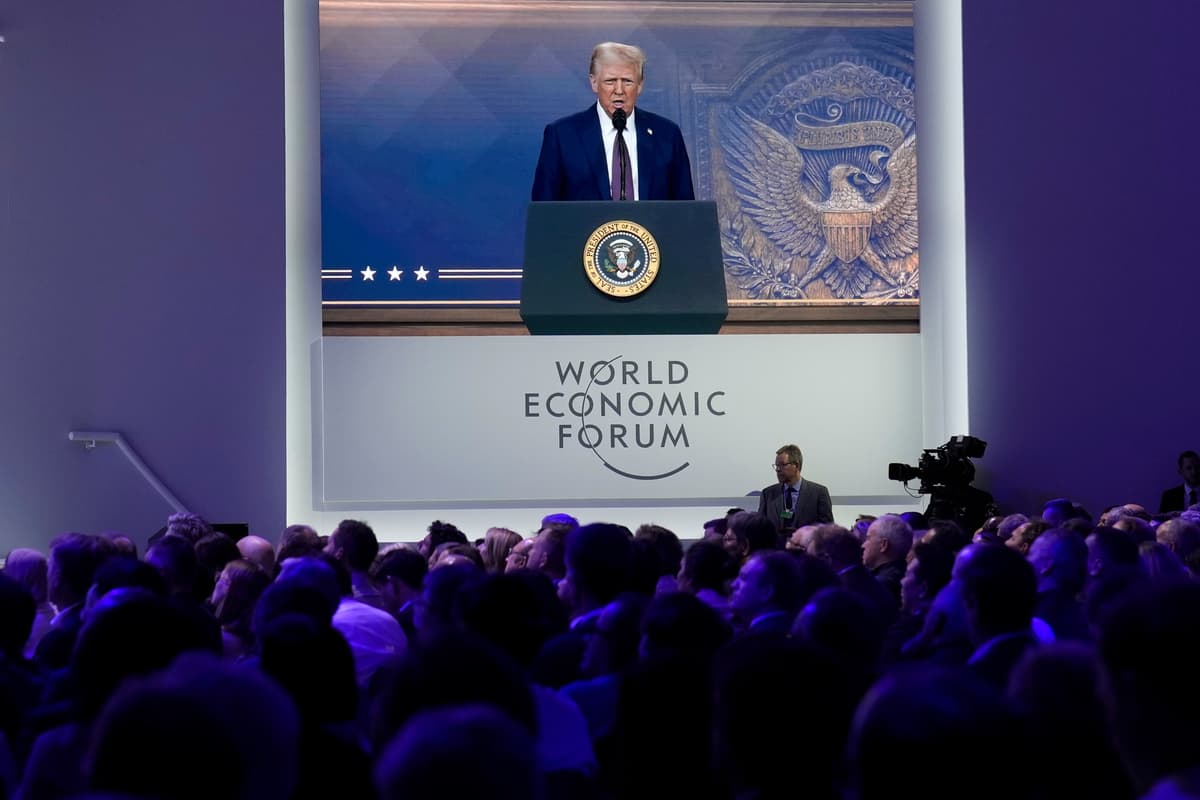

World leaders are steeling themselves for an address by President Trump to the World Economic Forum at Davos on Wednesday, saying that the 77-year-old transatlantic alliance could be on a “dangerous downward spiral” after recent threats made by the commander-in-chief. Mr. Trump, a longtime critic of NATO, is growing increasingly frustrated about Denmark’s reluctance to hand him control of Greenland.
The Geneva-based think tank that runs the confab says Mr. Trump will be accompanied by the largest American delegation ever to attend the meeting, including five cabinet secretaries a host of other top administration officials. The meeting begins Monday and runs through January 23.
Following the American military’s capture of Venezuela’s president, Nicolás Maduro, Mr. Trump has been unabashed in his demands of foreign leaders than at any point in his second term. On Saturday, Mr. Trump announced that eight European countries which have denounced his efforts to annex Greenland will now face a ten percent tariff beginning in February.
The president says those eight countries — Denmark, Norway, Sweden, France, Germany, the United Kingdom, the Netherlands, and Finland — are playing “a very dangerous game.” The tariff is set to increase to 25 percent on June 1.
“The United States of America is immediately open to negotiation with Denmark and/or any of these Countries that have put so much at risk, despite all that we have done for them, including maximum protection, over so many decades,” the president said over the weekend.
Mr. Trump and his closest “America First” allies have long derided the annual Davos conference as a gathering of “globalists” who do not care about the wellbeing of the United States. The address on Wednesday will mark Trump’s first in-person address to the World Economic Forum since 2020.
Six years ago, the president praised nations like Canada and Mexico for negotiating new trade agreements with the United States, expressed optimism about good-faith negotiations with the People’s Republic of China, and urged European nations to engage in greater trade with America.
Now, Mr. Trump and his administration are headed to Davos prepared to tussle with Europe rather than seek greater cooperation.
“Make [Greenland] part of the United States and there will not be a conflict, because the United States right now, we’re the hottest country in the world, we’re the strongest country in the world,” Treasury Secretary Scott Bessent told “Meet the Press” on Sunday. “Europeans project weakness; the U.S. projects strength.”
Mr. Trump’s staff say that the president’s address will focus on a challenge that is significantly impacting Americans’ wallets — the cost of housing. The director of the National Economic Council, Kevin Hassett — a finalist to be Mr. Trump’s nominee to lead the Federal Reserve — told Fox News last week that the president plans to discuss changes to how Americans can buy homes during his Davos address.
“We’re going to allow people to take money out of their 401(k)s and use that for a down payment,” Mr. Hassett told the outlet, saying that the president would have more to say during the World Economic Forum speech.
Ahead of the meeting this week, European leaders are apparently trying to get on Mr. Trump’s good side in order to bring tensions down. The secretary general of NATO, Mark Rutte, says that he spoke to Mr. Trump on Sunday about the situation in Greenland.
“We will continue working on this, and I look forward to seeing him in Davos later this week,” Mr. Rutte wrote on X.
In a statement Sunday, the leaders of the eight European nations now facing Mr. Trump’s tariff threats reiterated their opposition to the escalating rhetoric coming from Washington. “Tariff threats undermine transatlantic relations and risk a dangerous downward spiral. We will continue to stand united and coordinated in our response. We are committed to upholding our sovereignty,” the eight leaders said.
A number of other foreign policy issues for Mr. Trump are also set to take up some of his time in Switzerland, including his demand that the war between Russia and Ukraine be ended as quickly as possible. Despite meetings with both President Zelensky and President Putin over the course of the last year, no progress has been made on that front. Mr. Zelensky is scheduled to appear at the meeting along with Mr. Trump, according to a list of attendees made public by the World Economic Forum.
Mr. Trump’s longtime foe, President Gustavo Petro of Colombia, will also be in attendance after the two men spoke earlier this month by phone. The president has threatened Mr. Petro a number of times over the course of the last year due over drugs originating in Colombia trafficked to the United States, though Mr. Trump has expressed optimism about their first in-person meeting.
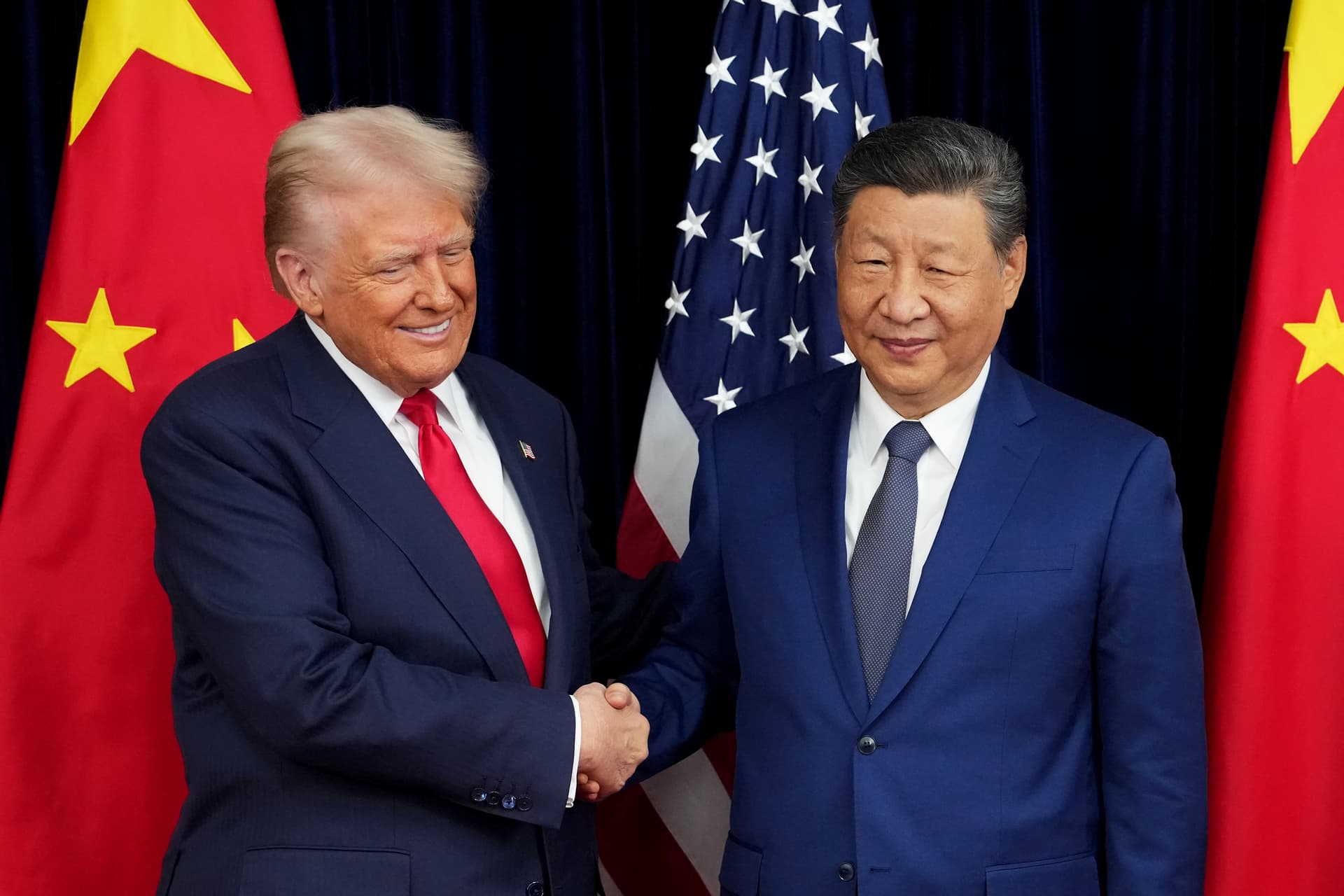
Another topic of discussion is likely to be Canadian Prime Minister Mark Carney’s newfound interest in deepening ties with China. Mr. Carney recently returned from a multi-day trip to the country, during which he expressed optimism about a new “strategic partnership,” which includes lowering trade barriers between the two countries. China’s vice-premier, He Lifeng, will lead his country’s delegation to Switzerland.