Federal Judge Blocks West Virginia’s Ban on Food Dyes, Calling It ‘Unconstitutionally Vague’

West Virginia’s governor says the ruling is ‘premature and wrongly decided.’
Justin Sullivan/Getty Images
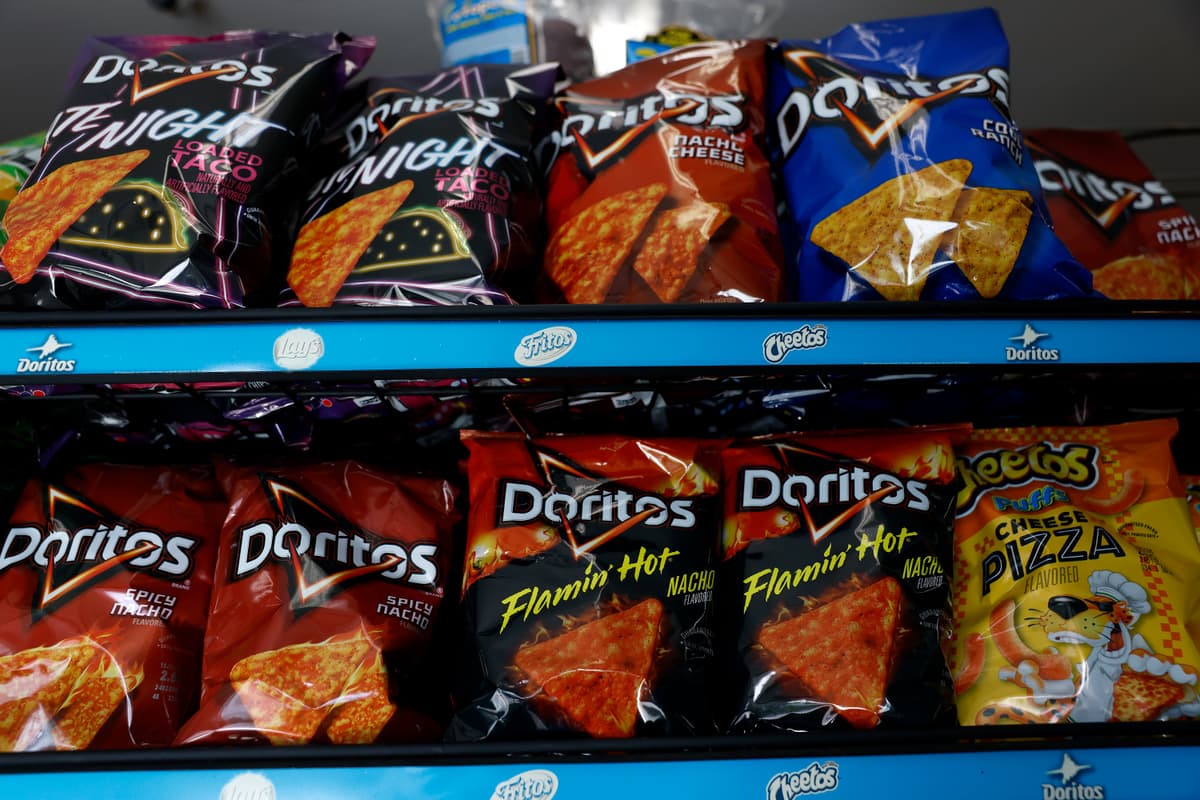
Packages of Doritos, which include food dyes, are displayed on a store shelf. Justin Sullivan/Getty Images

A federal judge has blocked West Virginia’s ban on certain food dyes, finding that the law was “unconstitutionally vague.” 

West Virginia’s governor, Patrick Morrisey, signed the bill into law in March. It bans certain food dyes such as Red No. 3, Red No. 40, Yellow No. 5, Yellow No. 6, Blue No. 1, Blue No. 2, and Green No. 3. Two preservatives, butylated hydroxyanisole and propylparaben, were also banned by the law. 

The ban went into effect for school lunches in August, and it was supposed to take effect for the food sold statewide in 2028.

However, a federal judge, Irene Berger, issued a preliminary injunction, blocking the West Virginia Department of Health from enforcing the ban. Her preliminary injunction did not affect the ban on dyes in school meals.

Judge Berger, an Obama appointee, said the law was “unconstitutionally vague,” due to language that she said “leaves the door open for arbitrary enforcement.” The law banned certain food dyes, but also dyes that are “poisonous and injurious,” without clarifying what the standard is for state officials to determine whether a color additive is “poisonous.”

“What facts or data, if any, must the WVDOH rely on before determining that additional color additives are ‘poisonous and injurious’?” she asked. “Is it sufficient for the WVDOH to rely on any study when making its determination or none at all? If a parent notifies WVDOH that they believe their child is sensitive to a color additive, is that a sufficient basis for a color additive to be deemed ‘poisonous and injurious,’ or must the WVDOH conduct a further investigation? It is far from clear.”

The lawsuit was filed by the International Association of Color Manufacturers, which argued that West Virginia’s law interfered with interstate commerce and would harm its member companies since the law did not provide a “substantial or rational basis” for determining whether food additives are dangerous.

Mr. Morrisey said Judge Berger’s ruling is “both premature and wrongly decided.”

“West Virginia will continue to defend its authority to protect the health and well-being of our citizens, especially children. We are reviewing our legal options but will continue to press forward with our efforts to get harmful crap out of our food supply,” he added.

When the law was signed, Mr. Morrisey said West Virginia was leading the “Make America Healthy Again mission,” a reference to the slogan used by Health and Human Services Secretary Robert F. Kennedy Jr. 

An advisor to Mr. Kennedy, Calley Means, wrote on X, “This is a scandal. It is not illegal … to prevent kids from being poisoned with chemicals banned in every other country.”

Nearly two dozen states are considering legislation to ban dyes and other additives. In 2023,  California banned Red No. 3 and six other dyes. And in March, Virginia passed a ban on food dyes in school lunches, set to take effect on July 1, 2027.

West Virginia’s ban was the most sweeping of the restrictions on food dyes. 

The state is expected to appeal the ruling. 


The New York Sun

© 2025 The New York Sun Company, LLC. All rights reserved.

Use of this site constitutes acceptance of our Terms of Use and Privacy Policy. The material on this site is protected by copyright law and may not be reproduced, distributed, transmitted, cached or otherwise used.

The New York Sun

Sign in or  create a free account

or
By continuing you agree to our Privacy Policy and Terms of Use