Gasoline Prices for Midterms May Drive Trump’s Power Play With Venezuela
Unleashing new oil on the American market would keep gasoline prices low in an election year, the president tells GOP lawmakers.
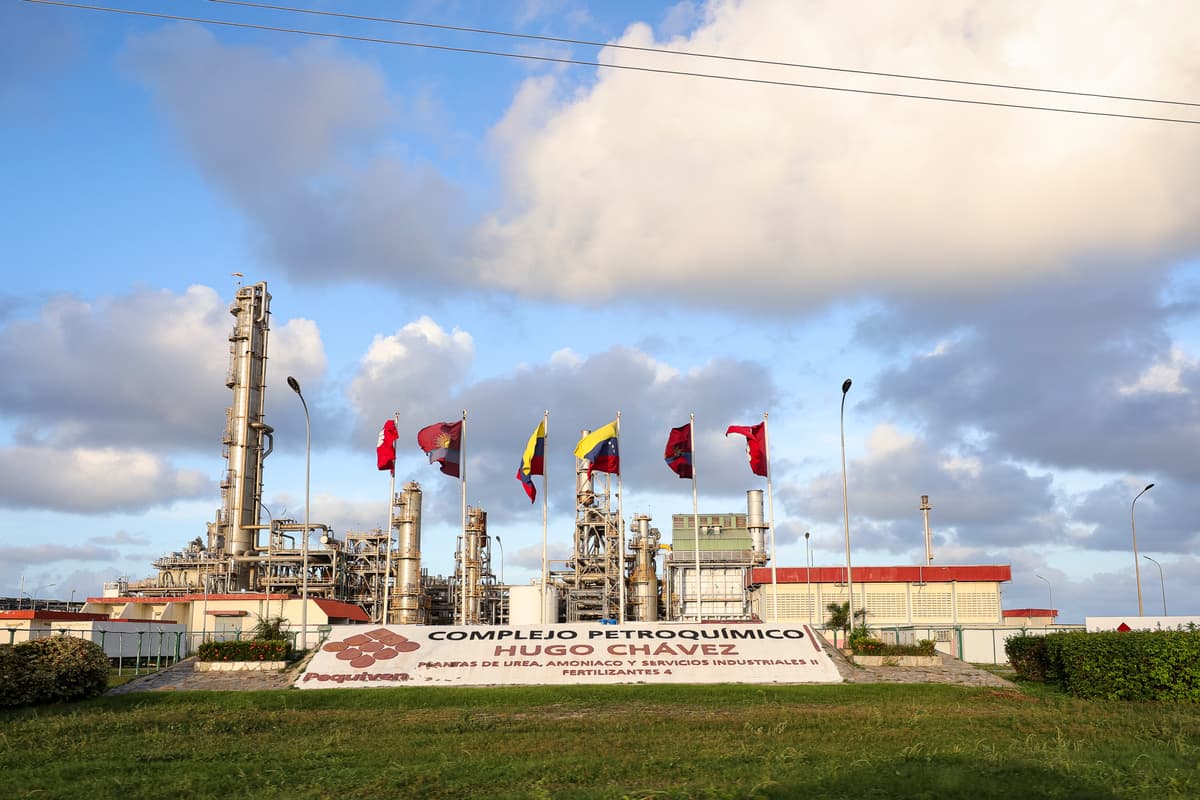

With an eye on gasoline prices for next fall’s midterm elections, President Trump is moving aggressively to win control over Venezuela’s oil reserves, the largest in the world. To twist arms, the United States Navy is blockading Venezuela’s oil terminals, preventing the export of oil to Communist China and other non-American destinations.
As Venezuela’s shore storage tanks started to hit capacity, Mr. Trump announced last night on Truth Social: “The Interim Authorities in Venezuela will be turning over between 30 and 50 MILLION Barrels of High Quality, Sanctioned Oil, to the United States of America. This Oil will be sold at its Market Price, and that money will be controlled by me, as President of the United States of America, to ensure it is used to benefit the people of Venezuela and the United States!”
To jumpstart American companies’ return to Venezuela’s, Mr. Trump is offering to subsidize American investment. On Monday, he told NBC: “A tremendous amount of money will have to be spent and the oil companies will spend it, and then they’ll get reimbursed by us or through revenue.”
On Friday, American oil company executives are to converge on the White House to hear the president’s pitch. After two waves of nationalizations — first in 1976, second in 2007 — American oil executives worry about political stability. To address that, the White House is working on guarantees designed to ensure that America will play policeman of the Caribbean for years to come.

The temptation of Venezuela’s oil riches is great. On Tuesday, Phillips 66’s chief executive, Mark Lashier, told investors on a conference call that two of its Texas refineries, Lake Charles and Sweeny, can handle “a couple of hundred thousand barrels a day” of Venezuela’s heavy crude. In a symbiotic, north-south relationship dating back to the 1930s, Gulf Coast refineries have long turned Venezuelan crude into gasoline and diesel for American cars and trucks. Mr. Lashier said: “This is an opportunity for Venezuela to return back into the capitalist fold, to bring their economy and to benefit their people over the long term.”
Lifting sanctions and unleashing new oil on the American market would keep gasoline prices low in an election year, Mr. Trump told House Republican lawmakers yesterday at a retreat at Washington. Giving insight into a major driver for forging a compliant government at Caracas, he said: “We got a lot of oil to drill, which is going to bring down oil prices even further.” Mr. Trump implored the GOP representatives: “You gotta win the midterms ’cause, if we don’t win the midterms. they’ll find a reason to impeach me.”
The interior secretary, Doug Burgum, joined the campaign yesterday, going on Fox News to proclaim that a surge of Venezuelan heavy oil to the American Gulf refineries would be “great news” for American gasoline prices. Savvy oil analysts see the impact of America winning control of oil policy in Venezuela, a founding member of OPEC.

Hours after Saturday’s arrest of the Venezuelan president, Nicolás Maduro, Russian energy and metals oligarch Oleg Deripaska wrote: “If our American ‘partners’ get control of the oil fields in Venezuela, they will control more than half of the world’s oil reserves. They probably plan that our oil prices don’t go higher than $50 per barrel.”
A national security adviser during Trump’s first presidential term, John Bolton, is skeptical. “Anybody who thinks the Venezuelan oil industry is going to emerge from the ashes in a matter of weeks or months, or even a couple of years, doesn’t know how bad the situation is,” he told Bloomberg Television yesterday. “I’d like to know what CEO of what major American oil company is just getting all of his top advisers together to get on a plane to go to Caracas, and put billions and billions of capital expenditures into Venezuela. The political situation is unstable.”
The desire for a stable government and for a return of American oil investment help explain why the Trump Administration is — for now — sidelining opposition leader María Corina Machado. In presidential elections 18 months ago, Ms. Machado’s endorsed candidate probably won more than 60 percent of the vote. However, Mr. Maduro stopped the vote count and declared that he and his running mate, Delcy Rodríguez, were the victors.

Despite widely accepted allegations of election fraud, Mr. Trump has decided to work with Ms. Rodríguez. She comes from a blue-blood Venezuelan left-wing family.
Her father, Jorge Antonio Rodríguez, founded the Socialist League, a Marxist political party. In 1976, he orchestrated the kidnapping of American business executive William Niehous. Her brother, Jorge Jesús Rodríguez Gómez, is president of the National Assembly. In that capacity, he oversaw the presidential swearing-in ceremony of his sister on Monday.
The line on Ms. Rodríguez’ resume that probably caught the eyes of Mr. Trump and of Secretary of State Marco Rubio was her service over the last two years as Venezuela’s petroleum minister. As Mr. Maduro’s top economic adviser, she was the main point of contact with foreign oil companies, including the last American producer in Venezuela, Chevron. Now, Trump Administration officials say, she could preside over as much as $100 billion in American oil investment in Venezuela.

For a carrot, Washington holds up the case of Guyana, Venezuela’s neighbor to the east. By playing ball with American oil companies, Guyana has become the Kuwait of the Americas. With oil production of 1 million barrels a day, slightly more than Venezuela’s, Guyana now is the world’s largest per capita oil producer.
By contrast, Venezuela’s oil industry, starved of investment and crippled by mismanagement, now accounts for only 1 percent of world oil production. This is down from eight percent in the 1970s.
On Monday, at the inauguration ceremony, Venezuela’s new president was filmed greeting the ambassadors of China, Iran, and Russia. However, she probably kept in the back of her head Mr. Trump’s Godfather-like threat from the day before. In a telephone interview with the Atlantic, he said: “If she doesn’t do what’s right, she is going to pay a very big price, probably bigger than Maduro.”