High Court Ruling on Trump’s Tariffs Could Greet Greenland
Can Congress delegate to another branch of government one of the powers the Constitution grants to the legislators?


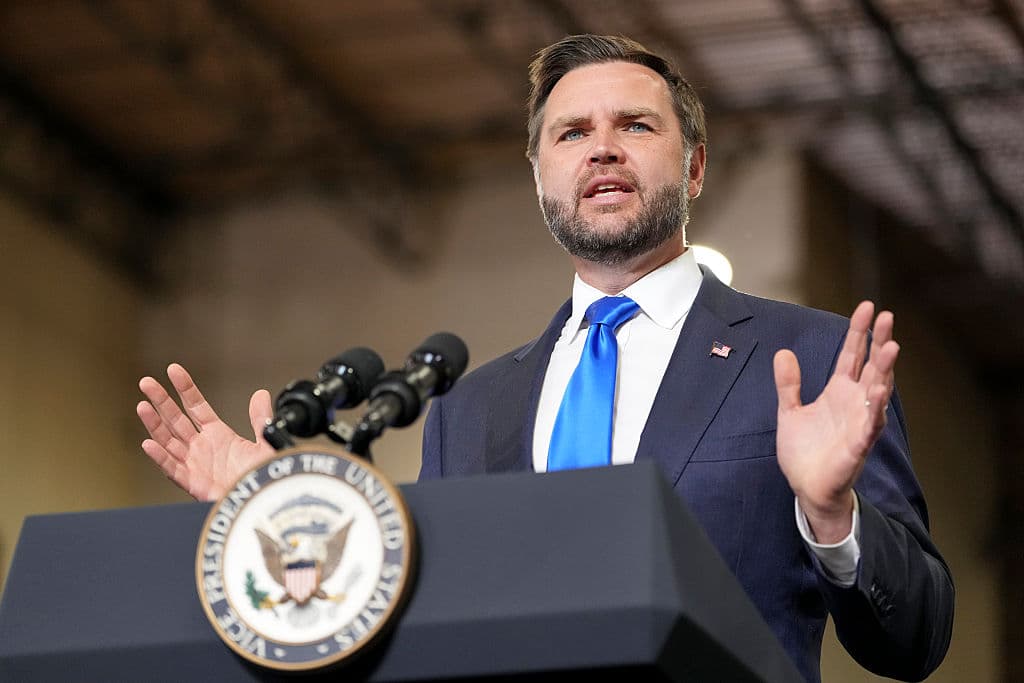
The Supreme Court could rule as soon as Tuesday on the validity of President Trump’s “Liberation Day” tariffs. It would be hard to overstate the significance of this decision for President Trump’s presidency. Mr. Trump has embraced the use of tariffs as a tool of policy to a degree rarely if ever pursued by other presidents. Note, say, the 10 percent tariffs he is mooting, even as the Supreme Court is deliberating, against European countries over Greenland.
“This Tariff will be due and payable until such time as a Deal is reached for the Complete and Total purchase of Greenland,” Mr. Trump avers on his Truth Social platform. The levies are slated for February 1, he says, and will rise to 25 percent by June 1. The statutory basis for this proposed tariff is not clear. By contrast the tariffs in dispute at the high court in Trump v. V.O.S. Selections are based on a law that gives the president the power to regulate trade.
The president’s powers under the International Emergency Economic Powers Act are contested in part because the law does not mention the word tariff. Plus, too, the law requires a state of emergency to justify the tariffs. The president reckons that the decline of America’s manufacturing sector — especially in critical defense industries — justifies his actions. Yet it’s uncertain what domestic economic issue triggers any tariffs over Greenland.
This is not to overlook the fact that the president may devise another legal basis for imposing tariffs on the Europeans over his effort to acquire Greenland. The Europeans, for their part, are griping about what they see as tariffs being used as a tool of “coercion” and weighing an escalation of the dispute. Yet there’s nothing wrong, per se, with a president using coercion as a tool of foreign policy.
The Framers granted presidents authority under the Constitution to wield pressure of various kinds against other countries. It’s an arrow in the president’s constitutional quiver, in his capacity as commander in chief and in his power to execute the foreign policy of America. Yet the Framers did not give presidents power to levy duties, which are, after all, a tax. That enumerated power was assigned to the Congress, the most accountable branch.
As a result, the Greenland tariffs, even if they are not directly before the Nine, put in sharp relief the constitutional quandary raised by the V.O.S. Selections dispute. That’s why these columns have called the case a “make or break moment” for Mr. Trump’s presidency. Their significance is most immediately a policy issue, because the president is using them as a means to advance his economic agenda of industrial rebirth.
The levies are a separation of powers issue, too, centering on whether Congress or the president can set tariffs — and whether the legislature erred if it intended to cede this power to the White House. If the high court on Tuesday agrees with V.O.S. Selections that the law in dispute “unconstitutionally delegates legislative authority to the President,” Mr. Trump’s use of tariffs as a policy tool, most recently over Greenland, would be cast into doubt.