Jack Smith, Grappling With an Emerging Republican Onslaught, Demands a Megaphone To Denounce Trump in Public
The special counsel reiterates his request that any future encounters with congressional inquisitors be broadcast.
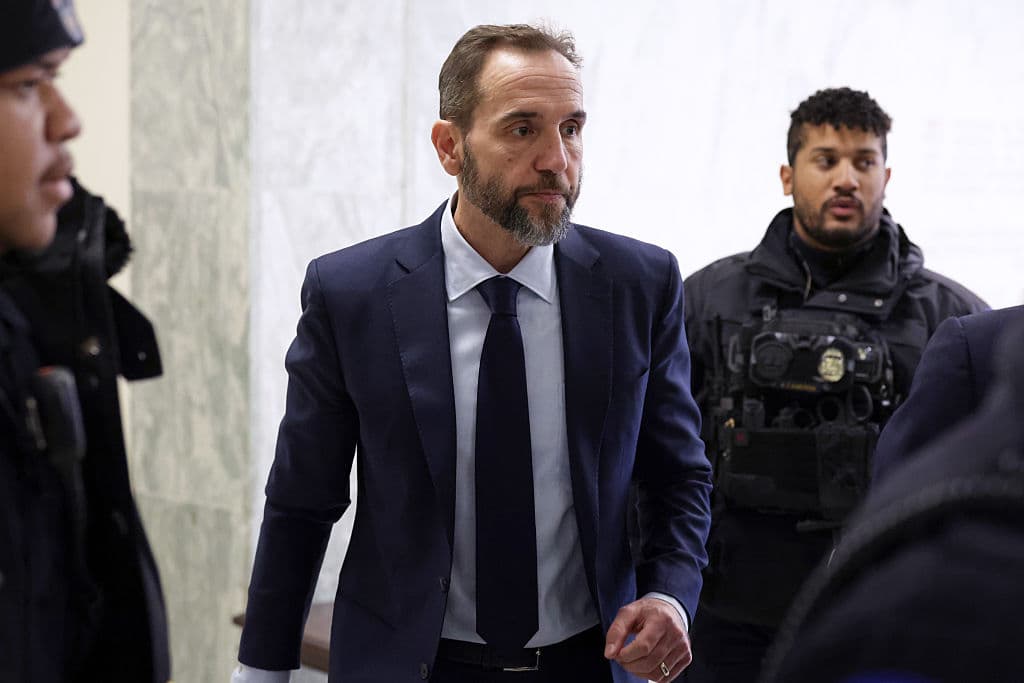

Special Counsel Jack Smith, hankering to tell his story to the American people, is escalating his campaign to testify publicly about his two prosecutions of President Trump.
The latest request to speak in a public forum comes in a letter to Congressman Jim Jordan from Mr. Smith’s attorneys. The correspondence renews a demand that the prosecutor made before his closed door session under oath with lawmakers last week.
Mr. Smith testified last Wednesday following a subpoena from Mr. Jordan, who chairs the House Judiciary Committee. When the subpoena was first issued, Mr. Smith’s lawyers insisted that their client would only testify if he was allowed to do so publicly and if he was granted immunity. Neither of those conditions was met, but Mr. Smith testified anyway.
That capitulation was likely motivated by the threat of a referral to the Department of Justice for criminal contempt if Mr. Smith did not heed the subpoena. One of Mr. Smith’s deputies, Thomas Windom testified to Mr. Jordan’s committee but still faces such a referral for allegedly not being forthcoming enough. Once a referral is lodged, the DOJ is tasked with the decision whether to prosecute. Two of President Trump’s advisers, Peter Navarro and Stephen Bannon, were convicted of contempt by President Biden’s DOJ.
Mr. Smith’s attorneys — Lanny Breuer and Peter Koski — write that they “reiterate our request for an open and public hearing. During the investigation of Mr.Trump, Mr. Smith steadfastly followed Justice Department policies.” They also request that the video of Mr. Smith’s eight hours of testimony last week be released so it can be watched directly “rather than through second-hand accounts.”
Those accounts paint a picture of a defiant Mr. Smith who remains unbound by his failure, twice over, to convict Mr. Trump for the storage of classified documents at Mar-a-Lago as well as for alleged interference in the aftermath of the 2020 election. Mr. Trump pleaded “not guilty” in both of those prosecutions, and both were dismissed when he defeated Vice President Kamala Harris in the 2024 presidential election.
Mr. Smith last Wednesday again accused Mr. Trump of hatching a “criminal scheme” with respect to the 2020 election. He declared that the “decision to bring charges against President Trump was mine, but the basis for those charges rests entirely with President Trump and his actions, as alleged in the indictments returned by grand juries in two different districts.” Mr. Smith contends that he adduced evidence to convict “beyond a reasonable doubt.”
Messrs. Breuer and Koski insist that “During the investigation of President Trump, Mr. Smith steadfastly followed Justice Department policies, observed all legal requirements, and took actions based on the facts and the law.” Mr. Jordan, though, accused Mr. Smith of “prosecutorial misconduct and constitutional abuses.” Mr. Trump has long denounced the special counsel as “deranged” and “lamebrained.”
Mr. Smith, who was taciturn in the months following his resignation days before Mr. Trump’s second inauguration, has been more outspoken in recent months. He ventured in a keynote speech at George Mason University that “what I see happening at the Department of Justice today saddens me and angers me.” He also insists that any suggestion that he was motivated by politics is “absolutely ludicrous.”
The special counsel’s renewed effort to testify publicly suggests that he reckons that his session with lawmakers last week is unlikely to be his last. Mr. Smith appears likely to be summoned to discuss his Mar-a-Lago case. The final report in that case is currently under seal by order of Judge Aileen Cannon, who reasoned that the dossier’s release could harm the due process rights of Mr. Trump and his co-defendants, Waltine Nauta and Carlos De Oliveira.
The 11th United States Appeals Circuit has chided Judge Cannon for an “undue delay” in ruling on the ultimate fate of the report and ordered her to render a decision by early January. If the report does see the light of day, lawmakers would be likely to ask questions about it. Mr. Smith wrote in his January report that only the DOJ’s “categorical” ban on prosecuting a sitting president prevented him from pursuing his January 6 case to a “guilty” verdict.
Doubts regarding Mr. Smith’s handling of the documents case have been amplified by the release of emails last week that disclose doubts within the FBI with respect to the search of Mar-a-Lago in August 2022. Some officials doubted whether Mr. Smith had shown “probable cause” or if there were “alternative, less intrusive and likelier, quicker, options for resolution.” One DOJ official, Harmeet Dhillon, reckons that the documents amount to a “bombshell.”
The search, which covered First Lady Melania Trump’s bedroom as well as the private quarters of Mr. Trump’s son, Barron, enraged the president. One dissenting voice within the FBI reasoned “that if a primary goal of this investigation is to identify and recover classified records quickly, so as to protect the information, the 6 weeks spent fixated on probable cause for a search warrant have been counterproductive.” Attorney General Merrick Garland ultimately greenlit Mr. Smith to seek a warrant.
Also of interest to lawmakers than could be grilling Mr. Smith about “Operation Arctic Frost,” the code name for his January 6 investigation. That probe involved the surveillance of telephone metadata culled from eight Republican senators and one congressman. Republican lawmakers are vowing to hold hearings on that surveillance early in the new year.