
Jack Smith, Seeking To Eclipse Trump’s Bully Pulpit, Demands Release of Secret Testimony About January 6 Case
The social counsel’s lawyers want the footage of their client’s testimony broadcast to the public.
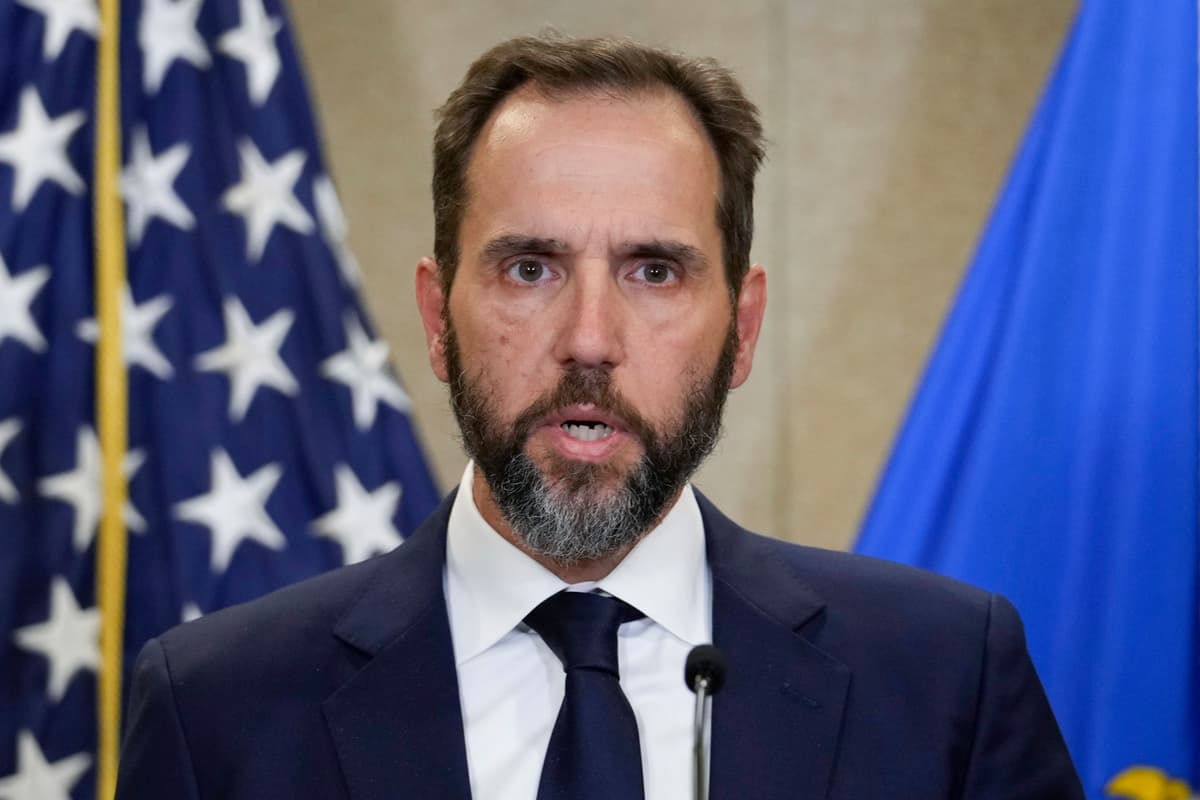
Special Counsel Jack Smith’s demand that congressional Republicans release eight hours of his closed-door testimony about his prosecution of President Trump puts into sharp relief an emerging strategy of pressing for publicity.
The request comes in a letter to Congressman Jim Jordan, the chairman of the House Judiciary committee, from Mr. Smith’s attorneys, Peter Koski and Lanny Breuer. The lawyers write that their client “respectfully requests the prompt public release of the full videotape of his deposition. Doing so will ensure that the American people can hear the facts directly from Mr. Smith.”
Ever since Mr. Jordan first served the special prosecutor with a subpoena earlier this month, Messrs. Smith and Jordan have locked horns about the terms of his testimony, which was delivered last week. Mr. Smith set two conditions for his testimony — that it be delivered at a public hearing and that he be granted immunity. Neither of those were met, but Mr. Smith testified anyway — and reportedly did not once invoke the Fifth Amendment.
In the wake of that closed-door session, Mr. Smith has requested that any subsequent testimony be public. His lawyers write that they request “an open and public hearing. During the investigation of President Trump, Mr. Smith steadfastly followed Justice Department policies, observed all legal requirements, and took actions based on the facts and the law. He stands by his decisions.”
Mr. Smith opened his testimony by asserting that he “developed proof beyond a reasonable doubt that President Trump engaged in a criminal scheme to overturn the results of the 2020 presidential election and to prevent the lawful transfer of power.” That echoed language from his final report on the case, where he declared that “but for” Mr. Trump’s reelection he could have secured a conviction on the strength of the adduced evidence.
Ultimately, Mr. Smith was forced to yield to the Department of Justice’s “categorical” ban, repeated in two separate memoranda, against prosecuting a sitting president. During Mr. Smith’s testimony he also defended, albeit briefly, his prosecution of Mr. Trump for retention of classified documents. Scrutiny of the Mar-a-Lago case has spiked after the DOJ last week declassified emails that show internal dissent over whether the search of the Palm Beach mansion was necessary and lawful.
Mr. Smith insisted to lawmakers, though, that he “developed powerful evidence that showed President Trump willfully retained highly classified documents after he left office in January 2021, storing them at his social club, including in a bathroom and a ballroom where events and gatherings took place.” The prosecutor added that Mr. Trump “tried to obstruct justice to conceal his continued retention of those documents.”
Mr. Trump pleaded “not guilty” in that case — and to the January 6 one — and both were dismissed before they matriculated to trial. Meanwhile Mr. Trump is, in his “personal capacity,” working to keep under seal Mr. Smith’s final report in the documents case. The dossier will be released in February, per a ruling from Judge Aileen Cannon — unless Mr. Trump can convince her that publishing it violates his due process rights and those of his two co-defendants.
Mr. Smith’s quest for the spotlight marks a pronounced pivot from a taciturn mien that defined his time as special counsel and the months after he tendered his resignation days before Mr. Trump took office for a second time. The 47th president and Attorney General Pam Bondi quickly moved to erase evidence of Mr. Smith’s tenure by firing everyone who was seconded to his team — including his support staff.
Mr. Smith broke that silence with a barnburner of a keynote address at George Mason University in September. He declared that “what I see happening at the Department of Justice today saddens me and angers me … the government, using the vast powers of the criminal justice system to target citizens for exercising their constitutional rights.” He also attacked Mr. Trump’s handling of the DOJ. He called the rule of law “fragile.”
The special counsel next took a flight to London. There, in an opinion with MS NOW contributor Andrew Weissman, he declared that “the idea that politics played a role in who worked on that case, or who got chosen, is ludicrous.” Mr. Smith also blasted the Trump administration’s Department of Justice, contending that “Nothing like what we see now has ever gone on.”
Now Mr. Smith, in his push for public testimony, appears to be eager to join the fray more fully. He could get his chance early in the new year, when congressional Republicans have vowed to hold hearings on whether he violated lawmakers’ constitutional rights when he surveilled their telephone metadata as part of “Operation Arctic Frost,” his criminal probe into Mr. Trump’s culpability for January 6.