Judge Plans To Block Temporarily National Guard Deployment in Illinois
An appeals court is set to rule on another deployment to Portland, Oregon.
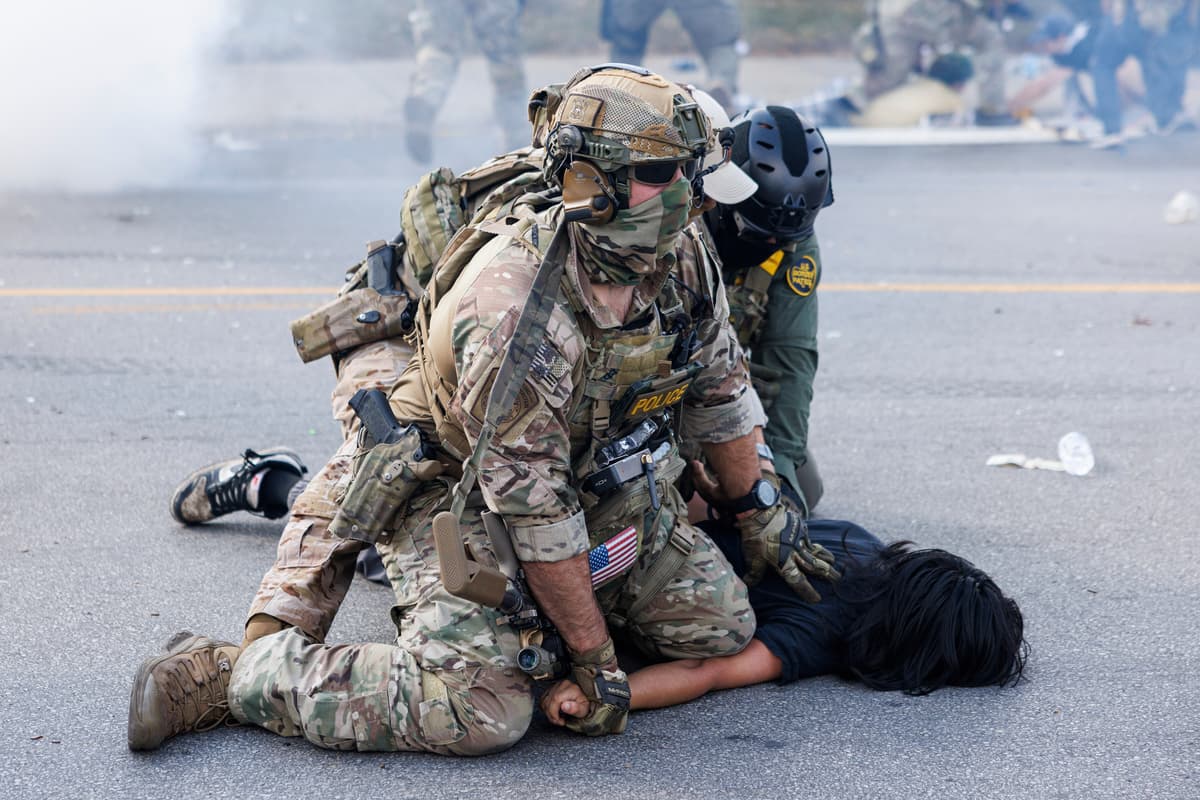
A federal judge in Chicago on Thursday said she planned to partially grant a request to block the deployment of National Guard troops in Illinois.
United States District Judge April Perry didnât elaborate on the specifics of her ruling during a hearing that resumed late in the afternoon. Judge Perry said she would release more details on Friday, according to the Associated Press.
President Trump has portrayed Chicago as a lawless âhellholeâ of crime but local officials say the troops are not needed.
âThere is no rebellion in Illinois,â a lawyer from the Illinois attorney generalâs office, Christopher Wells, said during a court hearing hours before Judge Perry made her announcement. Mr. Wells added that the deployment was âillegal and lawless.â
Judge Perry called the administrationâs description of the situation in the state was âunreliableâ and there was no credible evidence of a threat of a rebellion.
A Trump administration lawyer had argued that there doesnât need to be a rebellion for the president to deploy troops. Eric Hamilton told Judge Perry that Mr. Trumpâs decision to send in the National Guard was âunreviewableâ and was needed to respond to an urgent threat to the safety of federal officers.
National Guard troops from Texas arrived this week to guard an immigration facility just outside of Chicago.
The Chicago hearing was one of two on Thursday over whether the president has the authority to deploy National Guard troops.
The other case involves a planned deployment at Portland, Oregon.
The Trump administration is asking a three-judge panel of the United States Appeals Court for the Ninth Circuit in San Francisco to overturn a lower court order that blocks that troop deployment.
United States District Court Judge Karin Immergut had issued a temporary restraining order on Saturday to halt the use of the National Guard at Portland.
President Trump has characterized Portland as âwar-ravagedâ and âunder siegeâ amid ongoing nightly demonstrations against Immigration and Customs Enforcement and said the National Guard is needed to protect the ICE agents. In June, violent protests forced the ICE facility at Portland to close for several weeks.
Oregon officials have resisted the deployment calling it unnecessary and would only raise tensions in the community.
The judges asked a Trump administration lawyer, Eric McArthur, to give his definition of rebellion as it pertained to deploying federal troops. Mr. McArthur cited violence directed at ICE agents at their Portland facility, calling the situation âunsustainable and unsafe.â
The senior assistant attorney general for Oregon, Stacy Chaffin, said a rebellion needs to include the element of people attempting to overthrow the government.
One of the Ninth Circuit judges appeared ready to overturn the temporary injunction blocking the troop deployment. Judge Ryan Nelson questioned the lower court ruling, calling its analysis âwrong.â
âIâm sort of trying to figure out how a district court of any nature is supposed to get in and question whether the presidentâs assessment of executing the laws is right or wrong,â Judge Ryan Nelson, one of two Trump appointees on the panel hearing the appeal, said.
âIt may well be that the forces are used in an improper way, but we donât have any evidence of that right now. All we have is a document that says, âWe have a federal facility under attack where violence has forced it to close down, and we want to protect it,'â Judge Nelson told Ms. Chaffin. âThat doesnât strike me as a glaring overuse on its face.â
The judges didnât immediately issue a ruling in that case.