Latino Backlash Against Trump Immigration Policies Could Deliver Miami Mayor’s Office to Democrats for First Time in Decades
Democrats have not held the office since the Clinton administration.
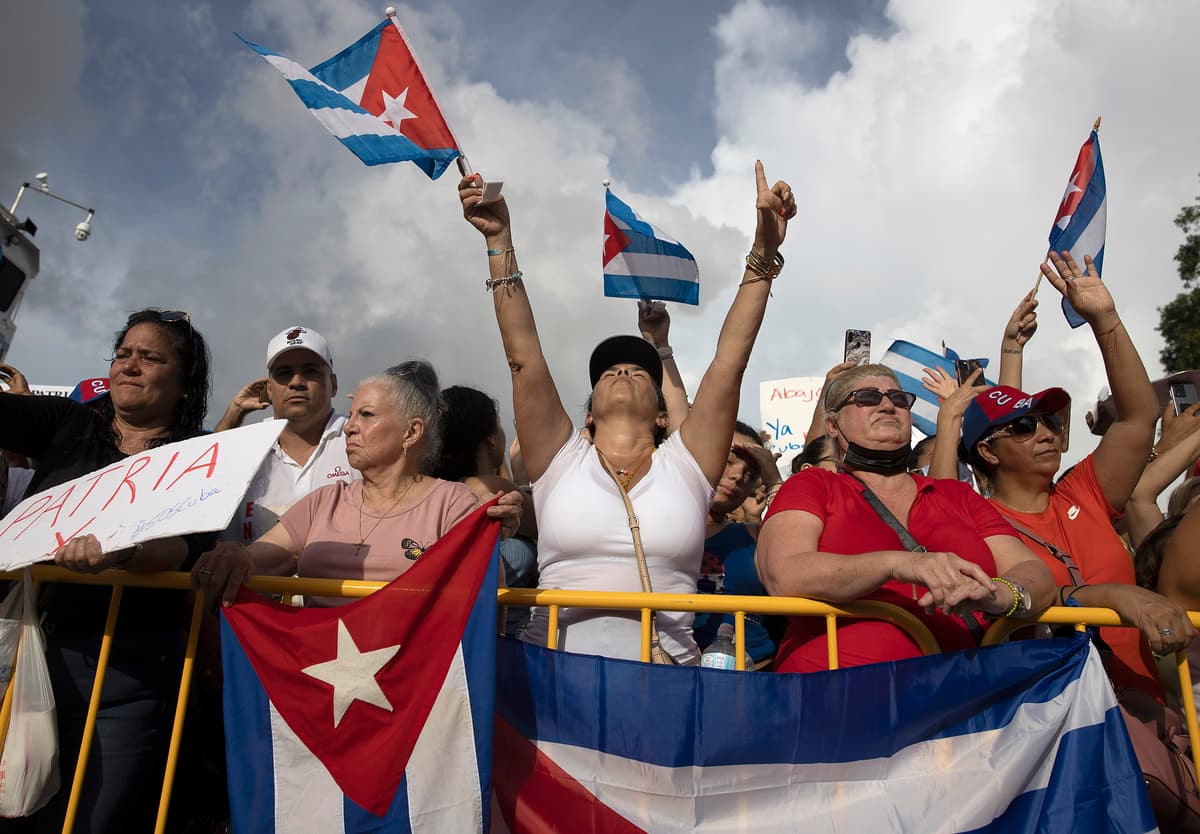
In what could be a key barometer of how Hispanic voters are feeling about President Trump, Miami’s citizens will go to the polls on Tuesday to choose a new mayor. Based on all available information, it appears that the city is poised to elect its first Democratic mayor since 1997.
The first round of the election was held in November, but because no candidate won a majority of the vote, a runoff between the top two candidates will be held on Tuesday. Though the race is nominally non-partisan, the two candidates are Democratic former county commissioner Eileen Higgins and Republican former city manager Emilio Gonzalez.
Polling suggests Ms. Higgins has a wide lead in the race, with a survey from MDW Communications showing her with a 26-point lead over Mr. Gonzalez.
Both candidates have focused on affordability and dysfunction at city hall in recent years. According to data compiled by Zillow, the average cost of a home in the city has risen by more than 50 percent in the last five years.
Ms. Higgins, however, has also actively spoken out against President Trump’s deportation policies.
“I’m very concerned with what’s happening in the city of Miami,” Ms. Higgins said during a debate with her opponent on CBS Miami last month. “First of all, they said they were gonna go after criminals, but guess what? They’re going after everybody.”
“In addition to being inhumane and cruel, it’s also bad for the economy. Two weeks ago, our federal government — the president — eliminated [temporary protected status] for Venezuelans,” Ms. Higgins said.
According to the 2020 census, Miami is the fourth-largest city in America with a majority-Hispanic population — more than 70 percent of the city’s population is of Hispanic descent. A majority of the city’s residents were born outside of the United States.
Keeping with the trend of Latino voters moving significantly to the right in recent years, Miami has seen a drastic swing toward the GOP in just the last decade. In 2016, Secretary of State Hillary Clinton won the city by 40 points in the presidential contest. Last year, Vice President Kamala Harris won Miami by less than one percent.
Mr. Trump endorsed Mr. Gonzalez after the first round of voting in November, and renewed his call for Miamians to back him in a Truth Social post on Sunday. “Miami’s Mayor Race is Tuesday. It is a big and important race!!! Vote for Republican Gonzalez,” the president wrote, urging supporters to get out on behalf of the GOP. “He is FANTASTIC!”
If Democrats can pull off a win in a majority-Hispanic city that has moved so significantly to the right in recent years, it will almost certainly be seen as a feat as impressive as their wins in Virginia and New Jersey last month. Republicans derided those two gubernatorial victories as nothing more than triumphs in states Ms. Harris won relatively comfortably in 2024.
The Latino vote, however, will likely be the most important takeaway, just as it was in the November elections. In both Virginia and New Jersey last month, voters of Hispanic descent swung dramatically back toward the Democrats just one year after Mr. Trump made massive gains among the cohort. In some of the most heavily Hispanic precincts of New Jersey, the Democratic candidate, Governor-elect Mikie Sherrill, saw 70-point swings in her direction relative to Ms. Harris’s performance last year.
In several precincts at Perth Amboy — a city in New Jersey which is nearly 80 percent Hispanic — Ms. Sherrill beat her Republican opponent by more than 60 points, even though Mr. Trump carried those same precincts in 2024.
Hispanics in Florida — specifically south Florida — have always been more conservative than most other Hispanic voters in other parts of the country, though a win for Ms. Higgins would buoy hopes of a major Democratic win in next year’s midterm elections.
Texas Democrats have placed their hopes in Hispanic voters in the southern part of the state to turn out for two Latino lawmakers — Congressmen Henry Cuellar and Vicente Gonzalez — who have both had their districts redrawn in order to include more Hispanic voters.
Republicans drew the maps believing that the rightward shift of the Hispanic population would either continue or remain steady, though a shift back toward the Democrats could take the air out of the GOP’s hope that they can pick up five seats in Texas.
The governor of Florida, Ron DeSantis, too, could have his redistricting plans upended by a major shift among Hispanics in south Florida. He is planning to call his legislature back for a special session to potentially redraw his state’s congressional maps, though that would require relying on Hispanic voters to turn out for the GOP next year.
A shift among them in Miami could be cause for concern among any sitting Republican members of Congress who do not want to see their seats become less red in the hopes that their party could pick up a seat or two in the Sunshine State.