
Mail-In Ballots Case Could Bolster Election Integrity for Midterms
The Nine will have an opportunity to rein in lax vote-counting policies in states like New York, Illinois, Texas, and California.
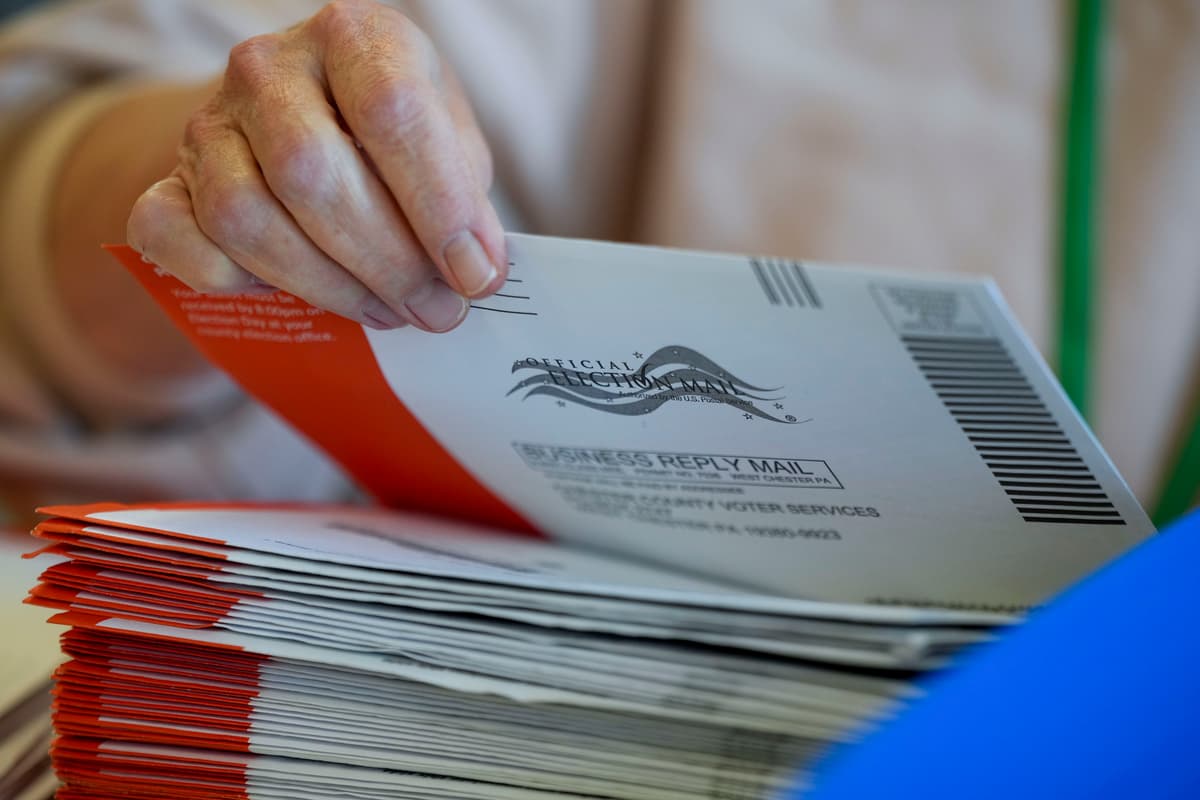
The Supreme Court will have an opportunity to bolster the integrity of the Midterm vote when it hears a dispute over whether states can count mail-in ballots that arrive post-Election Day. Watson v. Republican National Committee centers on policies in Mississippi, but could bear on other states, like New York, Illinois, Texas, and California, that allow late ballots to be tallied. Reining in such lax vote-counting rules makes constitutional sense.
The salience of this dispute — which the high court agreed to hear, but has not yet scheduled for argument — is underscored today by news reports about the unreliability of postmarks. The postal service reports that mailed ballots aren’t necessarily postmarked on the same day they are received. In a new rule the agency insists, per Stateline, that “it isn’t changing its existing postmark practices and is merely clarifying its policy.”
Some state election officials, Stateline adds, are fretting over the postal service’s announcement, because they “have looked to postmarks as a guarantee that mail ballots were cast before polls closed.” The clarified postal policy, and the pending case, could upend voting laws in 14 states and the Columbia District. These jurisdictions have a “ballot grace period” allowing mailed votes to be tallied as long as they are mailed on or before Election Day.
Yet if, as the postal service now avers, “the postmark date does not necessarily indicate the first day that the Postal Service had possession of the mailpiece,” it’s hard to see the logic in keeping such relaxed policies in place. More broadly, the case puts a spotlight on the expansion of mail-in voting policies, which surged in popularity, especially in blue states, during the Covid pandemic and its aftermath.
Widespread voting by mail raises a host of concerns about, say, whether the returned ballots were actually sent in by their purported voters, and whether their votes were cast in secret. There are, too, grounds for concern over the risk of ballot harvesting, by which activists are encouraged to collect the votes from backers of a particular party or candidate. With 46 percent of votes in 2020 cast by mail, it’s no wonder so many doubts were sown about the result.
Voting by mail during the pandemic could be seen as a reasonable expedient. Yet the left’s subsequent embrace of mailed ballots seems to reflect a disdain for casting ballots in person on Election Day. The promotion of absentee, postal, and early voting increasingly suggests what these columns call a “complement to the Democratic Party’s aggressive get out the vote tactics.” Election Day, once a rite of citizenship, risks becoming a kind of extended symposium.
In Watson, Republicans argue that the state laws allowing such drawn-out voting run afoul of federal statutes designating “the day for the election” for House, Senate, and presidential races. In 1997, the GOP avers, the high court in Foster v. Love held that federal law “mandates holding all elections for Congress and the Presidency on a single day throughout the Union.” So, the GOP reckons, state laws to the contrary are “preempted.”
The Magnolia State contends that it merely lets ballots “be counted if they are received by election officials a short time after election day,” and reversing the policy “will have destabilizing nationwide ramifications.” In 2024, some 725,000 votes were “postmarked by Election Day” and arrived in time to be counted in states that still allow late ballots, the Times reports. Seeing how close many races in 2026 are likely to be, the more votes cast in person, the better.