
Mamdani and the ‘Forgotten’ New Yorker
As the new mayor readies the release of his budget, who will be on the hook for $10 billion in proposed new spending?
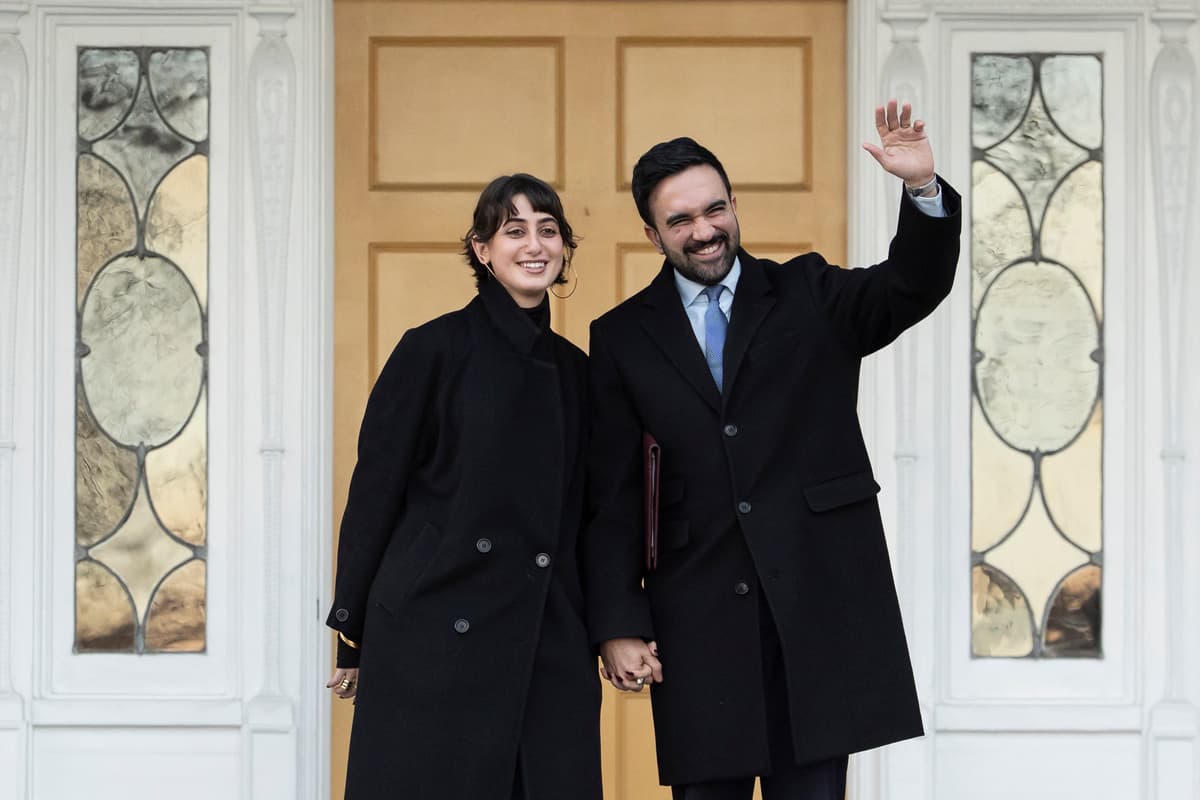
Mayor Zohran Mamdani’s ambitious program of giveaways is about to get a reality check, and it will prove an eye-opener for taxpayers, too. Mr. Mamdani, as Nicole Gelinas reports in City Journal, is required to submit a draft budget a month after taking office. This, per Ms. Gelinas, “will be the first moment when his campaign narrative meets hard math.” More to the point, who will be on the hook for Mr. Mamdani’s proposed $10 billion in new spending?
The Forgotten New Yorker, that’s who. In other words, the hardworking denizens of the Five Boroughs. It’s their tax dollars that fuel the lavish spending of City Hall’s surging bureaucracy. While Mr. Mamdani has proposed a costly agenda of “free” benefits, Ms. Gelinas reports, on the revenue side of the equation, “he identifies only $300 million in savings and another $700 million from tougher enforcement of existing taxes and fees.”
Plus, too, Ms. Gelinas cautions, Mr. Mamdani “isn’t asking Washington to fund his agenda.” As a result, “the entire burden would fall on the local tax base.” By her calculation, “that means $9 billion in new taxes.” She suggests these new levies could feature some $5 billion from “a state income-tax surcharge on the city’s millionaire earners.” On top of that another $4 billion could be extracted from a boost in the state’s corporate tax.
That levy on businesses, incidentally, is a cost that would be passed on to New Yorkers in the form of fewer jobs or higher prices on goods and services. Ms. Gelinas’s sobering statistics are likely to emerge in sharper focus once Mr. Mamdani issues his budget. That, Ms. Gelinas reports, “will finally require him to attach real schedules — and real funding — to his ideas.” Even in the broad outlines, these numbers are enough to daunt city taxpayers.
It’s a moment to mark the insight of the 19th century scholar, William Graham Sumner. He was an advocate for free-market capitalism when collectivist delusions like Progressivism and Marxism were waxing. He was a critic, too, of protectionist tariffs, which he had the perspicacity to see were a tax. He was prescient, too, in detecting the undemocratic logic at the heart of the welfare state. In 1883 he advanced his theory of “The Forgotten Man.”
He, Sumner relates, is who bears the burden of liberal schemes to improve society. He explained the problem using variables. Person A, in his telling, “observes something which seems to him to be wrong, from which X is suffering.” So “A talks it over with B, and A and B then propose to get a law passed to remedy the evil and help X.” The law, per Sumner, “proposes to determine what C shall do for X or, in the better case, what A, B and C shall do for X.”
What about C? “I want to show you what manner of man he is,” Sumner wrote. “I call him the Forgotten Man,” Sumner explained, the “simple, honest laborer.” He is, too, the “victim of the reformer, social speculator and philanthropist.” His heir is today’s taxpayer, for whom Sumner’s question echoes: “Who is there in the society of a civilized state who deserves to be remembered and considered by the legislator and statesman before this man?”
Which brings us back to Mr. Mamdani. In his entire campaign there hasn’t been so much as a particle of recognition on his part of the Forgotten Man, and Woman — the long-suffering taxpayer who will be asked to dig deeper into their wallets to pay for the mayor’s projects for social betterment. Mr. Mamdani, with the release of his budget, will have to make the case for his tax hikes — a moment to remember the Forgotten New Yorker.