Massie, Khanna Demand Judge Who Oversaw Ghislaine Maxwell’s Trial Step Into DOJ Redaction and Disclosure Process for Epstein Files
The Epstein Files Transparency Act required that all of the files be made public by December 19.
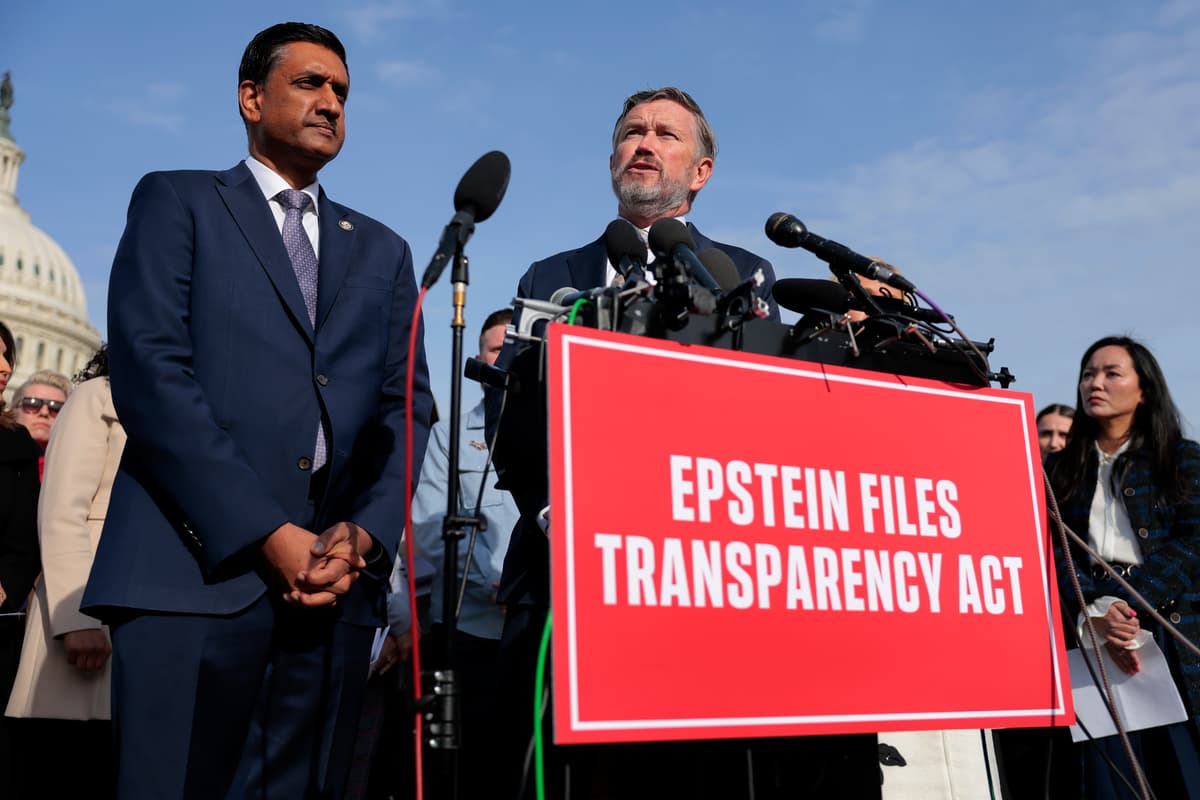
The leading sponsors on a bill to force the disclosure of the Epstein files, Congressmen Ro Khanna and Thomas Massie, are asking a federal judge to take control of the redaction process from the Justice Department, citing the administration’s delay in releasing all the information. Messrs. Khanna and Massie say the DOJ simply cannot be trusted to run this process any longer.
Their bill, the Epstein Files Transparency Act, became law last month after the Senate unanimously passed the legislation and President Trump signed it, seemingly under protest after months of fighting to keep the files under wraps.
The information was due to be released on December 19 with minimal redactions. The law allows for information to be kept from the public only if it includes child pornography, victims’ names, national security secrets, or records related to ongoing investigations or prosecutions. Any redactions must be explained in detail, according to the law.
Citing the DOJ’s lack of compliance with those provisions, Messrs. Massie and Khanna are asking Judge Paul Engelmeyer — who oversaw the trial of Jeffrey Epstein’s longtime associate, Ghislaine Maxwell — to appoint a special master to take over the redaction process and ultimate disclosure of the files.
“The conduct by the DOJ is not only a flagrant violation of the mandatory disclosure obligations under the Epstein Files Transparency Act, but as this Court has recognized in its previous rulings, the behavior by the DOJ has caused serious trauma to survivors,” the lawmakers write in a letter to the judge.
“Put simply, the DOJ cannot be trusted with making mandatory disclosures under the Act,” they continue.
During an interview at the Capitol on Thursday, Mr. Massie told The New York Sun that he believes Judge Engelmeyer could rule on the special master issue swiftly.
“Pam Bondi is in communication with this judge about the document production. So, our request was in the form of an amici curiae — you know, friend of the court,” Mr. Massie said. “We are stepping in and offering our opinion … because we believe they are over-redacting material and are also policing it in a manner to just flood the channel with stuff that doesn’t matter.”
The Justice Department did not immediately respond to the Sun’s request for comment.
Messrs. Massie and Khanna say the delays in disclosing all of the documents, constitute criminal acts. So far, just over 12,000 documents have been made public, totaling more than 100,000 pages, according to the congressmen. The Justice Department, however, says they may have millions more to analyze before they can be released.
“We suggest pursuant to its inherent authority … this Court appoint [a] Special Master and/or Independent Monitor for the purpose of ensuring all the documents and electronically stored information are immediately made public,” they write. Messrs. Massie and Khanna are also suggesting that such an appointee “be given authority to notify and prepare reports to this Court about the true nature and extent of the document production and if improper redactions or other improper conduct is taking place.”
“Absent an independent process, as outlined above, we do not believe the DOJ will produce the records that are required by the Act and what it has represented to this Court,” they argue.