Mexican Raids Bring Justice Closer for Olympic Athlete Turned Drug Kingpin

Seizures this week in Mexico City are being linked to Ryan Wedding, a former Olympic snowboarder now high on the FBI’s 10 most wanted list.

Via FBI
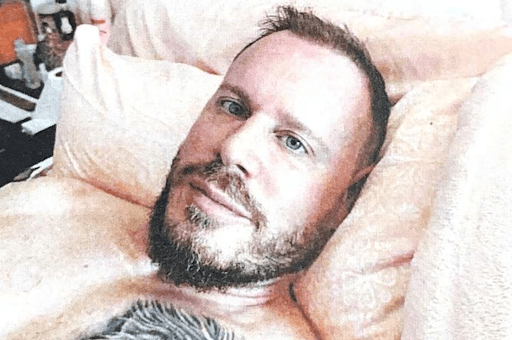
Mexican police are reported to be closing in on Olympic snowboarder turned drug kingpin Ryan Wedding, seen here in a photo provided by the FBI. Via FBI

Mexican police appear to be closing in on a former Olympic snowboarder turned suspected drug kingpin with a series of raids this week that netted, among other things, 62 “high-end” motorcycles and two Olympic medals.

“The seized items are related to a former Olympic athlete who is among the 10 most wanted fugitives by U.S. authorities,” says a Mexican Secretariat of Security press release, evidently referring to Ryan Wedding, who competed for Canada in the parallel giant slalom during the 2002 Winter Olympics at Salt Lake City, Utah.

Wedding, believed to be hiding in Mexico under the protection of the Sinaloa cartel, was added to the FBI’s most-wanted list earlier this year amid suspicion that he was behind a series of killings, including the murder of a key FBI witness against him.

Attorney General Pam Bondi, accompanied by the FBI director, Kash Patel, announced at a November 19 press conference that the reward for information leading to Wedding’s arrest was being increased to $15 million, more than for anyone else on the most-wanted list.

An accompanying Treasury Department release said Wedding “is responsible for trafficking multi-ton quantities of cocaine through Colombia and Mexico for distribution in the United States and Canada. His criminal organization uses cryptocurrency to move and launder the proceeds of drug trafficking, concealing vast sums of illicit wealth.

“According to the FBI, Wedding has ordered dozens of murders across the globe, including in the United States, Canada, and Latin America,” the statement says. “He employs highly sophisticated methods in both the planning and execution of these killings, demonstrating a level of coordination and ruthlessness that has made him one of the world’s most dangerous fugitives.”

In a joint statement Wednesday, the Mexican security authorities said that as a result of “bilateral” cooperation with an unspecified country, “lines of investigation were developed on a former athlete of foreign nationality related to transnational criminal activities.”

Based on that investigation, raids were staged on four properties in Mexico City and the State of Mexico, the statement said.

“Thus,” it said “doses of methamphetamine and marijuana, 62 high-end motorcycles, two vehicles, works of art, two Olympic medals, cartridges, a magazine and various documents were found.” The provenance of the Olympic medals is uncertain since Mr. Wedding won bronze and silver at the 1999 and 2001 Junior World Championships respectively but placed 20th in his Olympic event and ended his snowboarding career shortly afterward.

“It appears to me they are closing in on [Wedding] and they’re closing in on his location,” said a former FBI agent and federal prosecutor, M. Quentin Williams, in a Zoom interview Thursday with Canada’s CTV television network.

Another former FBI agent who now lectures at the University of New Haven, Ken Gray, told CTV the raids mark “a significant step in that it shows that Mexican authorities are taking this seriously now” and that the Sinaloa cartel’s ability to protect Mr. Wedding may be in question.

Since taking Wedding under their wing, the cartel “are under attack and losing some of their authority, plus the Mexican government are making efforts to assist U.S., which they had not been doing since last year,” Mr. Gray said. “They themselves are under attack and their ability to protect him at this point in the area of Mexico City may have suffered some damage.”

According to an ABC News timeline published last week, Wedding’s criminal career first came to light with a 2008 arrest in San Diego and subsequent conviction on charges of conspiracy to buy and traffic 24 kilograms of cocaine as part of a Vancouver-based drug trafficking organization. He completed his sentence in December 2011.

Following additional cocaine-related charges in Toronto and Montreal, Wedding and an accomplice were accused in 2023 of ordering the retaliatory murder of another Canadian drug trafficker. However the hired killer mistakenly killed the wrong couple in front of their daughter, who was wounded but survived.

Wedding subsequently left Canada and, according to a 2024 American indictment, conspired with others to ship hundreds of kilograms of cocaine from Mexico through Southern California to Canada via long-haul semi-trucks.

The FBI’s interest in his capture increased with the January 2025 murder in Medellin, Colombia, of Jonathan Acebedo-Garcia, a Montreal-born former crime partner of Wedding’s who had begun helping federal authorities and had been expected to testify whenever Wedding is brought to trial.

A Toronto-area lawyer, Deepak Paradkar, was arrested in November on charges that he had advised Wedding that the federal case against him would collapse if Acebedo-Garcia were murdered. Mr. Paradkar, whose Instagram handle is “@cocaine_lawyer,” was freed this week on the equivalent $3.8 million bail pending extradition to America.


The New York Sun

© 2025 The New York Sun Company, LLC. All rights reserved.

Use of this site constitutes acceptance of our Terms of Use and Privacy Policy. The material on this site is protected by copyright law and may not be reproduced, distributed, transmitted, cached or otherwise used.

The New York Sun

Sign in or  create a free account

or
By continuing you agree to our Privacy Policy and Terms of Use