

Obamacare’s Defects Stem From Progam’s Inception, When Healthcare Bill Passed Congress With No GOP Votes
Fixing health care means embracing free markets and competition.
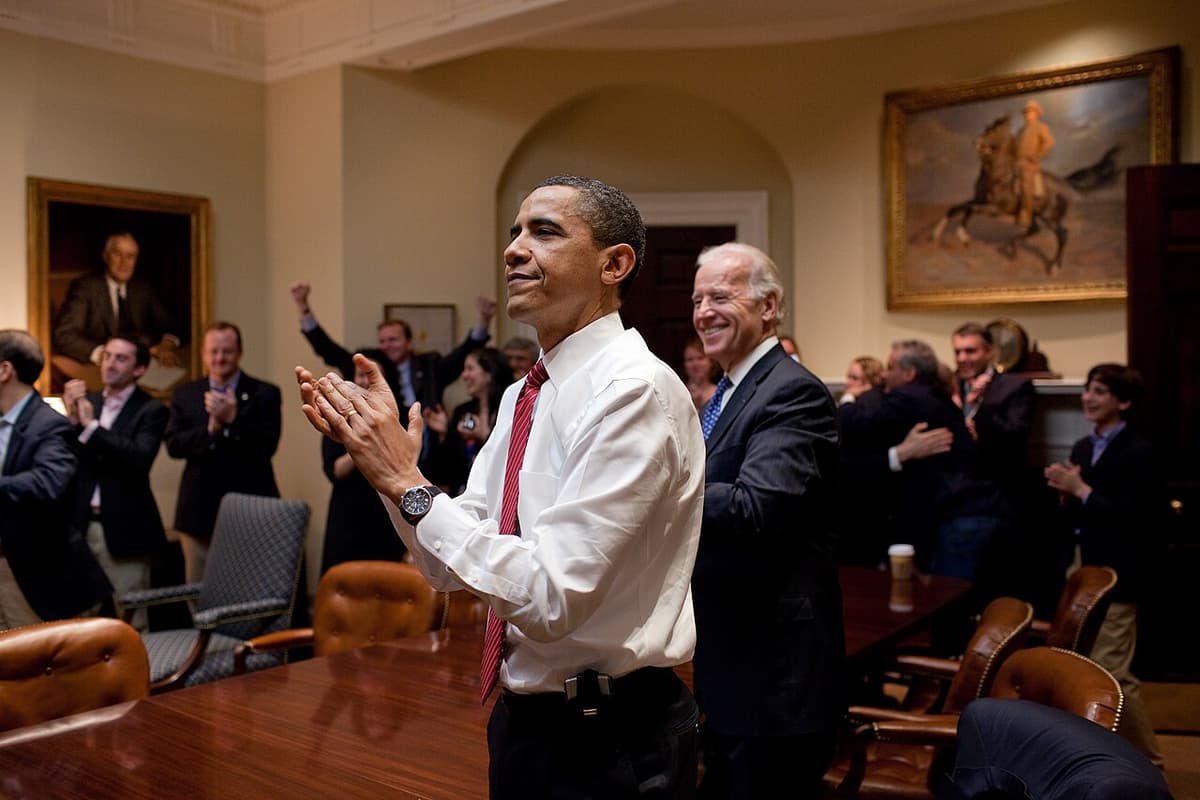
President Obama signed the Affordable Care Act, also known as Obamacare, in 2010 without a single Republican vote in the House or the Senate. When Mr. Obama announced it to the nation, Vice President Biden could be heard on a hot mic telling Mr. Obama, “This is a big f—ng deal.”
It was no exaggeration, particularly given that most Americans opposed it. The liberal Brookings Institution think tank recently wrote: “The ACA was conceived in unpopularity. In October 2010, the month before the midterm elections, only 42 percent of Americans had a favorable view of the ACA. Republicans hated it — only 11 percent held a positive view — and independents didn’t like it, either (only 34 percent were favorable toward the ACA). Even among Democrats, approval stood at just 69 percent, down nine points from six months earlier.”
Democrats gambled that two things would eventually happen.
First, Democrat politicians expected those without health care insurance, pre-Obamacare, to become a large, loud and sympathetic special interest voting group.
Second, when Obamacare failed to fulfill its ridiculous free lunch promises — bend the cost curve; save the average family $2,500 a year in premiums; allow people to keep their doctor and their health care plan; reduce the deficit; improve quality; reduce visits to emergency rooms; provide greater accessibility to providers; etc. — Democrats would be ready with a “solution.” Whether they call it “single payer,” “the public option” or “Medicare for all,” the federal government (taxpayers) should pay.
Democrats knew few politicians would dare describe health care as a commodity like a car, a computer or a flat-screen TV. They bet few Republicans would say, “If the goal is accessibility, at the cheapest cost with the best incentives for innovation, this requires more competition and less government interference.”
Brookings writes, “By March 2023, 62 percent of Americans had a favorable view of Obamacare. … Democrats are now nearly unanimous (94 percent) in viewing (the Affordable Care Act) positively, along with 64 percent of independents. … (A)pproval among Americans who identify as Republicans now stands at 36 percent — five times more support than the ACA enjoyed with the party’s loyalists in 2012.”
As for the federal government’s role, Brookings writes: “As Obamacare was just beginning to come online in 2013, Gallup found that just 42 percent of Americans believed it was ‘the responsibility of the federal government to make sure all Americans have healthcare coverage.’ By the end of 2024, the proportion endorsing this idea had risen to 62 percent. The Pew Research Center asked a similar question in November 2025 — ‘Is it the federal government’s responsibility to make sure all Americans have health care coverage?’ — and found that 66 percent of Americans responded in the affirmative.”
The Constitution limits the duties and obligations of the federal government. Health care insurance is not included. A federal takeover is not the only path forward.
The former Democrat presidential candidate, George McGovern, a former senator with unquestioned liberal bona fides, wrote a 2008 Wall Street Journal op-ed titled “Freedom Means Responsibility.” McGovern wrote: “Buying health insurance on the internet and across state lines, where less expensive plans may be available, is prohibited by many state insurance commissions. Despite being able to buy car or home insurance with a mouse click, some state governments require their approved plans for purchase or none at all. It’s as if states dictated that you had to buy a Mercedes or no car at all.”
What about those who cannot afford health care insurance or those with preexisting conditions?
Alexis de Tocqueville, in “Democracy in America,” marveled at the generosity of the American people, and at their willingness to arrange mutual aid societies to help the needy. Tocqueville said, “The Americans make associations to give entertainment, to found seminaries, to build inns, to construct churches, to diffuse books, to send missionaries to the antipodes; in this manner, they found hospitals, prisons and schools.”
Health care is a commodity. The “answer” is free markets, competition, and fee for services. Many states have set up high-risk pools for those with preexisting conditions. As for the poor, America is, as Tocqueville found, a caring, generous nation. If government got out, the people would step in. But good luck trying to win elections while making such an argument.
Creators.com