Of Mice and Men: Europe Faces the Russia Threat
Faced with the largest threat to the continent’s security since World War II, Europe’s leaders seem paralyzed.

“Why do 450 million wealthy Europeans need 340 million Americans to protect themselves from 140 million Russians?” is how the head of Transatlantic Networks, Andrew Denison, frames the continent’s quandary. The European Union’s foot-dragging over a 90-billion euro loan to Ukraine suggests that old habits of relying on America die hard. Amid the most serious threat to Europe’s security since 1945, EU politicians are prone to paralysis.
To be sure, the decision to move ahead on the loan is good news for Ukraine, which needs the money to fund its war effort in the year ahead. It suggests, too, that the Europeans, despite the dithering leading up to the loan agreement, could yet get their collective act together on an independent security policy in the absence of American largesse. It’s telling, though, that the EU quailed from confronting Russia over how to structure the loan to Kyiv.
The initial plan for the loan had called for borrowing against some $160 billion in frozen Russian central bank assets that are held in the central European depository, Euroclear. Germany’s chancellor, Friedrich Merz, had pushed this scheme despite what he called “questions of international law” and the idea that it raised “fundamental issues concerning the euro’s role as a global reserve currency.” Yet Herr Merz insisted: “This must not hold us back.”
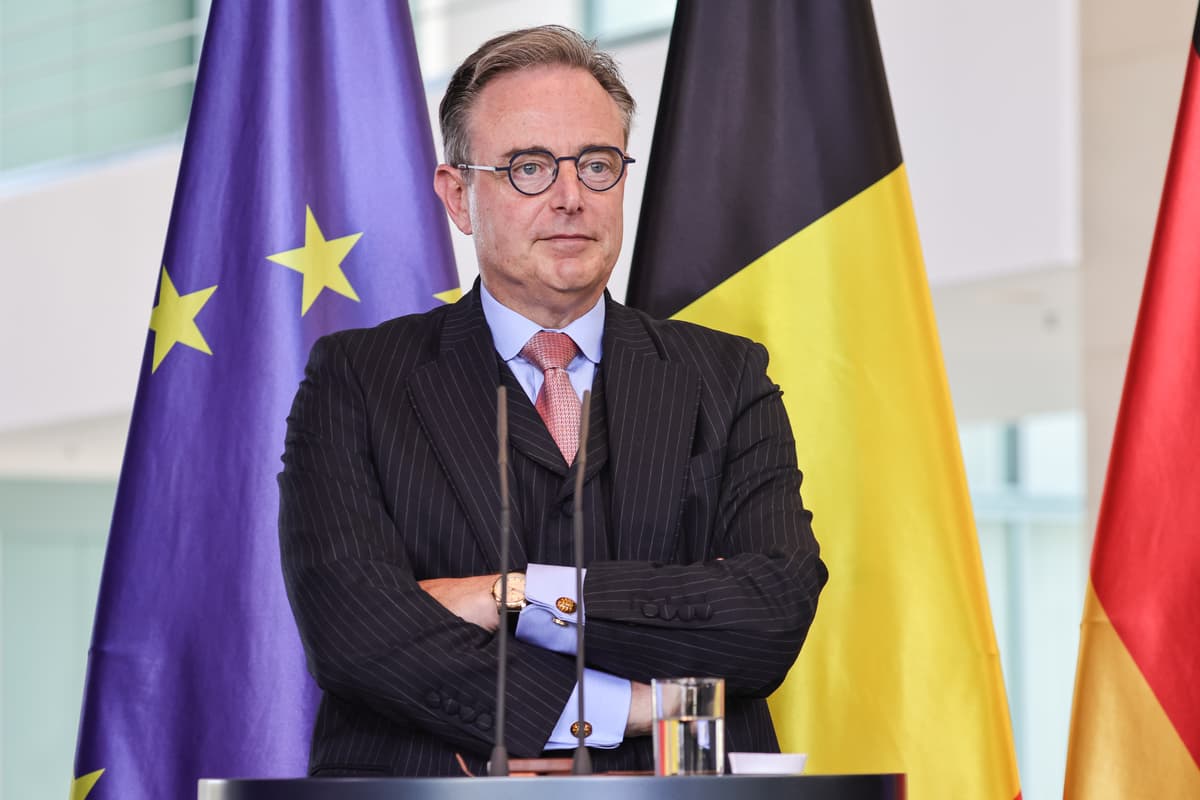
Not so fast, averred the Belgian premier, Bart De Wever. Brussels, after all, is where the Russian money is stashed. Mr. De Wever feared that Belgium would be on the hook for the spondulix if Russia demanded back its missing money. Other EU leaders, too, were rattled when Russia threatened to retaliate financially against EU firms by seizing any assets they still had remaining in Russia. Moscow, too, last week filed a lawsuit against Euroclear.
All this was too much for the Europeans, who dropped the plan to use Russian assets in the loan to Kyiv. “It was clearly just too complicated,” Herr Merz lamented. While the loan shows “Europe’s commitment to Ukraine’s fight against Russian aggression,” the Financial Times’ Ben Hall writes, the tortuous path by which the EU “reached its decision hardly sends an unequivocal message.”
It’s the latest reminder that EU leaders are quick to sound the alarm over a Russian victory in Ukraine — and to accuse President Trump of appeasement. Yet the EU’s political divisions themselves pose a stumbling block to action. Hungary’s Viktor Orban agrees on nearly nothing with, say, President Emmanuel Macron. The same can be said of, say, Mr. Trump and Governor Gavin Newsom. Yet unlike in America, EU policy decisions require unanimity.
We get that America has had its own trouble building consensus on how to respond to the Kremlin’s aggression. In nearly four years of war, no American leader has yet given a coherent and inspiring call to arms the way, say, FDR did after the attack on Pearl Harbor. There’s something to the point leveled by some critics that America has given Kyiv enough aid to avoid defeat, but not enough to win. For Europe as well as America, it’s a time for choosing.
“We will support Ukraine in its defense for as long as it takes,” Herr Merz vows. Germany, to its credit, is rearming, and even inching toward conscription. Will that give Mr. Putin pause? Of the loan, a “jubilant” Mr. De Wever says “you should not complain about the color of the cat; if it can catch a mouse it is fine.” Quoth the Wall Street Journal: “It’s hard to believe Vladimir Putin can wreak four years of bloody havoc in Europe and still may get his money back.”