Pill Forms of Wegovy and Zepbound Are Expected To Increase Weight-Loss Market, but High Costs Are a Concern
The first pills are expected to hit the market next month and attract people who don’t want to give themselves shots.
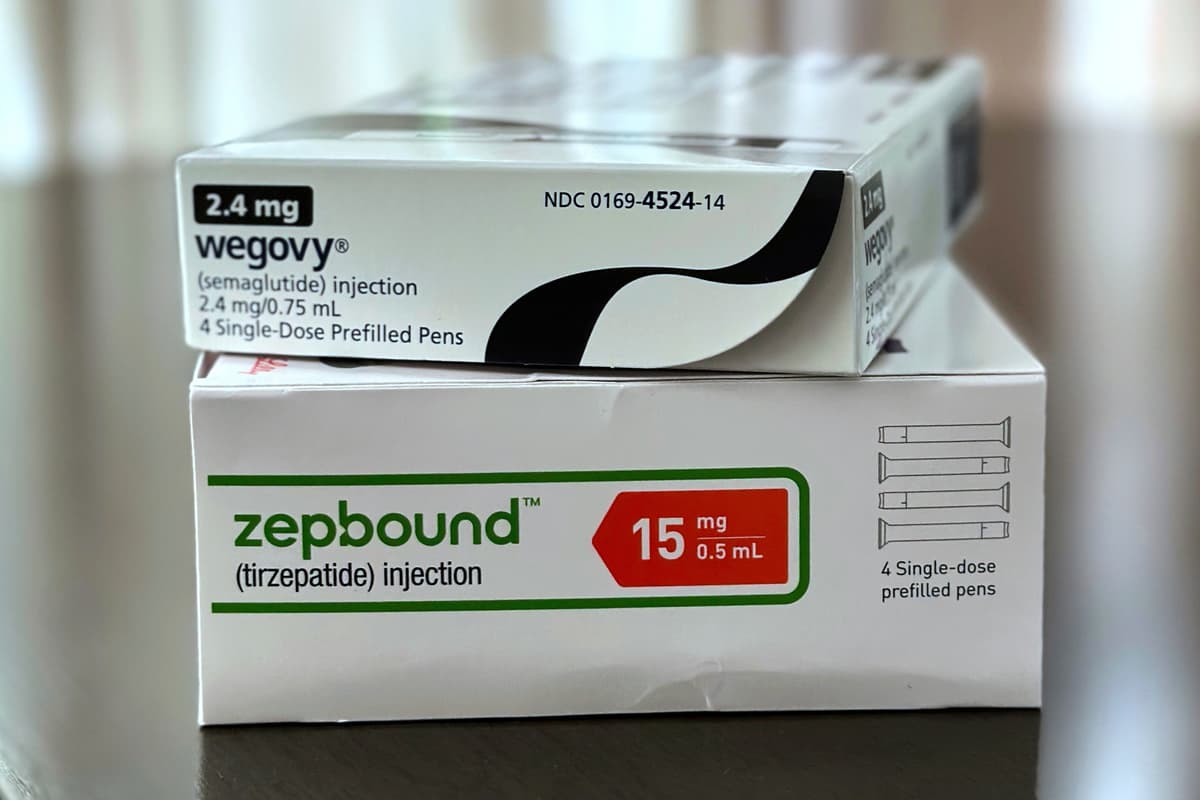

The weight loss medication war is entering a new phase as federal health regulators have given approval to Wegovy-maker Novo Nordisk to launch a pill form of the weight-loss treatment in the United States.
Novo says it plans to start selling the drug next month. The long anticipated oral version of the medication is expected to expand the number of patients because some people who shied away from self-administered shots are expected to take the pill form.
“A brand new effective pill for weight loss gives people greater flexibility to choose a GLP-1 treatment that can fit in their daily routine and preferences,” the president and chief executive officer of the Obesity Action Coalition, Joe Nadglowski says.
Novo hopes to gain market share back from Eli Lilly which is becoming the dominant weight loss drugmaker with its Zepbound injectable. Studies have shown Zepbound outperforms Wegovy for weight loss.
An oral version of Zepbound is not expected to hit the market for several months, giving Novo an edge.
“As the first oral GLP-1 treatment for people living with overweight or obesity, the Wegovy pill provides patients with a new, convenient treatment option that can help patients start or continue their weight loss journey,” the president and chief executive officer of Novo Nordisk, Mike Doustdar, said in a release.
“We are very excited for what this will mean for patients in the US,” Mr. Doustdar continued.
Novo’s stock price jumped on the news but it was still trading nearly 50 percent lower than its 52 week high.
The pill form of Wegovy contains a much larger dose of the GLP-1 because the oral version does not absorb as effectively as the injectable version. The daily 25 mg pill had a similar weight loss outcome as patients on the once-weekly 2.4 mg Wegovy shot. Studies showed an average weight loss of 16.6 percent for people who stayed on the treatment.
Novo has agreed to sell the initial 1.5 mg starter doses of the pills at $149 a month as part of a drug price agreement with President Trump. A spokeswoman for Novo told the Sun that full details around prices for other doses and savings offers will be available in early January. Analysts have predicted that they will be cheaper than the injectable form of Wegovy.
Lilly hopes to get approval to sell its pill form of Zepbound by March. A late-stage trial of its once-daily oral pill helped patients maintain weight loss achieved with injectable drugs but found it was not as effective as Zepbound shots. It also plans to sell starter doses at $150 a month.
One advantage Lilly will have over Novo is that its pill can be taken at any time of the day without concerns about food or drink. The Wegovy pill needs to be taken first thing in the morning on an empty stomach and patients will need to wait 30 minutes before eating or drinking.
A new class of weight loss drugs is also on the horizon. Lilly also says testing of its next-generation weight loss drug helped patients lose significantly more than Zepbound. A Phase 3 trial found that patients lost an average of 28.7 percent of their body weight with the new injectable. The test was so successful in helping people shed weight that some participants dropped out of the study early because they had lost so much weight that they perceived it as excessive.
The market for weight loss drugs is big and expanding but cost concerns remain an issue for its continued growth
About one in eight adults say they are currently taking a GLP-1 drug to lose weight or treat a chronic condition, according to a KFF Health Tracking Poll. BMO Capital markets has predicted the global market for the growing and lucrative weight-loss drugs will reach $100 billion by 2035.
Many insurance companies — including those under the Affordable Care Act — have balked at covering the drugs, however, because of their high prices. The drugs have been too expensive for many patients to pay out-of-pocket — especially on a long-term basis.
In response, both Novo and Lilly have started lowering prices of their weight loss drugs for self-pay customers. The drug makers are now selling the drugs directly to consumers through their websites with starting doses as low as $199 a month and higher doses for under $450 a month. That compares to list prices north of $1,000 a month.
Those price tags still put the drugs out of reach of many Americans. More than half — 56 percent — of users say weight loss drugs were difficult to afford, including one in four who say they were “very difficult” to afford, according to a new KFF survey.
Mr. Trump’s deal with the drug companies will lower what they charge Medicaid programs for weight loss drugs. Under the agreement, Medicare enrollees will have access to them next year with a $50 copay. Some state Medicaid programs will also offer the drug with the lower copay.