
Plan B for the Democrats?
The National Popular Vote Interstate Compact is inching toward adoption.
Could the Electoral College wind up a casualty in what the Times calls the â74-day sprint to Election Dayâ? With the polls tightening in the swing states, a âbruising battleâ awaits, the Times says. One can already imagine the outcry on the left if Vice President Harris looks poised to win the popular vote without securing an electoral majority. In that event, count on the so-called defenders of freedom and the Constitution to demand the end of the Electoral College.
It turns out that there is already a plan afoot â one thatâs been simmering for years â to elude the Framersâ rules for selecting the chief executive and hand the presidency to the winner of the popular vote. The scheme goes by the National Popular Vote Interstate Compact. States that join the compact agree to require their delegates to the Electoral College to vote for the candidate who gets the most votes nationally on Election Day.
One can see the appeal of such an arrangement for Democrats, who, twice since 2000, have been denied the presidency despite winning the national popular vote, first with President George W. Bush and again with President Trump. The dynamic could recur in 2024, compact backers fret. They fear Democrats running up big margins in cities and blue states like New York â while the GOP wins narrowly in states like Wisconsin.
It was Vice President Goreâs defeat in 2000 that spurred the popular vote compact effort. The New Yorkerâs Hendrik Hertzberg, described by the editor of the Sun as the planâs âmost eloquent advocate,â hails the compact as a means âtoward making the United States of America something more closely resembling a modern democracy.â That could be true. Yet, it was one of the concerns of the Framers to avoid the dangers of direct democracy.
They could, after all, have arranged for the commander in chief to be selected by a majority of votes cast on Election Day. The Electoral College, first and foremost, preserves a role for the states in our federal system. The requirement to achieve a majority of electoral votes ensures, too, that presidents have the backing of a broad national coalition â and not just a narrow majority of support from a handful of states or a particular region.
The National Popular Vote compact at least pays homage, to some degree, to the idea of the Electoral College. It would work, Mr. Hertzberg avers, âwithout changing a word of the Constitution.â It is designed to go into effect once a sufficient number of states, with a total of at least 270 electoral votes â enough for a majority in the College â agree to join. So far 18 states â most recently Maine â and the Columbia District, with 209 electoral votes, have signed up.
That means but a handful of states, totalling 61 electoral votes, are needed to put the compact into effect. Four states, totaling 50 votes, have legislation pending to join, the compact reports. If the compact succeeds, backers like left-leaning Common Cause croon, it will prove a boon for democracy and âforce candidates to spend time engaging with voters in all 50 states,â not âjust a handfulâ of âswing states.â Itâs more accurate to see it as a gift to the Democrats.
Would the compact run crosswise to the Constitution? The parchment forbids any state to âenter into any Agreement or Compact with another Stateâ without the okay of Congress â which is iffy. Yet backers like Mr. Hertzberg remind that the same document directs that âEach State shall appoint, in such Manner as the Legislature thereof may direct, a Number of Electorsâ â which defenders insist is a green light for the states to adopt the compact.
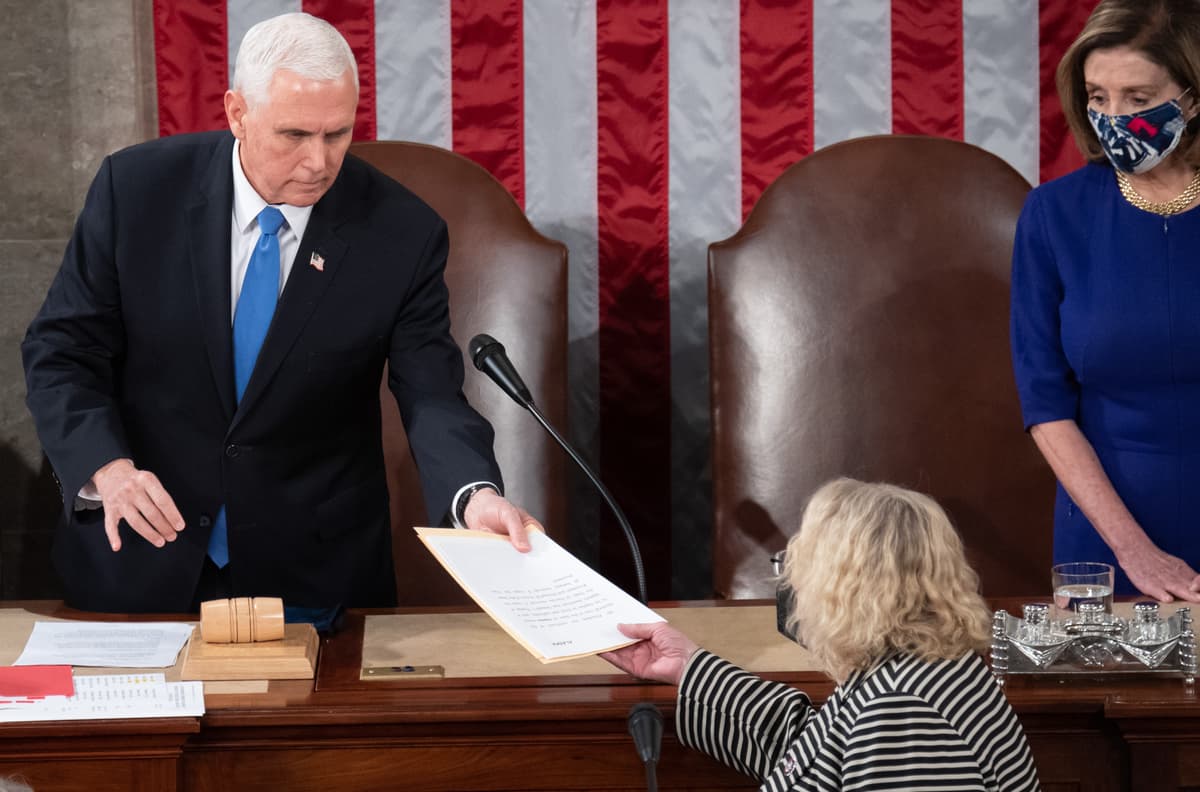
It could wind up as a Constitutional conundrum, just in time for the electoral vote count on January 6, 2025. As Ms. Harris hits the campaign trail, she âis not leading in a single battleground state,â Newsweek quotes a poll as saying. âHistory is littered with presidential candidates who roused their partisans at conventions,â the Times warns, but âfall short come November.â The Democrats just might have an ace in the hole if Ms. Harris fails to close the deal.