


Shane Gillis’s Crass ‘SNL’ Monologue Told Uncomfortable Truths About Gym Decency and Decorum
By CAROLINE DOWNEY
|Although Walt Whitman is credited — or blamed — as the father of American free verse, those sprawling lines exhibit an underlying instinct for craft and cohesion.
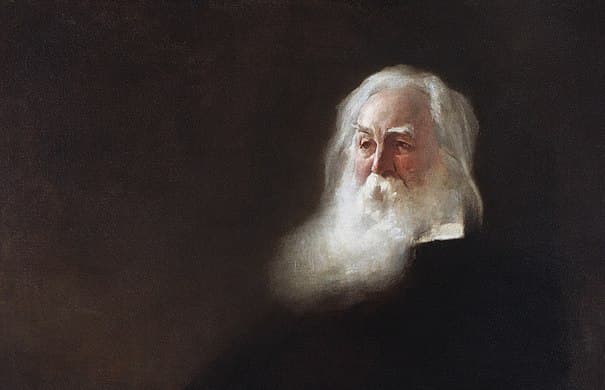
In 1855, on the publication of the first edition of “Leaves of Grass,” Ralph Waldo Emerson wrote to Walt Whitman (1819–1892), hailing him “at the beginning of a great career.” While less adulatory readers labeled him a “pretentious ass,” Whitman had this sentence of Emerson’s embossed in gold on the cover of the book’s second edition, a seminal occurrence of the later omnipresence of the back-jacket blurb. Undeniably, Whitman holds a place of significance in the developing tradition of the American poetic voice. His lines in their expansive sprawl hint at the irrepressible energy of the nineteenth-century nation in its adolescence, emerging from the chaos of war to try conclusions at its own frontiers. But although he is credited — or blamed — as the father of American free verse, those sprawling lines exhibit an underlying instinct for craft and cohesion, as today’s Poem of the Day, “A Noiseless Patient Spider,” illustrates. The poem’s two five-line stanzas, though neither rhymed nor strictly metrical, echo the cadences of biblical poetry. They exhibit, as well, a baseline accentual pentameter pulse, to which the lines expand or contract, suggesting the movements of the spider, a figure for the human soul, as it creeps, spins, and launches itself on slender filaments into its own unknown future.
By CAROLINE DOWNEY
|
By ALEX ZDAN
|
By JOSEPH CURL
|
By TOM DEIGNAN
|
By JENNIFER DOHERTY
|
By LUKE FUNK
|
By THE NEW YORK SUN
|
By MATTHEW RICE
|In 1855, on the publication of the first edition of “Leaves of Grass,” Ralph Waldo Emerson wrote to Walt Whitman (1819–1892), hailing him “at the beginning of a great career.” While less adulatory readers labeled him a “pretentious ass,” Whitman had this sentence of Emerson’s embossed in gold on the cover of the book’s second edition, a seminal occurrence of the later omnipresence of the back-jacket blurb. Undeniably, Whitman holds a place of significance in the developing tradition of the American poetic voice. His lines in their expansive sprawl hint at the irrepressible energy of the nineteenth-century nation in its adolescence, emerging from the chaos of war to try conclusions at its own frontiers. But although he is credited — or blamed — as the father of American free verse, those sprawling lines exhibit an underlying instinct for craft and cohesion, as today’s Poem of the Day, “A Noiseless Patient Spider,” illustrates. The poem’s two five-line stanzas, though neither rhymed nor strictly metrical, echo the cadences of biblical poetry. They exhibit, as well, a baseline accentual pentameter pulse, to which the lines expand or contract, suggesting the movements of the spider, a figure for the human soul, as it creeps, spins, and launches itself on slender filaments into its own unknown future.
Already have a subscription? Sign in to continue reading
Cancel anytime
By continuing you agree to our Privacy Policy and Terms of Service.
Cancel anytime