


True Luxury Means Far More Than a Logo
By VIVEK NAGRANI
|Willa Cather’s poem argues that spring is more melancholy than winter. With its frailty, spring tells us that it must pass, while winter, with its hardness, tells us that the origin of beauty is in eternal law.
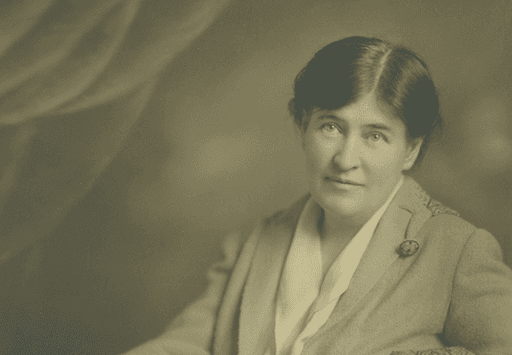
Sure, you know of Willa Cather. You know her as the author of such American novels as “My Ántonia,” “O Pioneers,” and “Death Comes for the Archbishop.” But, as noted when her poem “Fides, Spes” appeared as a Poem of the Day in March, she was also a poet. And here in the cold midwinter, it’s worth looking at another of her poems, “I Sought the Wood in Winter.”
This Cather poem, offered on a Friday to close the week, is a parallel to A.E. Housman’s “Loveliest of trees, the cherry now,” which was Poem of the Day on Monday to open the week. Both poems describe visiting trees in spring and winter, both treat beauty and the passage of time, both seek consolation for the fading of the temporary.
“I Sought the Wood in Winter,” however, takes up the philosophical roots of beauty. The poem is written in iambic trimeter lines, rhymed on the second line — which gives a sense of half-meter quatrains, the first and third lines in the quatrain ending with an unstressed syllable to emphasize the line-break caesura into what otherwise would be a six-foot line. And in this meter, the poem argues that spring is more melancholy than winter. With its frailty, spring tells us that it must pass, while winter, with its hardness, tells us that the origin of beauty is in eternal law.
By VIVEK NAGRANI
|
By JENNIFER DOHERTY
|
By SHARON KEHNEMUI
|
By MATTHEW RICE
|
By GEORGE WILL
|
By DONALD KIRK
|
By ROSS ANDERSON
|
By JULIE BURCHILL
|Sure, you know of Willa Cather. You know her as the author of such American novels as “My Ántonia,” “O Pioneers,” and “Death Comes for the Archbishop.” But, as noted when her poem “Fides, Spes” appeared as a Poem of the Day in March, she was also a poet. And here in the cold midwinter, it’s worth looking at another of her poems, “I Sought the Wood in Winter.”
This Cather poem, offered on a Friday to close the week, is a parallel to A.E. Housman’s “Loveliest of trees, the cherry now,” which was Poem of the Day on Monday to open the week. Both poems describe visiting trees in spring and winter, both treat beauty and the passage of time, both seek consolation for the fading of the temporary.
“I Sought the Wood in Winter,” however, takes up the philosophical roots of beauty. The poem is written in iambic trimeter lines, rhymed on the second line — which gives a sense of half-meter quatrains, the first and third lines in the quatrain ending with an unstressed syllable to emphasize the line-break caesura into what otherwise would be a six-foot line. And in this meter, the poem argues that spring is more melancholy than winter. With its frailty, spring tells us that it must pass, while winter, with its hardness, tells us that the origin of beauty is in eternal law.
Cancel anytime
By continuing you agree to our Privacy Policy and Terms of Service.