

Washington Post Ordered To Reinstate Left-Wing Columnist Who Protested Her Firing by Posting a Picture of Herself Burning the Paper
By BRADLEY CORTRIGHT
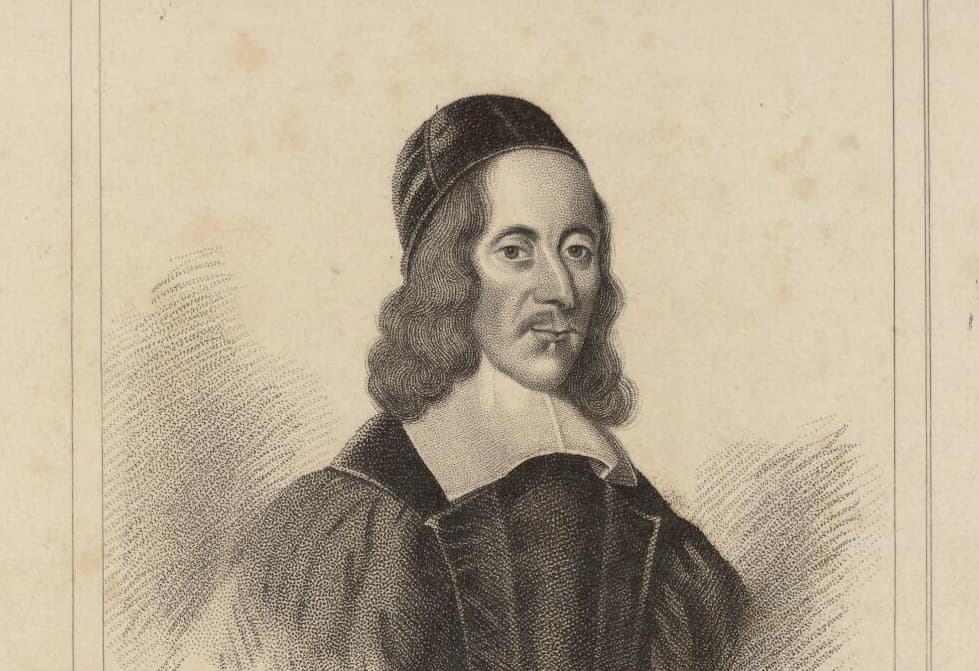
|George Herbert’s poetry was hailed by T.S. Eliot for making plain both an individual mind and the mind of an age.

Published:
Updated:
The Christian liturgical season of Lent opens today, on Ash Wednesday. As our Poem of the Day, by the English metaphysical poet and divine George Herbert (1593–1633) declares, “Welcome, dear feast of Lent.”
T.S. Eliot (1888–1965) initially dismissed Herbert as a devotional and therefore a minor poet. Eliot later decided, however, that Herbert’s work, taken as a whole, “comes to reveal itself as a continued religious meditation within an intellectual framework; and . . . discloses to us the Anglican devotional spirit of the first half of the seventeenth century.” In other words, it’s not that Herbert wrote profound devotional poems that raises him to greatness. It’s that the entire body of his poetry makes plain both an individual mind and the mind of an age.
In today’s poem, in aabccb stanzas whose b lines disrupt the general pentameter with trimeter, we can see that mind at work. The speaker not only welcomes Lent as a season and a practice, but proceeds to ruminate on it as an idea. You must love Lent, he says, for if you don’t, then surely you love anarchy instead. If you can’t be actually crucified with Christ, you can at least walk the way of the desert and the cross. You don’t walk alone, for the one who first walked that way walks with you, to “strengthen [your] decays.” Fasting, you feast on spiritual discipline. Among the poor whom Christ feeds, you may number your own soul.
By BRADLEY CORTRIGHT
|
By MARK GLANVILLE
|
By CONRAD BLACK
|
By MATTHEW RICE
|
By GEORGE WILLIS
|
By MATTHEW RICE
|
By CAROLINE McCAUGHEY
|
By ROSS ANDERSON
|The Christian liturgical season of Lent opens today, on Ash Wednesday. As our Poem of the Day, by the English metaphysical poet and divine George Herbert (1593–1633) declares, “Welcome, dear feast of Lent.”
T.S. Eliot (1888–1965) initially dismissed Herbert as a devotional and therefore a minor poet. Eliot later decided, however, that Herbert’s work, taken as a whole, “comes to reveal itself as a continued religious meditation within an intellectual framework; and . . . discloses to us the Anglican devotional spirit of the first half of the seventeenth century.” In other words, it’s not that Herbert wrote profound devotional poems that raises him to greatness. It’s that the entire body of his poetry makes plain both an individual mind and the mind of an age.
In today’s poem, in aabccb stanzas whose b lines disrupt the general pentameter with trimeter, we can see that mind at work. The speaker not only welcomes Lent as a season and a practice, but proceeds to ruminate on it as an idea. You must love Lent, he says, for if you don’t, then surely you love anarchy instead. If you can’t be actually crucified with Christ, you can at least walk the way of the desert and the cross. You don’t walk alone, for the one who first walked that way walks with you, to “strengthen [your] decays.” Fasting, you feast on spiritual discipline. Among the poor whom Christ feeds, you may number your own soul.
Cancel anytime
By continuing you agree to our Privacy Policy and Terms of Service.