


‘Pretend I’m on the Ballot,’ Trump Tells Supporters, Hoping To Grow Coattails and Scratch ‘the Six-Year Itch’
By DEAN KARAYANIS
|Rudyard Kipling’s was a talent that will not be buried under either the bombastic recitation of some of his devotees or the sneer of all of his detractors.
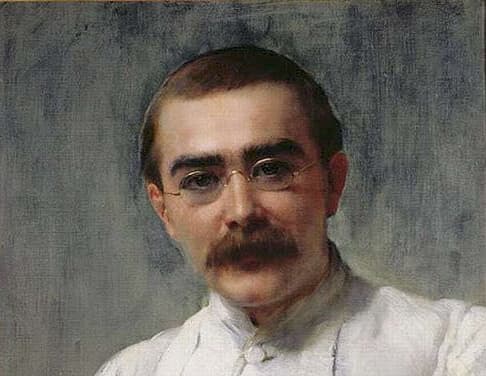
Once or twice a decade, someone makes the case for Rudyard Kipling (1865–1936), having rediscovered his depth and skill. And fairly so, for his was a talent that will not be buried under either the bombastic recitation of some of his devotees or the sneer of all of his detractors. In “The Way through the Woods,” he uses three- and four-foot lines, with an irregular rhyme scheme and echoes of the French forms that use repeated elements. (The phrase “through the woods” ends seven of the poem’s 25 lines.) And what starts as a little nature poem about the woods reclaiming an abandoned road becomes by the end a strange little invocation of ghosts and a glimpse of a mystical world.
By DEAN KARAYANIS
|
By JOTAM CONFINO
|
By JOTAM CONFINO
|
By LUKE FUNK
|
By MATTHEW RICE
|
By MATTHEW RICE
|
By ALEX ZDAN
|
By MATTHEW RICE
|Once or twice a decade, someone makes the case for Rudyard Kipling (1865–1936), having rediscovered his depth and skill. And fairly so, for his was a talent that will not be buried under either the bombastic recitation of some of his devotees or the sneer of all of his detractors. In “The Way through the Woods,” he uses three- and four-foot lines, with an irregular rhyme scheme and echoes of the French forms that use repeated elements. (The phrase “through the woods” ends seven of the poem’s 25 lines.) And what starts as a little nature poem about the woods reclaiming an abandoned road becomes by the end a strange little invocation of ghosts and a glimpse of a mystical world.
Already have a subscription? Sign in to continue reading
Cancel anytime
By continuing you agree to our Privacy Policy and Terms of Service.