
Professor Sanctioned by University for a Satirical ‘Land Acknowledgment’ Wins First Amendment Case on Appeal
The court says students’ issues with the parody are ‘not grounds for the university retaliating against the professor.’
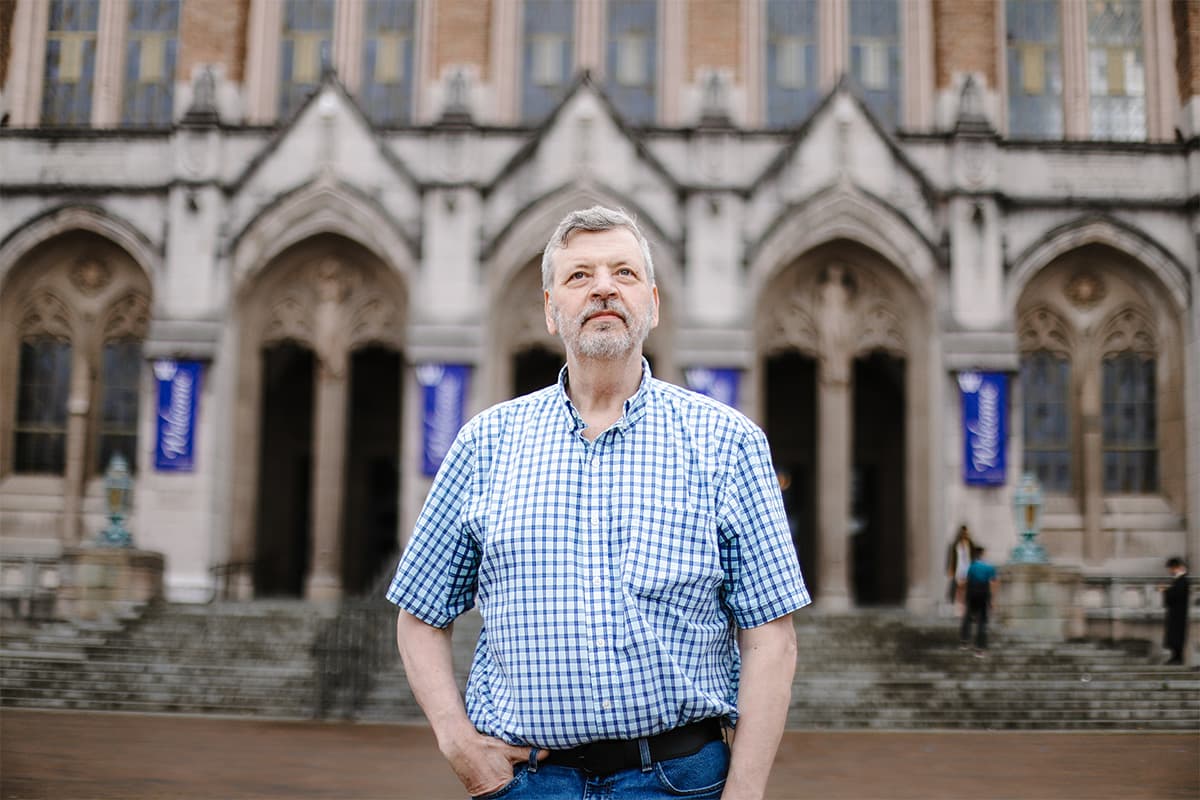
A computer science professor at the University of Washington is claiming victory after a three-judge panel on the U.S. Court of Appeals for the Ninth Circuit found that the university violated his First Amendment rights when it warned him against including a satirical land acknowledgment in his syllabus.
A three-judge panel on the Ninth Circuit ruled 2-1 in favor of the professor, Stuart Reges, and reversed the district court’s decision to grant UW summary judgment.
The dispute began when the Paul G. Allen School of Computer Science and Engineering encouraged professors to include the school’s acknowledgment that its campus “sits on occupied land” of the Coast Salish tribe in their syllabi. Mr. Reges criticized the land acknowledgment in emails to fellow faculty members.
In 2022, Mr. Reges ramped up his criticism of the land acknowledgment, creating a satirical version of it for his syllabus. The parody version stated, “I acknowledge that by the labor theory of property the Coast Salish people can claim historical ownership of almost none of the land currently occupied by the University of Washington.” His comment refers to John Locke’s theory that property rights are established by labor.
The university did not find the satire amusing, and created a panel to investigate whether Mr. Reges violated its policies by publishing his acknowledgement. The investigation concluded that the professor’s satire caused emotional harm to students, including a Native American student taking a leave of absence.
University officials did not punish Mr. Reges, but warned him that if he put his parody of the land acknowledgment in his syllabus again and it caused further disruptions, he could be subject to disciplinary action.
The university also created a competing class so offended students would not have to take Mr. Reges’ class.
Mr. Reges, who was represented by FIRE, sued the university in July 2022, arguing that his First Amendment rights were violated. A district court granted summary judgment to UW.
The Ninth Circuit reversed that decision and remanded the case to the district court to determine the appropriate relief.
The judge who wrote the opinion, Daniel Bress, a Trump appointee, said, “The First Amendment protects the free exchange of ideas.”
“When we place limits on what professors may say or impose punishment for the views they express, we destock the marketplace of ideas and imperil future generations who must be exposed to a range of ideas and readied for the disharmony of a democratic society,” Judge Bress said.
The court disagreed with UW’s argument that Mr. Reges’ syllabus constituted “government speech,” which is subject to a different level of scrutiny. Judge Bress said, “The record shows that Reges was speaking in his own capacity as a professor, and not on behalf of his employer.”
“In fact, the record reflects that students attributed the speech to Reges, as they argued that Reges’ speech warranted condemnation because it conflicted with [the university’s] views and policies on inclusivity,” he added.
He also said that students’ “discomfort with a professor’s views can prompt discussion and disapproval,” but that “discomfort is not grounds for the university retaliating against the professor.”
An attorney for FIRE, Gabe Walters, said in a statement that the Ninth Circuit’s decision is a “resounding victory for Professor Stuart Reges and the First Amendment rights of public university faculty.”
“The Ninth Circuit agreed with what FIRE has said from the beginning: Universities can’t force professors to parrot an institution’s preferred political views under pain of punishment,” Mr. Walters said.
The University of Washington said in a statement that it is evaluating the decision and its next steps.