Proportion of Convicted Criminals Arrested in ICE Sweeps Dwindles as Agent Scurry to Meet Detention Quota
The Trump administration’s dragnet is collecting asylum seekers, non-citizen residents, and alleged civil offenders who haven’t had their day in court.

In the glittering enclave of the MAGA-dominant Palm Beach, José Gonzalez had been a beloved fixture for decades — the charming manager of BiCE Ristorante who remembered every patron’s name and made the elite feel at home.
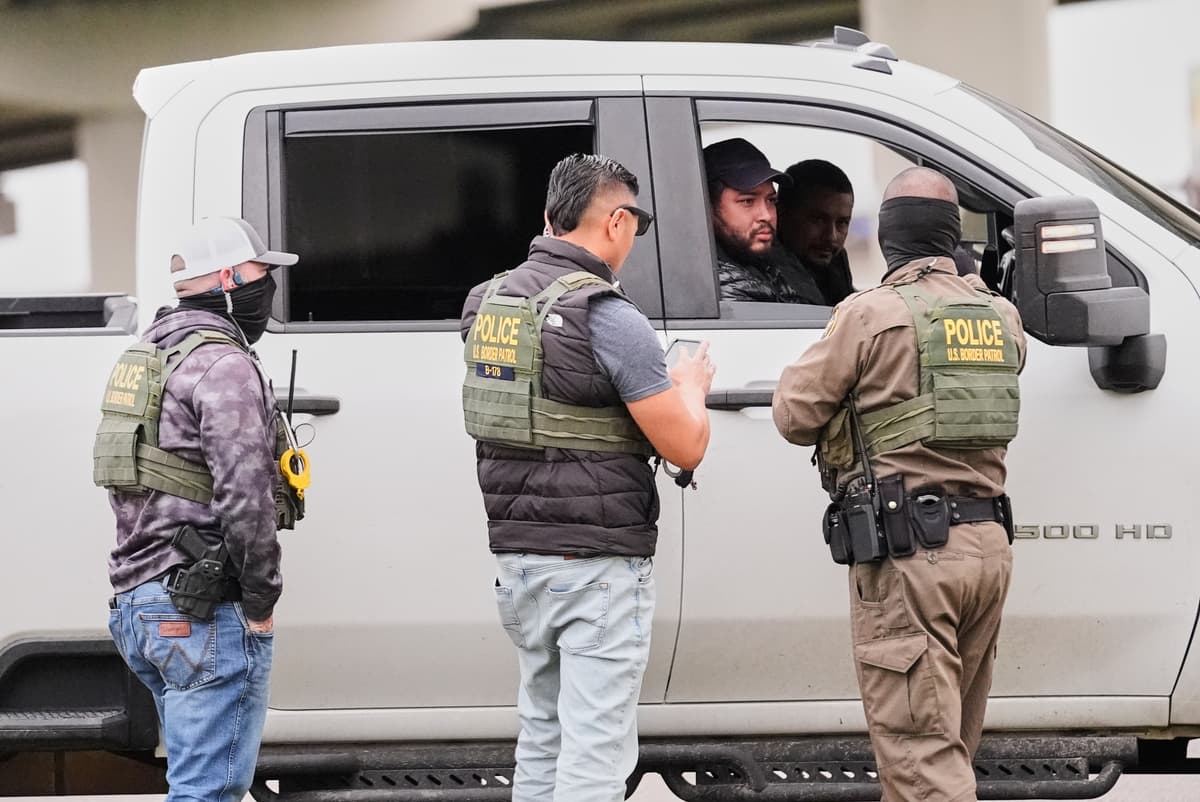
Yet on a routine December day, while running errands in his nephew’s pickup truck, the Mexico native was pulled over for darkly tinted windows, handed over to immigration authorities despite a valid work permit and pending asylum case, and vanished into the remote Everglades facility infamously known as “Alligator Alcatraz.”
With no criminal record nor violent history, a mere traffic stop swept a pillar of the community into detention for nearly two weeks, sparking outrage and rallies among the very wealthy circles he served. Mr. Gonzalez’s story, however, is no outlier. While he was released after 12 days in detention and much public outcry, many others in his situation have not shared the same fate.
When Immigration and Customs Enforcement agents descended on neighborhoods across America last year, the Trump administration framed the operations in stark terms. These were raids targeting dangerous criminals. The administration promised to remove what Homeland Security Secretary Kristi Noem repeatedly called “the worst of the worst.”
The data tell a different story.
Government records obtained through Freedom of Information Act requests reveal that almost three-quarters of people taken into ICE custody this fiscal year, beginning in October, had no criminal conviction whatsoever, with only five percent apprehended guilty of violent offenses.
“To me, someone is not a criminal if they do not have a criminal conviction. That is our judicial system in the United States,” Cato’s Director of Immigration Studies, David Bier, tells The New York Sun. “DHS has so perverted that understanding that now they have everyone convinced that anyone who’s ever been charged with a crime is therefore a criminal. That’s just untrue.”
The figures represent a dramatic shift in enforcement priorities. Under the Biden administration, roughly 53 percent of ICE arrests involved convicted criminals between January 20 and June 2024, according to Stateline review. That proportion dropped to 40 percent during the same period at the start of Mr. Trump’s second term, even as total arrests more than doubled.
For those with criminal records in ICE custody, the majority was not convicted of violent crimes. Only five percent of all detainees had violent criminal convictions, the Cato data show. Just eight percent had either violent or property crime convictions.
The most common criminal convictions among detainees fell into three categories: traffic offenses, vice crimes, and immigration violations such as illegal entry. Convictions for traffic violations other than DUI and hit-and-run incidents rose nearly fourfold, representing the most significant increase among the top 10 offense categories.
Data released by the Deportation Data Project at University of California-Berkeley show that of roughly 220,000 people arrested by ICE from January 20 through mid-October 2025, nearly 75,000 had no criminal record. That represents more than one-third of total arrests during the first nine months of Trump’s second term.
“The share of (apprehended criminals) has been going down significantly over the course of the year,” Mr. Bier says. “And the share and number of people without convictions and without even charges has been going up.”
Quotas Lead to Surge in Collateral Arrests
The surge in arrests of people without criminal records followed a May 2025 meeting where White House Deputy Chief of Staff Stephen Miller set a quota of 3,000 arrests per day. The previous target had been roughly 650 arrests daily during the first months of the administration.
“For the administration to meet its goal of 3,000 immigration arrests per day, or a quota of roughly one million removals per year, they necessarily have to sweep in people who pose absolutely no public safety threat,”the policy director at the American Immigration Council, Nayna Gupta, tells the Sun. “There simply aren’t enough non-citizens with criminal records to meet those targets.”
ICE officials reportedly encouraged officers to make warrantless arrests and to “turn the creative knob up to 11” in meeting detention targets, according to an email from the agency’s acting associate director of enforcement and removal. Agents received broader mandates for collateral arrests, meaning they could apprehend undocumented people who happened to be present with someone on a target list, such as family members in the same household.
“This is intentionally indiscriminate,” Mr. Bier says.
The arrest tactics sparked litigation across multiple cities. At Chicago, a judge ordered the release of 600 people arrested without warrants. A Washington, D.C. judge similarly halted warrantless arrests after an enforcement surge drew legal challenges.
The administration has enlisted other federal agencies as well, including the Drug Enforcement Administration, the U.S. Marshals Service, and the Bureau of Alcohol, Tobacco, Firearms and Explosives, to assist with immigration enforcement.
Despite the expansion, ICE has fallen short of its stated goals. The agency has arrested roughly 1,100 people per day in recent weeks, moving the daily average between January 20 and October 15 to 821 arrests, well below the 3,000-per-day target Miller demanded.
Geographic Disparities and Community Impact
The enforcement campaign has played out differently across states. Nearly half of all ICE arrests occurred at local jails and lockups, with arrests there concentrated in states that fully cooperate with the Trump administration.
“That’s the fastest way to clean data. If someone’s already in state or local custody, it’s easy to go get them,” Mr. Bier says.
In Northern California alone, ICE arrests more than tripled compared to the previous year. By September 2025, for the first time, people arrested in the state without criminal records outnumbered those with criminal convictions.
The shift, advocates say, reflects a turn toward street-level enforcement that sweeps in people going about their average day.
“The big reason for the change over the course of the year is that they’re going to Home Depots, going to car washes, harassing people on the street,” Mr. Bier says. “That’s leading to all these arrests of people who haven’t done anything.”
Homeland Security officials maintain that enforcement focuses on public safety threats. In September, the department highlighted arrests of individuals convicted of sexual conduct with minors, homicide, drug trafficking, and assault with deadly weapons.
Assistant Secretary Tricia McLaughlin defended the operations, stating that ICE was targeting “dangerous criminal illegal aliens” and taking them “off American streets.” She characterized arrested individuals as “violent thugs,” including “child pedophiles, drug traffickers, and burglars.”
The administration counts individuals with pending criminal charges as part of its “criminal alien” category, even without convictions. ICE detained approximately 45,000 people with only pending charges as of mid-June.
Officials argue that the expanded enforcement is necessary to restore order to the immigration system and protect American communities. The administration points to arrests of individuals with violent criminal histories as evidence that the operations are removing genuine threats.
To achieve the administration’s goals, Congress has provided substantial funding for expanded enforcement, approving approximately $ 170 billion in immigration enforcement spending over four years through the One Big Beautiful Bill Act, signed in July 2025. The package includes $45 billion for ICE detention capacity expansion and roughly $30 billion to hire 10,000 additional enforcement officers by the end of 2025.
The legal framework governing these operations raises questions about due process and judicial oversight.
“What the Trump administration is doing, while unprecedented in terms of indiscriminately sweeping in so many people who pose no public safety threat, is permitted under our current, outdated immigration legal system,” Ms. Gupta says. “If people are in violation of civil immigration law, the Department of Homeland Security is allowed to arrest and detain them, even when they have no underlying criminal conviction.”
She explains that the administration is exploiting the distinction between civil violations, including overstaying a visa, and criminal violations.
“What the Trump administration is purposely confusing for the American public is the difference between violations of civil immigration law and violations of criminal law, which in some cases could mean a public safety threat,” Ms. Gupta says.
“Basically, if the government accuses you of being removable, and you are a non-citizen, they can always detain you. Always,” adds Mr. Bier. “When it comes to just arresting someone, there’s basically no protection. If the agency wants to arrest you, they’ll go out and arrest you.”
He and Ms. Gupta noted that the statistics don’t include the number of citizens and legal residents who are caught up in the dragnet of indiscriminate community sweeps, in violation of legal boundaries.
“We’ve seen people with lawful status and even citizenship denied access to lawyers, phones, and a fair day in immigration court, which is required under basic due process,” Ms. Gupta says.
The consequences of this enforcement approach are multifold, Ms. Gupta says. The erosion of trust in both local and federal authorities causes communities to become afraid to report crimes. “We’re hearing that directly from sheriffs and police chiefs around the country,” she says.
It’s also straining the labor force.
“Even if the administration only arrests 1,000 people per day instead of 3,000, the rhetoric, propaganda, anti-immigrant narrative, and indiscriminate community arrests are enough to scare people away from work, school, and community life,” adds Ms. Gupta. “We’re hearing this across labor sectors, rural and urban communities nationwide.”
As arrests continue at elevated levels, the gap between rhetoric about targeting dangerous criminals and the actual composition of those detained could create a potential political liability for the president and his supporters, says Mr. Bier.
“I don’t think they believe it will affect politics much,” he says of the administration’s calculus. “The big question is the Hispanic vote. They’re harassing lots of people based on their appearance and the type of job they’re doing. That’s going to include citizens who can vote, their families — it could matter, but it remains to be seen.”