Proposed Washington State ‘Millionaire Tax’ Would Lead to Highest Tax Burden in Nation for Some Seattle Residents

With a slew of other state and local taxes, a Seattle worker making a million dollars a year would pay more than 57 percent of their salary in taxes.

John Moore/Getty Images
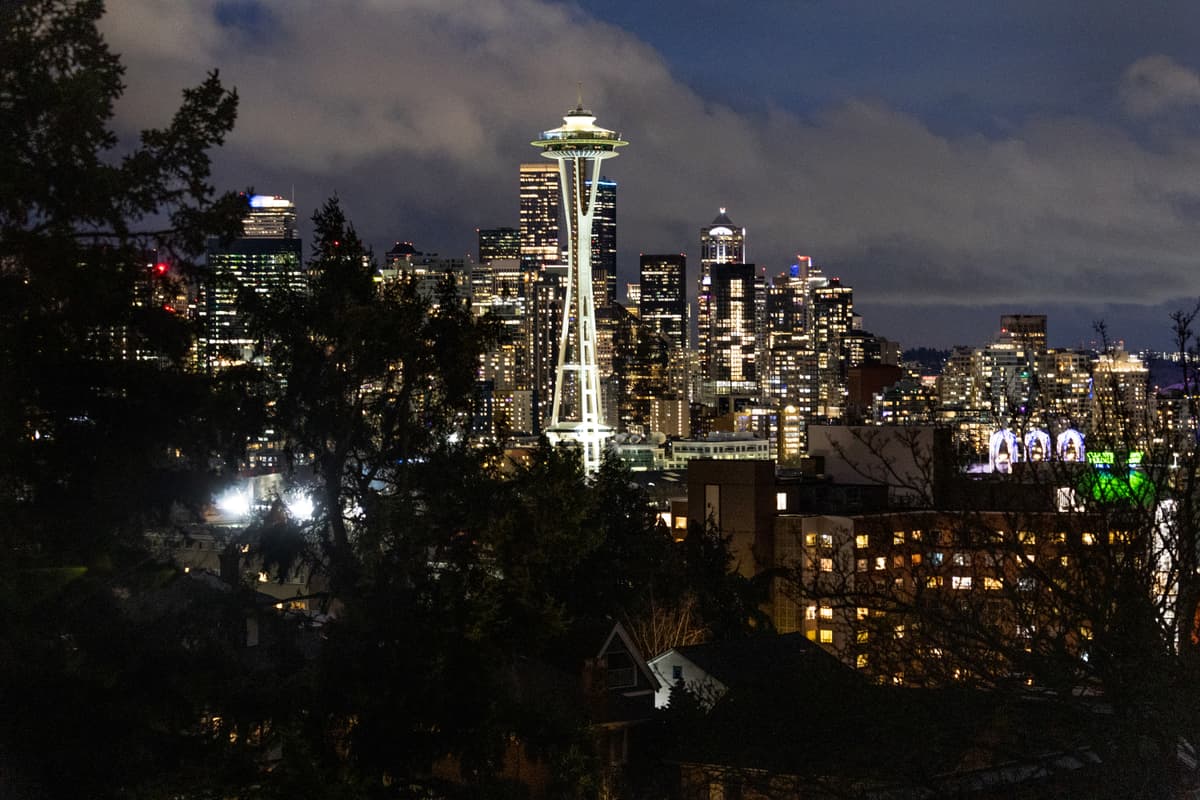
The Space Needle stands over the Seattle skyline. John Moore/Getty Images

Washington Governor Bob Ferguson used his State of the State address to throw his full weight behind a new revenue proposal: a 9.9 percent tax on adjusted gross income exceeding $1 million annually.

In the city of Seattle, where residents already face a slew of local taxes that total 8 percent of income, millionaires would pay more than 57 percent of their incomes in state and federal taxes if the proposal is enacted.

Addressing a joint session of lawmakers on the second day of the 60-day legislative session on Tuesday, Mr. Ferguson framed the proposal as a necessary step toward fiscal resiliency and equity. The governor argued that the state’s current tax structure places an undue burden on lower-income residents while letting the wealthiest off the hook.

“Our system takes too much in taxes from hard-working families, and not enough from the wealthy. Washington families in the bottom 20 percent pay a whopping 13.8 percent of their total income in taxes, while those whose income is in the top one percent pay only 4.1 percent of their income,” Mr. Ferguson told the chamber. 

“That’s not fair. That’s not right, and that’s why I’m calling for something truly historic — a millionaire’s tax,” he said.

If the proposed 9.9 percent tax is signed into law, Seattle’s highest earners would face top rates of more than 18 percent on wage income and the vesting of restricted stock units, the highest state and local combined rate in the nation. New York City’s rates for the same items comes in a 14.8 percent, according to the Tax Foundation.

The proposed tax is estimated to generate up to $3.5 billion annually, though Mr. Ferguson acknowledged that revenues would not reach state coffers until at least 2029. The delay is attributed to anticipated legal challenges and the time required to build the necessary collection systems.

Despite the timeline preventing the funds from addressing the immediate budget shortfall, Mr. Ferguson insisted the policy targets a minute fraction of the population.

“I’m calling for something truly historic, a millionaire’s tax,” he said. “I mean, someone who makes more than a million dollars in income in a single year. Less than one-half of 1 percent of Washingtonians will pay it.”

The proposal received a standing ovation from most Democrats, who hold majorities in both chambers, but met swift condemnation from Republicans.

Following the address, Republican State Senator Keith Wagoner of Sedro-Wooley delivered the opposition’s response. Mr. Wagoner accused the governor of reneging on previous promises to avoid new taxes.

“He said he would not sign a budget built on new and higher taxes,” Mr. Wagoner said, referencing Mr. Ferguson’s inaugural speech. “Less than five months later, the governor signed the majority Democrats’ bloated budget and the largest tax increase in Washington’s history. Whether he never intended to keep his word or simply couldn’t muster the courage to stand up to his party, it doesn’t really matter.”

Critics argue that an income tax remains unpopular with voters, noting that Washingtonians have rejected income tax proposals at the ballot box 10 times since the Supreme Court struck one down in 1932. Washington currently has no state income tax but does tax the capital gains of some high-income residents.

“Make no mistake, their proposals this session will pave the way to a full-blown income tax on all Washington workers,” Mr. Wagoner said.  “And right now, a Washington family of four has a state and local tax burden over $5,000 higher than the national average. You cannot make Washington more affordable by making it more expensive.”

Republicans also warned that initiating an income tax on high earners sets a precedent that could eventually see such taxes expanded to the middle class.

“This current administration and legislature have an unquenchable thirst for more taxes. They might start there, but don’t have any illusions that that’s where it’s going to end. It’s an income tax,” said Republican Senator Drew MacEwen, according to The Seattle Times

House Republican Leader Drew Stokesbary reinforced this concern, arguing that the tax bracket would inevitably widen.

“House Republicans are united against an income tax on anyone because we know that eventually an income tax on anyone will turn into an income tax on everyone,” Mr. Stokesbary said. He noted earlier at a Seattle CityClub event: “It might be millionaires today, but it’s going to be you and me tomorrow — and I think that’s my real deep concern as the budget continues to grow.”

The governor, however, urged lawmakers to act quickly. “Let’s seize this opportunity, this session, to make our tax system more fair,” Mr. Ferguson said. “We must be bold and continue to make historic investments. I’m confident we are well-positioned to address internal challenges and meet the moment with unity and clarity.”

Lawmakers have until the session ends on March 12 to debate the measure.


The New York Sun

© 2026 The New York Sun Company, LLC. All rights reserved.

Use of this site constitutes acceptance of our Terms of Use and Privacy Policy. The material on this site is protected by copyright law and may not be reproduced, distributed, transmitted, cached or otherwise used.

The New York Sun

Sign in or  create a free account

or
By continuing you agree to our Privacy Policy and Terms of Use