‘Remember the Alamo,’ but for What? Dispute Over Interpretation of History Leads to Trust CEO’s Ouster
Disagreements over the iconic Texas landmark centered on whether exhibits should focus on the 1836 siege where Davy Crockett and almost 200 others died, or the mission’s role in the broader history of the region.
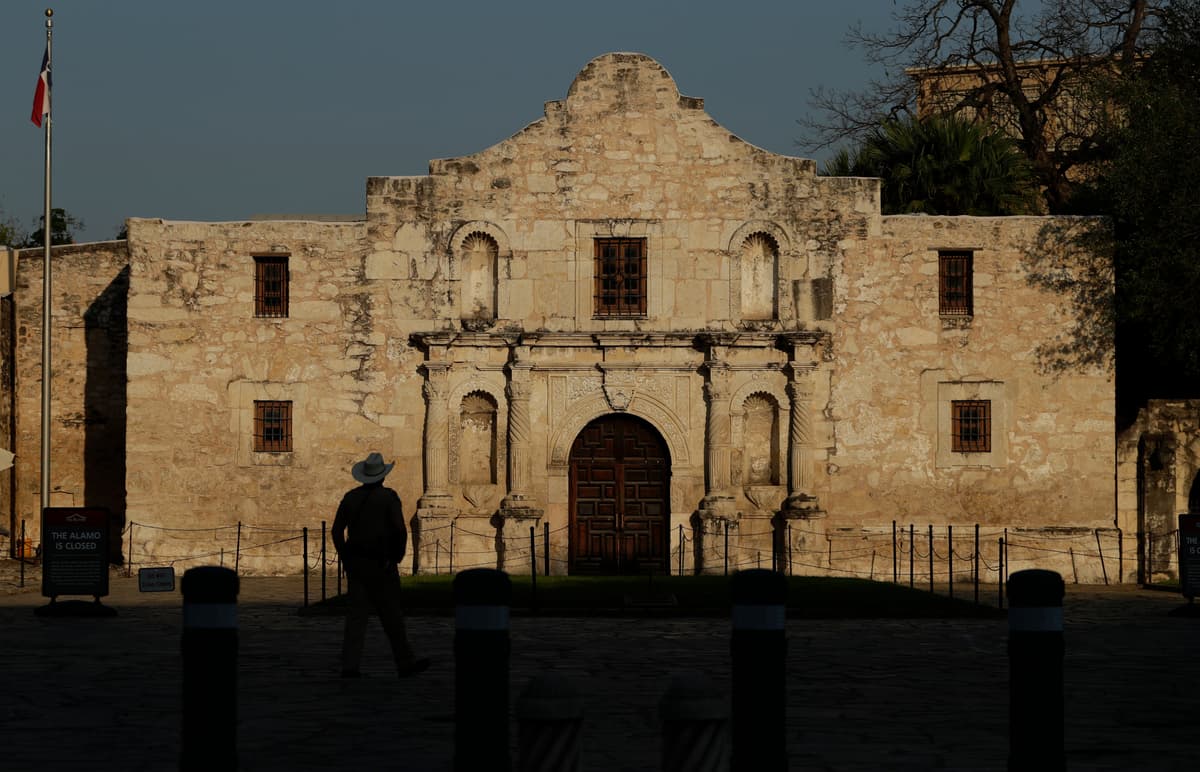

The president and CEO of the Alamo Trust, Kate Rogers, has resigned under pressure from Texas’ lieutenant governor, Dan Patrick, who took issue with views she expressed in a 2023 doctoral dissertation about how the historic site’s story should be told.
Her resignation calls attention to a debate over the presentation of the Alamo’s history and the role of politics in shaping educational narratives at Texas’s most iconic landmark, the site of a pivotal 1836 battle during the Texas Revolution and a symbol of courage and resistance.
Mr. Patrick’s criticism centered on Mr. Rogers’ doctoral dissertation at the University of Southern California, which examined the role of historic sites and museums in supporting K-12 social studies instruction. In the paper, Ms. Rogers discussed competing visions for the Alamo’s redevelopment between Republican state leaders and local officials.
According to excerpts Mr. Patrick posted on social media, Ms. Rogers wrote that Republican leaders want the battle to be the primary focus, while Bexar County and San Antonio officials have advocated to “tell the full story of the site including its beginning as a home to Indigenous people.”
“Personally, I would love to see the Alamo become a beacon for historical reconciliation and a place that brings people together versus tearing them apart,” Ms. Rogers wrote in her dissertation, adding, “but politically that may not be possible at this time.”
Ms. Rogers acknowledged the sensitive nature of her research: “For all these reasons, I had to be very careful with my study and its implications as it could have negative consequences” for the Alamo project “as well as my job.”
In her dissertation, Ms. Rogers described what she called the “conservative agenda” of the 2021 Texas legislative session, noting bills that “ban educators from teaching Critical Race Theory” and “prohibited the discussion of slavery.” She also referenced the controversial book “Forget the Alamo,” which argues that maintaining chattel slavery was a primary motivator in the Texas fight for independence.
“Perhaps the biggest dilemma for me as a researcher … had to do with my own political views and my current environment,” Ms. Rogers wrote. “Philosophically, I do not believe it is the role of politicians to determine what professional educators can or should teach in the classroom. Instead, teachers should be afforded the autonomy to make those decisions based on their own expertise as well as the needs of their students.”
In his Thursday letter to the Alamo Trust’s board of directors, Mr. Patrick called Ms. Rogers’ views “incompatible with the telling of the history of the battle of the Alamo.”
“I believe her judgment is now placed in serious question,” the lieutenant governor wrote. “She has a totally different view of how the history of the Alamo should be told.”
Mr. Patrick emphasized that while “of course the entire story of the Alamo will be told,” the primary focus must remain on the “13 Days of Glory,” when nearly 200 men “gave their lives to defend liberty and freedom for Texas.”
He added: “I will continue to defend the Alamo today against a rewrite of history.”
Ms. Rogers said she submitted her resignation with “mixed emotions.”
“It became evident through recent events that it was time for me to move on. I am incredibly proud of the team we built and the work we did together over the past 4 and a half years,” she said. “I remain grateful to the board for this incredible opportunity that enabled me to grow both personally and professionally and to our state’s leadership and the Legislature for their generous support.”
The Alamo is undergoing a $500 million restoration and expansion, which will include a new museum and visitor center. The project, slated to open in 2027, will feature eight galleries covering the history of the site from its Indigenous context through the Battle of the Alamo and its legacy in Texas.
In 2015, the Texas General Land Office — which oversees the Alamo — Bexar County, and the City of San Antonio agreed to “guiding principles” that include telling “the entire history of the Alamo area” and embracing “the continuum of history to foster understanding and healing.”
The Alamo Trust board announced Friday that a former Texas secretary of state, Hope Andrade, would be the organization’s next president and CEO.
Correction: The Texas legislative session ending in 2021was referenced by Kate Rogers in her dissertation. An earlier version misstated the year.