RFK Jr. Plans More Changes to Vaccine Policy in Second Year as Health Secretary
After a year of upending long-established practices, Mr. Kennedy wants to further move health policy to align with his MAHA agenda.
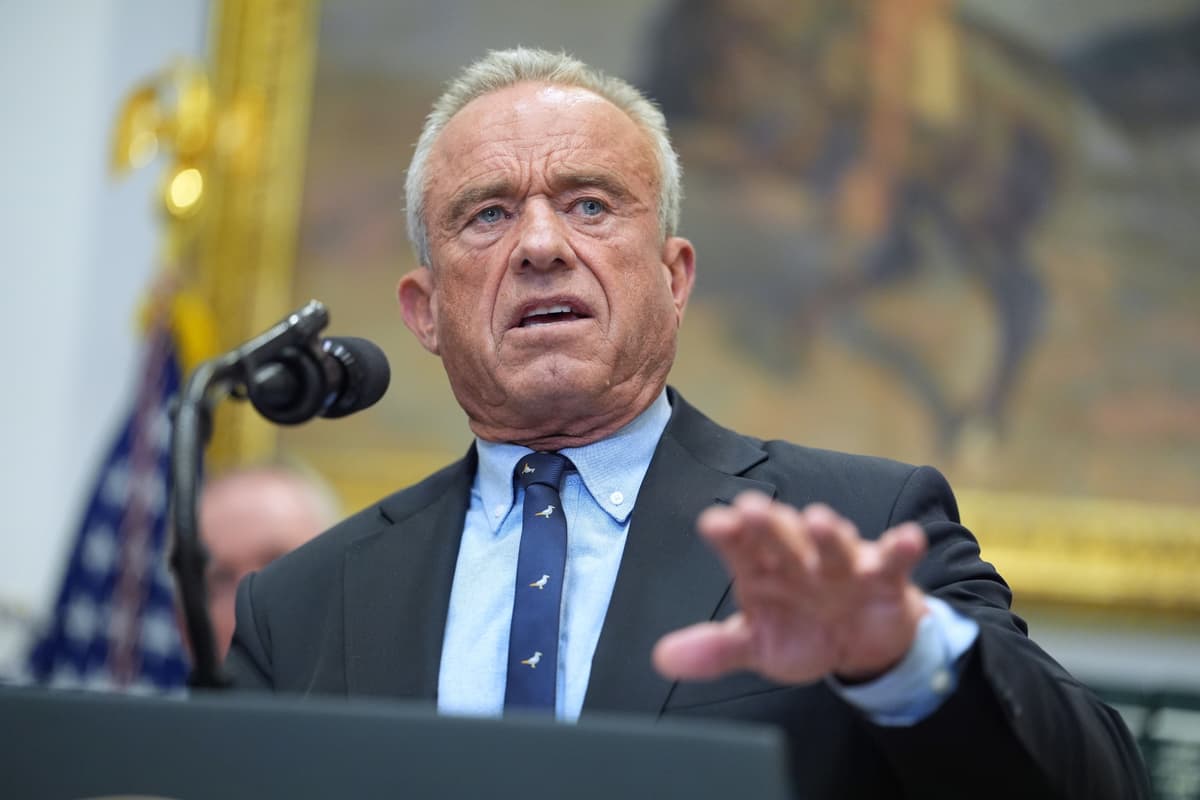

Early in his first year as secretary of health and human services, Robert F. Kennedy Jr. told a congressional panel, “I don’t think people should be taking medical advice from me.” He then moved quickly to reshape much of federal health policy to align it with his Make America Healthy Again agenda.
Heading into a second year in the post, Mr. Kennedy faces fresh challenges, including likely controversy over a plan to amend the pediatric immunization schedule. With an approval rating below 40 percent in the latest Gallup poll, he will also struggle to restore the confidence of the American public.
Mr. Kennedy took office in February after a bruising confirmation process in the Senate. Some Republicans hesitated to support his nomination because of his history of questioning long-standing medical norms.
Senator Bill Cassidy — a doctor who was concerned about Mr. Kennedy’s vaccine skepticism — cast the deciding committee vote that moved Mr. Kennedy’s nomination to the full Senate, but only after soliciting a pledge that Mr. Kennedy would not remove language from the Centers for Disease Control and Prevention website saying “vaccines do not cause autism.”
Minutes after Mr. Kennedy took office, President Trump signed an executive order to create a Make America Healthy Again Commission to be chaired by Mr. Kennedy. The goals were to study chronic childhood diseases and come up with solutions.
Mr. Kennedy started his work with a “dramatic restructuring” of the Department of Health and Human Services and attempted a mass reduction of the workforce at key agencies like the CDC and the Food and Drug Administration. About 10,000 employees were let go. Critics complained that the restructure sowed chaos inside the agency and hurt morale; some of those firings are still tied up in legal fights.
Mr. Kennedy quickly worked to upend vaccine policy. In one of his most controversial decisions, he removed all 17 members of the Advisory Committee on Immunization Practices in June. He hastily rebuilt the committee with his own selections, including several known vaccine skeptics.
The advisory committee voted in July to recommend that single-dose flu vaccines no longer contain a mercury-based preservative. Thimerosal, which is used in flu vaccines to prevent microbial growth, has been in the crosshairs of vaccine critics for years. Mr. Kennedy himself speculated in a 2014 book that it is “immensely toxic to brain tissue” and could cause neurodevelopmental disorders like autism and ADHD, although those claims have been repeatedly debunked.
The committee also voted 8-3 to no longer recommend giving the hepatitis B vaccine to most newborns on the day they are born. The committee said the initial dose of the vaccine should be administered no earlier than at 2 months of age for most children. The Centers for Disease Control and Prevention had recommended that babies get vaccinated against hepatitis B within 24 hours of birth since 1991.
The CDC also removed the Covid vaccine from the recommended immunization schedule for healthy children and healthy pregnant women.
Mr. Kennedy pledged to remove fluoride from the American water supply and announced in April that the Centers for Disease Control and Prevention would stop recommending fluoridation in drinking water systems nationwide. Mr. Kennedy has called fluoride a “dangerous neurotoxin,” linking it to conditions such as arthritis, bone fractures, and thyroid disease. Utah and Florida became the first states to ban community water fluoridation.
Mr. Kennedy then set his sights on artificial food dyes — ingredients he has long claimed are a “mass poison” harming the nation’s youth. He started pressuring food companies to phase out artificial dyes in popular ultra-processed snacks, drinks, candy, and other food.
Several companies have agreed to phase out the dyes. By year-end, the health agency reported that 40 percent of the food industry has pledged to remove synthetic food dyes from their products. Mr. Kennedy has promised to increase that number in the new year.
In September, his commission released a highly anticipated strategy report. Some of the goals that were laid out included expanding research into chronic disease prevention, nutrition and metabolic health, food quality, environmental exposures, autism, gut microbiome, precision agriculture, and vaccine injury.
The report also called for more research into the mental health of children. Mr. Kennedy said the commission was also looking into a possible cause for the increase in school shootings over the past several decades. He cited prescription psychiatric drugs, video games, and social media as possible causes that are being studied.
The report made no recommendations for new regulations on pesticides in the American food supply, a disappointment for members of the health secretary’s MAHA community. The head of the Department of Agriculture, Brooke Rollins, has stood behind the use of pesticides, saying they undergo years of research before they are approved for use.
Mr. Kennedy has had less success in his fight against autism. He has repeatedly cited statistics showing that diagnoses have risen from 1 in 10,000 when he was a child to 1 in 31 today. He has claimed the increased prevalence in autism diagnoses is linked to environmental toxins.
He boldly claimed in April that he would quickly uncover the cause of the autism epidemic in America. “By September we will know what has caused the autism epidemic and we will be able to eliminate those exposures,” Mr. Kennedy said.
Mr. Kennedy walked back the claim a week later. “We will have some of the answers by September,” he said. Those answers didn’t come, but along the way he has made claims that are not backed up by science.
Mr. Kenedy suggested in late September that the use of Tylenol during pregnancy was a possible cause of autism, but backed off a month later, acknowledging there is not enough evidence to establish a link.
Mr. Kennedy also zeroed in on another potential culprit for autism — circumcision. He said studies have found circumcised boys twice as likely as others to develop autism and suggested the missing link may be Tylenol administered as a painkiller to the newly circumcised children. The claims have been met with strong pushback from the makers of Tylenol.
In November, language on the Centers for Disease Control and Prevention’s autism page was updated. A bold headline near the top of the page retained the previously existing language saying: “Vaccines do not cause Autism.” But below it the text was updated to state, “The claim ‘vaccines do not cause autism’ is not an evidence-based claim because studies have not ruled out the possibility that infant vaccines cause autism.”
An asterisk leads to a footnote saying the header “has not been removed due to an agreement with the chair of the U.S. Senate Health, Education, Labor and Pensions Committee.” That chairman is Mr. Cassidy, who cast the deciding vote in Mr. Kennedy’s confirmation process.
Mr. Cassidy blasting the new language as “wrong” in an X post.
“Redirecting attention to factors we definitely know DO NOT cause autism denies families the answers they deserve,” he wrote.
Most recently, Mr. Kennedy moved to end the use of puberty-blocking drugs and transition surgeries on children, calling it “junk science.” He claimed the medical community is putting profits ahead of the long-term health of patients.
Year two of MAHA is expected to bring more of what Mr. Kennedy’s department describes in its year end review as “bold, decisive action to reform America’s food, health, and scientific systems.”
More vaccine rule changes are still on Mr. Kennedy’s agenda. President Trump has ordered a review of all childhood vaccines and told Mr. Kennedy and the acting director of the Centers for Disease Control and Prevention to “review best practices from peer, developed countries for core childhood vaccination recommendations — vaccines recommended for all children — and the scientific evidence that informs those best practices.”
Mr. Kennedy responded on X with “We’re on it,” but reportedly canceled an announcement on his plans after being told they could face legal challenges because he had not followed the necessary legal procedures.
An announcement on the next steps is now expected sometime in January.
Mr. Kennedy also hopes to expand the number of states that ban the use of food stamps to buy junk food. To date, 18 states have received approval to expand the list of items excluded from the SNAP program.
Mr. Kennedy is also expected to try to allow the use of health savings accounts to purchase more MAHA-backed products like supplements. Only purchases that are made to specifically treat or prevent a medical condition are currently eligible under IRS rules. Mr. Trump’s February executive order called for changes to “ensure expanded treatment options and health coverage flexibility for beneficial lifestyle changes and disease prevention.”
Some congressional Republicans suggest that the accounts could be an alternative to Affordable Care Act premium subsidies, but health experts who spoke with the news outlet NOTUS expressed concerns about moving the accounts in that direction.
“While on the surface it would appear that we have more choices as a consumer, the reality would be, the deluge of misinformation that’s coming in from the manufacturers and poor-quality products, then we end up spending our monies on inferior products that do not work,” a Harvard Medical School professor, Pieter Cohen, told the outlet.
Mr. Kennedy could also replace all the members of another influential advisory committee in the new year. He has hinted that he wants to shake up the United States Preventive Service Task Force. The volunteer group provides recommendations on services that health insurers must provide without cost-sharing as part of their policy coverage.
“The task force has done very little over the past five years, and we want to make sure it is performing, and it is approving interventions that are actually going to prevent the health decline of the American public. And it hasn’t,” Mr. Kennedy said at a news conference in August.