
Russians Slog on in Ukraine, Fighting Longer Than the Soviets Against the Nazis

Casualties are high; land gains are paltry.
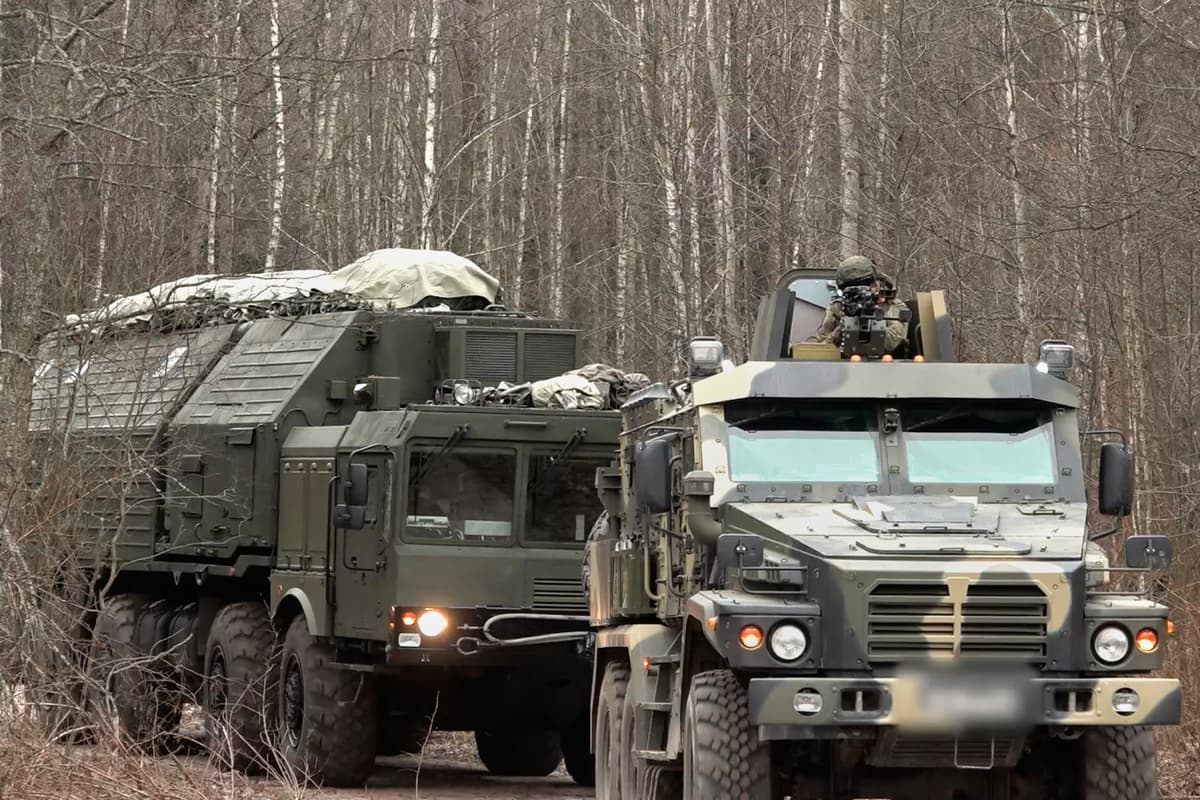
Russian Defense Ministry Press Service via AP
Russia's Oreshnik missile system is seen during a training in an undisclosed location in Belarus. Russian Defense Ministry Press Service via AP

Russia’s full-scale war on Ukraine has crossed a line that President Vladimir Putin chooses to ignore. As of today, Russian troops have been fighting in Ukraine for 1,420 days — that is three days longer than the 1,417  days the Red Army fought the Nazis in World War II. 

“The full-scale war of the Russian Federation against Ukraine has now lasted as long as the war of the USSR against Nazi Germany,” President Volodymyr Zelensky said in a TV address Sunday night.  “They wanted to repeat it. And they did repeat it: the torture of people, fascism, they have repeated almost everything and the worst that happened in the 20th century.”

Increasingly, Russia’s war looks like World War I, the notoriously  stalemated trench war that Tsarist Russia waged for 1,200 days. Today, Russia controls about 19 percent of Ukraine. Three years ago, Russia controlled about 19 percent of Ukraine. In contrast to the 1,000 mile advance of the World War II-era Red Army, Mr. Putin’s Russia has only advanced 30 miles in some parts of his most coveted region, Ukraine’s Donetsk.

Last year, Russia conquered about 2,500 square miles of Ukraine, Defense Minister Gerasimov told Mr. Putin in a year end briefing. The Washington-based Institute for the Study of War gives a slightly lower figure — 1,865 square miles. 

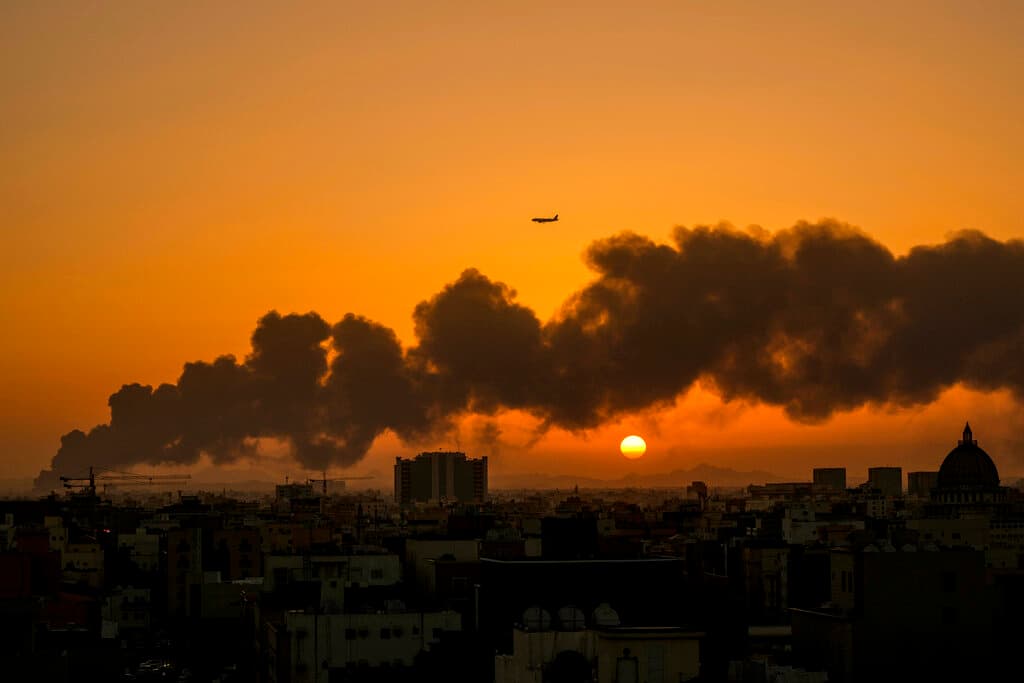
A residential building burns after a Russian strike in Kyiv, Ukraine, Friday, Jan. 9, 2026.
A residential building burns after a Russian strike at Kyiv, January 9, 2026. AP/Efrem Lukatsky

To sugarcoat the news, Mr. Putin uses an old Soviet slogan, telling Russians that their troops are “advancing on all fronts.” While Russian soldiers may advance potato field by potato field, the net amount is not a game changer. For a country twice the size of California,  last year’s gains amounted to seven-tenths of one percent of Ukraine’s territory. 

Last year, Ukraine played defense and kept casualties low. In contrast Russia suffered its bloodiest year of the nearly 4-year-old war — 418,170 dead and wounded, according to Ukraine’s military command. Since the war started, Russian casualties total 1.2 million. Ukrainian casualties are believed to be about one-third of the Russian total.

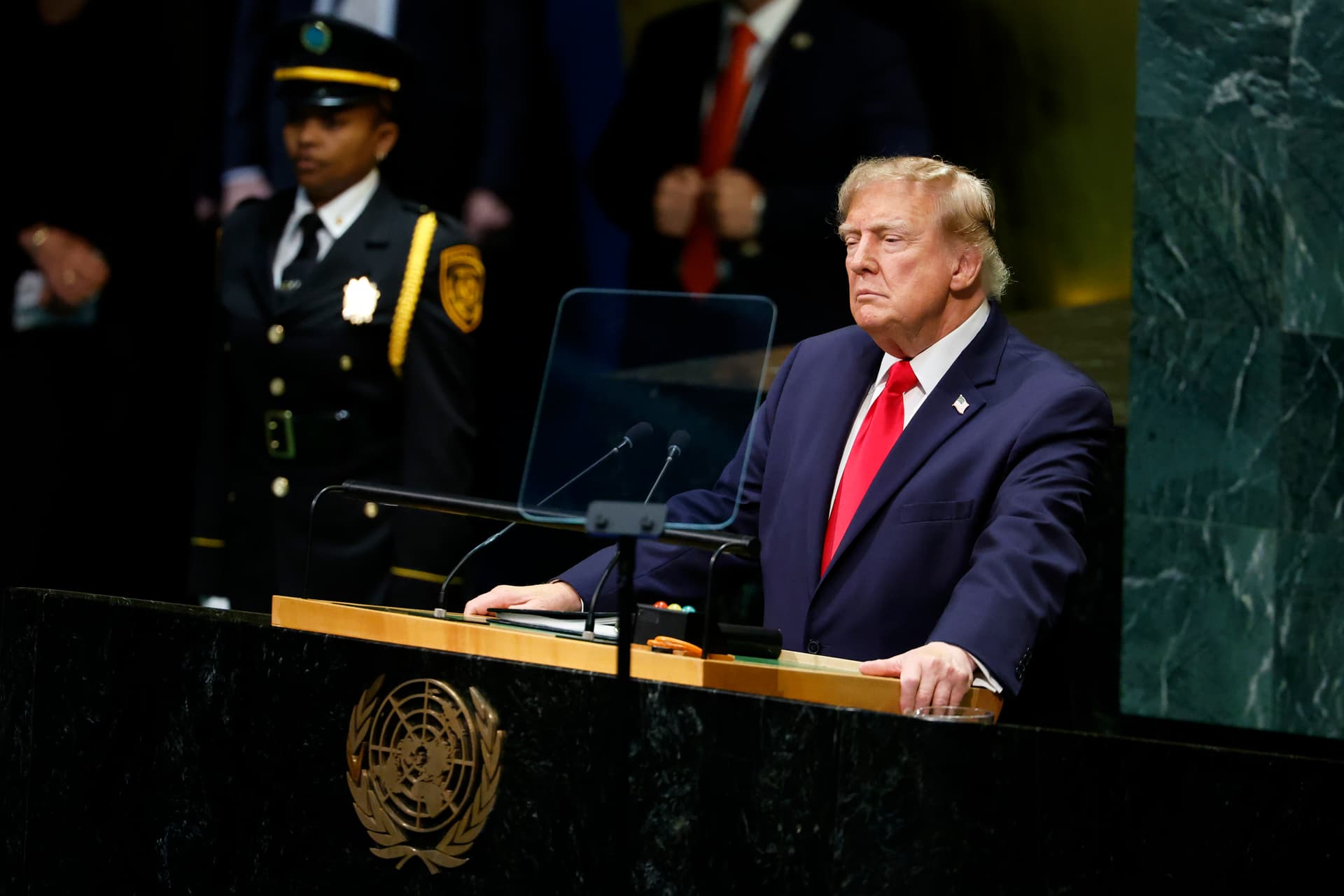
“Putin is killing too many people,” President Trump told reporters recently, veering briefly from the topics of Venezuela and Iran.

President Donald Trump speaks during a meeting with oil executives in the East Room of the White House, Friday, Jan. 9, 2026, in Washington.
President Trump speaks with oil executives at the White House, January 9, 2026. AP/Evan Vucci

In North American terms, Russia’s 2025 land advance would be the equivalent of America conquering the lower 15 percent of Canada’s province of Saskatchewan. Given that the American population is more than double Russia’s, the military toll for 2025 would be 850,000 American soldiers killed and wounded.

Mr. Putin shows no sign of seriously negotiating peace, but pressures mount. Russia’s foreign influence is clearly ebbing. Last year, the presidents of Iran and of Venezuela each signed “Strategic Partnership” treaties with Russia. Over the last two weeks, Mr. Putin proved unwilling — or unable — to lift a finger to defend either ally.

First, Washington kidnapped President Nicolas Maduro from a military base at Caracas. Russian-made air defenses proved useless against the American airborne attack. Then, the United States Coast Guard chased a Russia-flagged tanker to waters off Iceland from Venezuela. In the North Atlantic, the American military seized the tanker, ignoring a Russian submarine and navy ship escort.

“I don’t think it was a tough call,” Mr. Trump told Fox News when asked about pressure from Russia. “The fact is, there was a Russian submarine and a destroyer there. Both left very quickly when we arrived.”

U.S. troops monitor the M/V Bella in the Atlantic Ocean prior to it being captured.
U.S. troops monitor the M/V Bella in the Atlantic Ocean prior to it being captured. U.S. European Command/X.com

Russian nationalists were outraged. Duma Member Alexei Zhuravlev said Russia should attack the U.S. Coast Guard. He said: “Attack with torpedoes, sink a couple of American Coast Guard boats. Normally they guard their shore several thousand kilometers away. I think the United States, which is in a kind of euphoria of impunity after the special operation in Venezuela, can only be stopped now with such a whack on the nose.”

Closer to home, the anti-American regime in Iran is undergoing the biggest protests in its 46-year-history. As in the case of Venezuela, Russia’s action is limited to angry speeches at the United Nations. Behind Russia’s weakness is a military quagmire in Ukraine that shows no sign of easing. After ruling Russia for 25 years, Mr. Putin is losing his aura of protector of the motherland. In the last two years, Ukrainian drones have hit targets in 49 of Russia’s 85 regions.

Over the last six months, the price of Urals crude oil, Russia’s largest export, has fallen by one-third, to $50 a barrel today. Hemmed in by new American sanctions, more and more Russian crude is stored in tankers at sea. As this glut rippled back to onshore production, Russia suffered in December its biggest production drop in 18 months, Bloomberg reported last week.

President Vladimir Putin at the Valdai Discussion Club at the Black Sea resort of Sochi, Russia, October 2, 2025. Mikhail Metzel, Sputnik, Kremlin pool via AP

With finances tight, Russian governors slash the mouth-watering signing bonuses that induced many Russian men to enlist in the Army. Ukrainian military strategists calculate that Russian casualties are around 30,000 a month, the same number of recruits who enter the Army monthly.

Low signing bonuses and high casualties make it increasingly difficult to recruit soldiers. In the last 24 hours, Russian soldiers have posted two videos of  black soldiers in Russian uniforms, presumably mercenaries recruited from South Africa.

One source of recruits may dry up. Chechen leader Ramzan Kadyrov is said to be dying of kidney disease. If Mr. Kadyrov dies, a struggle for succession will probably emerge, and Chechnya’s top warlords would bring home their troops from Ukraine.

In the West, Mr. Putin is more isolated than ever. Yesterday, after touring the site of a Russian drone strike on an apartment building in Kyiv, Britain’s defense secretary, John Healey, told a British reporter: “I would take Putin into custody and hold him accountable for war crimes. For what I saw in Bucha during one of my first visits to Ukraine, and for the abduction of Ukrainian children.”

Friday night, Russian forces hit Lviv with a hypersonic “Oreshnik” missile. Using a nuclear-capable ballistic missile with dummy warheads to hit a target 45 miles east of the Polish border seemed to be a warning to the West. Kremlin officials are angry that Britain and France agreed last week to post troops inside Ukraine in the event of a ceasefire.  The missile’s “use is the sign of a fearful, worried leader and not one that is confident and anticipating victory,” Australian military analyst Mick Ryan wrote in his blog on Ukraine.

Videos from the field increasingly show an army that is fraying. Russian soldiers mounted on horses increasingly appear in Ukrainian drone videos. Due to the effectiveness of these drones, Russia has largely abandoned jeeps and armored personnel carriers in favor of  foot soldiers. “The de-mechanization of the Russian armed forces is now complete,” American military analyst David Axe wrote last week.

In contrast, Ukrainian troops received 25 percent more armored vehicles in 2025 compared to 2024. As Europe stepped in to replace aid from America, military aid to Ukraine hit $45 billion, almost 30 percent larger than in 2024, Ukraine’s minister of defense, Denys Shmyhal, said in a year end report.

In another black eye for Russia’s army, Ukrainian authorities announced on December 27 that a bomb killed the founder of the Russian Volunteer Corps, an anti-Putin military unit, Denis Kapustin. Delighted with the news, Russia’s Federal Security Service, or FSB, duly paid a $500,000 bounty. Last week, Ukraine’s military intelligence disclosed that they had faked Kapustin’s death. They said they would use the bounty money to build more drones to attack Russian soldiers.


The New York Sun

© 2026 The New York Sun Company, LLC. All rights reserved.

Use of this site constitutes acceptance of our Terms of Use and Privacy Policy. The material on this site is protected by copyright law and may not be reproduced, distributed, transmitted, cached or otherwise used.

The New York Sun

Sign in or  create a free account

or
By continuing you agree to our Privacy Policy and Terms of Use