Russia’s Rebranded Wagner Group Extends Grip Across Sahel as West Retreats
Now under direct Kremlin control, the Africa Corps props up military juntas while shipping home gold to help finance the war on Ukraine.
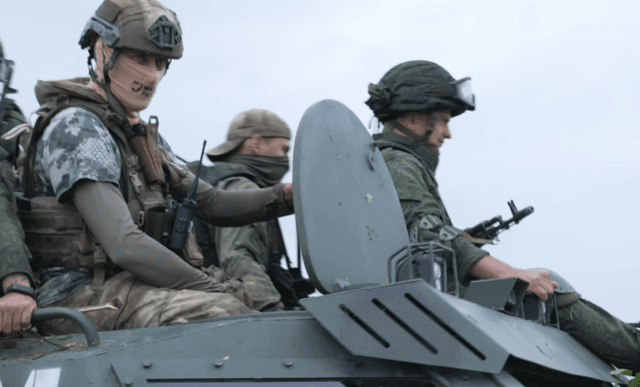

The marquee has changed but the muscle remains. When Russia’s notorious Wagner Group mercenaries vanished from official view following founder Yevgeny Prigozhin’s fatal plane crash in August 2023, Western intelligence analysts anticipated a power vacuum across Africa’s conflict zones.
Instead, something more troubling has emerged: a streamlined, state-controlled successor force operating under the banner “Africa Corps,” wielding the same brutal tactics under a fresh coat of government paint.
As President Trump confronts strategic challenges from China and Russia, Moscow’s expanding African footprint represents a stark reversal of American influence across a continent where Washington once held sway.
But this Wagner rebrand represents far more than cosmetic surgery on Russia’s mercenary enterprise. The transformation signals a calculated expansion of Kremlin influence across strategically vital regions where Western powers once dominated, from mineral-rich Central African territories to the volatile Sahel corridor stretching across Mali, Burkina Faso, and Niger.
“The metamorphosis of the Wagner Group is akin to the change in Twitter. It’s a new name, and there is some new management. However, it still serves the same purpose for Russia,” the president of the intelligence and geospatial monitoring firm The Ulysses Group, Andrew Lewis, tells The New York Sun.
“Prigozhin’s death did not end the Wagner Group’s operations in Ukraine and Africa; with the involvement and oversight of the GRU, the ties they established in Africa now seem to be strengthened.”
From Private Army to State Instrument
The Africa Corps emerged from the wreckage of Prigozhin’s brief mutiny and subsequent death, moving Wagner’s African operations under the direct control of Russia’s Ministry of Defense. The deputy defense minister, Yunus-Bek Yevkurov, oversees the restructured force, which analysts estimate fields approximately 2,000 fighters across multiple nations.
The mercenary outfit is best understood as Wagner’s Africa model being brought under tighter Russian state control, the head of a strategic geopolitical consulting firm focused on Russia, Eurasia, and Latin America tells the Sun.
Natalya Goldschmidt, the CEO of Lightning Associates LLC, explained that continuity remains substantial in personnel and local networks, so many dynamics look the same on the ground; however, Moscow now “owns” the outcomes more directly when operations fail or abuses occur.
A research fellow at the Foundation for the Defense of Democracies, Ivana Stradner, agrees that the change is largely superficial.
“Africa Corps is basically Wagner with Russian government ties: personnel, same model, but Russia can no longer easily use plausible deniability,” Ms. Stradner tells the Sun. “Wagner’s business interests, influence campaigns, and resource extraction model are unchanged.”
Filling the Western Vacuum
Africa Corps’ expansion coincided precisely with the collapse of the Western military presence across the Sahel. Between 2020 and 2024, military coups systematically ejected French forces. By December 2023, more than 15,000 French, European Union, and United Nations troops had departed the region.
The United States suffered parallel setbacks. Niger’s July 2023 coup forced Washington to abandon Air Base 201 in Agadez, a $110 million facility serving as America’s primary drone surveillance hub. U.S. forces completed their withdrawal in September 2024.
Russian operatives moved swiftly to occupy these vacated positions. Africa Corps personnel arrived in Niger by April 2024, operating from the same base that American troops had recently evacuated. In Burkina Faso, 100 instructors were deployed in January 2024. Mali has hosted the most substantial Africa Corps presence, with forces conducting joint operations alongside the Malian Armed Forces.
“Russia’s Wagner Group/Africa Corps has bases across northern and sub-Saharan Africa, including three air bases in Libya that it can use to extend its operations and influence,” Mr. Lewis said. “They use these for logistics, power projection, moving resources out of the continent and [they] mask ownership and sourcing to avoid sanctions, all to the disadvantage of the U.S. and Western interests.”
The three nations established the Alliance of Sahel States in September 2023, a mutual defense pact functioning as Russia’s geopolitical counterweight to Western-aligned organizations. Mr. Lewis notes that in several countries, Russian operatives have been instrumental in getting resource laws rewritten to disadvantage Western interests.
“America has minimal resources and capabilities in Africa to counter Russia’s activities, and USAFRICOM has always had limited funding and operational authorities, so Russia and China will likely continue to expand their influence and presence across the continent with little opposition from the U.S.,” Mr. Lewis said.
Resource Extraction as a Business Model
Military services alone do not explain Africa Corps’ economic sustainability. The force follows a pattern pioneered by Wagner: Security services are provided in exchange for preferential access to mineral wealth, which in turn helps Moscow fund its war in Ukraine.
In the Central African Republic, Wagner forces seized control of the Ndassima gold mine after the government transferred the mine’s permits to Midas Ressources, a Wagner-affiliated entity, in 2020. The mine holds estimated reserves valued at $2.8 billion. In Mali, forces seized the Intahaka gold mine near Gao, the largest of northern Mali’s artisanal mining operations, in February 2024.
The America-based nonprofit Democracy 21 estimated that Wagner and Russia have extracted approximately $2.5 billion through African gold trade alone since invading Ukraine in February 2022.
The gold mining-for-security model remains sustainable in the near term because it shifts costs from Africa Corps and the Russian state apparatus onto host states and uses opaque commercial channels that can mitigate sanctions pressure, Ms. Goldschmidt noted.
These networks can also create a Ukraine linkage by recruiting African fighters and using Africa Corps manpower to supplement Russia’s wartime needs. But over time, it becomes unstable because the arrangement breeds corruption and local resentment, she says.
The Human Cost of Kremlin Counterinsurgency
The Russian force has been more successful at extracting gold than at defending its client states from insurgents. Violence linked to Islamist groups has only increased across Mali, Niger, and Burkina Faso over the past two years while government forces and Russian mercenaries are blamed for more civilian casualties than the jihadist insurgents.
Africa Corps forces have been widely accused of deliberate killings of dozens of civilians, the burning of homes and villages, and escalating abuses such as summary executions, enforced disappearances, torture, sexual violence, beheadings, and organ removal.
Survivors and refugees fleeing to Mauritania have shared videos and testimonies of villages razed by “white men,” a common local description of the Russian fighters, with consistent patterns of brutality described.
“Russia has been committing atrocities in Mali, and it does not bode well for policymakers,” Ms. Stradner said.
The Russian mercenaries have been more effective in defending the juntas themselves, who continue the partnerships despite the documented brutality and poor counterterrorism results. Ms. Stradner explains that Russia is playing a long game, with strategic goals that include ousting Western influence, acquiring strategic ports and access to natural resources, and evading sanctions.
“Unlike the West that operates with democratic principles, Russia does not require democratic or human rights conditions,” she observed. “Moscow also offers regime preservation packages where Russian troops directly protect leaders. Also, the Kremlin controls the information space and portrays the West as ‘imperialist and colonialist.’ Perception matters, and Russia understands that the role of propaganda is critical there.”
Ms. Goldschmidt concurs that Russia sells a regime-security package with fewer political conditions, plus information and cognitive warfare support that helps juntas frame their pivot as a defense of anti-colonial sovereignty even as violence persists.
“For coup governments under pressure, the appeal is not ‘better counterterrorism,’ it is often control, coercive capability, and narrative cover, even if long-term stability worsens,” she underscored.
Strategic Implications
The Africa Corps expansion signals Russia’s systematic displacement of Western security partnerships across strategically important African territories. France has lost military bases in Chad, Senegal, Côte d’Ivoire, and across the Sahel. The U.S. faces similar challenges after losing its Niger drone bases.
The three Sahel nations have withdrawn from the Economic Community of West African States and formed their own alliance under Russian patronage, fundamentally reshaping regional security architecture. While Russia purchases less than 1 percent of Africa’s total exports, its military influence now exceeds its economic footprint through strategic application of force and resource extraction.
Yet experts see potential weaknesses in Russia’s expanding African empire. Ms. Goldschmidt identifies the biggest vulnerabilities as Russia’s growing reliance on weak governments with little legitimacy and its loss of plausible deniability.
“As Africa Corps becomes more overtly state-linked, Moscow inherits reputational blowback from atrocities and failures, and that creates an opening for Western policy to compete by offering credible, locally grounded alternatives that address security, governance, and economic incentives on the ground,” she said.
Russia’s gains are real but not irreversible because they rely on junta legitimacy, anti-West narratives, and the West’s self-limiting pullbacks after coups, all of which can change quickly when security outcomes disappoint, she said.
Ms. Stradner notes that regional tensions are rising and that civil society is increasingly interested in sustainable partnerships and economic expansion, creating a time-sensitive opening for Western re-engagement.
“Russia is increasingly perceived as a nefarious actor, not a reliable partner,” she said, arguing that the West should counter Russian propaganda by reminding African nations of Russian imperialistic ambitions.
Ultimately, Russia’s Africa strategy is less a durable realignment than a high-risk bet on instability, repression, and short-term coercion. Contrary to the Kremlin’s claim that it has been a champion of anti-imperialism in the Global South, the czarist Russian Empire was a participant in the international race for colonization, the famed scramble for Africa, indicative of its colonial ambitions.
“In other words, with friends like Putin, they do not need enemies,” Ms. Stradner said.