Senator Lee’s Marque and Reprisal Bill

Could this be a better — or additional — way to combat the drug cartels? Ask the Founding Fathers.

Kevin Dietsch/Getty Images
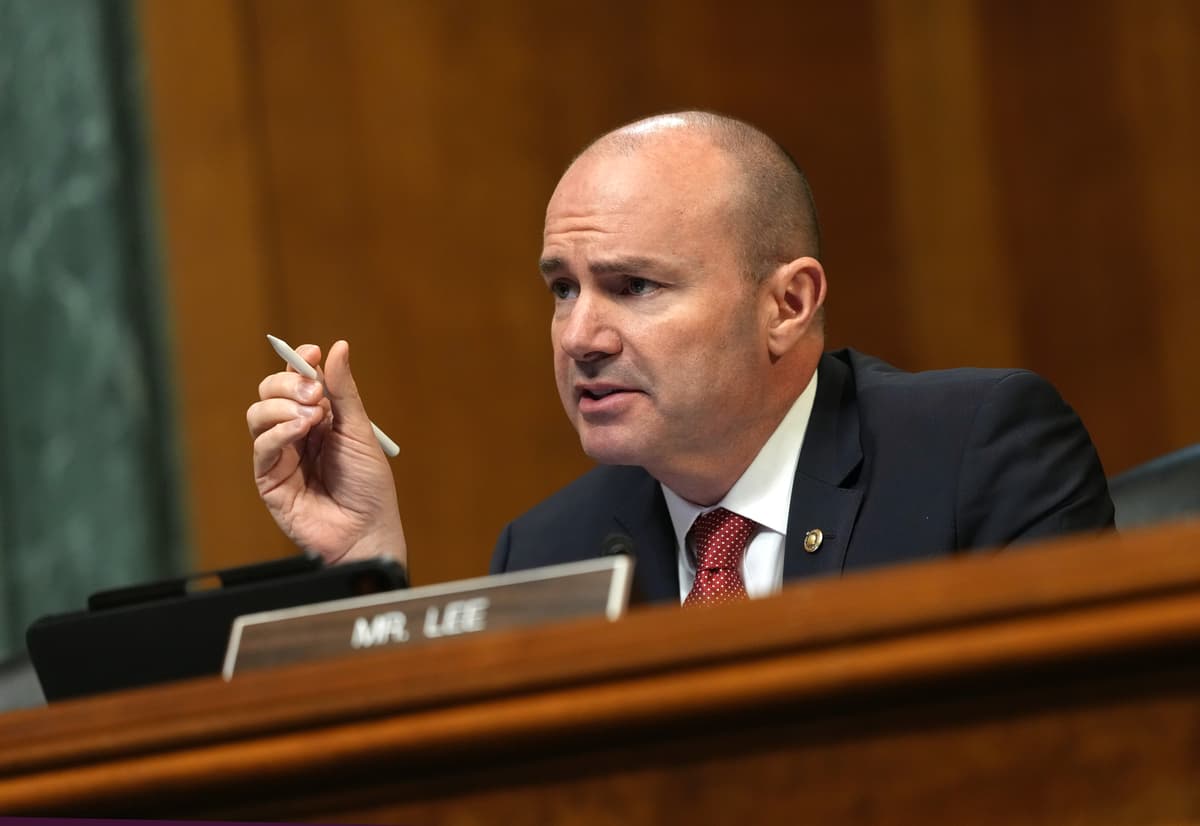
Senator Mike Lee, Republican of Utah, on May 13, 2025 at Washington, D.C. Kevin Dietsch/Getty Images

Let us be the first to endorse Senator Mike Lee’s bill to combat drug traffickers by using one of the great war powers granted to Congress — the power to grant letters of marque and reprisal. They are the second great war power granted to Congress in the Constitution. They amount, in effect, to licenses to private parties to levy war. Issuing such letters was been formally ended in Europe in the 19th century, but they are still constitutional in America.

Early in our Republic, we used them against, say, against the Barbary Pirates. They were used by South and North during our Civil War, but rarely, if ever, used since. Yet shortly after 9/11, Congressman Ron Paul introduced in Congress the “September 11 Marque and Reprisal Act of 2001.” It authorized as much as $40 billion in bounties to holders of a letter of marque to go after the head of Al-Qaeda.

At the time, as now, we thought it was a good idea. Dr. Paul’s thinking was that granting letters of marque would have been a more efficient way of bringing in bin Laden than the launch of a global war on the taxpayers’ dime, which, he surmised, would cost trillions. His bill got nowhere other than to illuminate this little used feature of the national parchment. Since then, these columns have several times urged the grant of letters of marque and reprisal.

When Mr. Lee’s thinking was first aired, Glenn Reynolds offered a description of how letters of marque work. “In old-fashioned naval warfare, a government letter of marque allowed a privately funded and operated warship to set sail and seize enemy ships, typically in international waters,” he writes. “Once vanquished, an enemy ship and its cargo would be taken to a friendly port and adjudicated as legitimate (or not) by a prize court.”

Mr. Lee’s proposal emerges in the context of President Trump’s escalation of scrutiny on the scourge of drug trafficking into America from countries like, say, Venezuela, which is now “completely surrounded” by what the commander in chief calls an “armada” of warships. He accuses Venezuela of responsibility for thousands of American deaths based on the export of drugs, including fentanyl, to these shores.

Senator Lee’s bill would authorize and request that the president commission “under officially issued” letters of marque and reprisal “privately armed and equipped persons and entities,” letting them “employ all means reasonably necessary to seize outside the geographic boundaries of the United States and its 20 territories the person and property of any individual who the President determines is a member of a cartel.” 

Mr. Lee, like Dr. Paul, seems to suggest that a strategy of issuing letters of marque could prove a more efficient means of combating the threat of trafficking. “Would you like to seize cartel assets as a privateer?” the senator asks on X. “My bill would allow the president to issue you a letter of marque.” He adds that it’s “Time to take these pirates down.” The bill may be unlikely to become law in time for this war, but whose fault is that?


The New York Sun

© 2025 The New York Sun Company, LLC. All rights reserved.

Use of this site constitutes acceptance of our Terms of Use and Privacy Policy. The material on this site is protected by copyright law and may not be reproduced, distributed, transmitted, cached or otherwise used.

The New York Sun

Sign in or  create a free account

or
By continuing you agree to our Privacy Policy and Terms of Use