

Ski Jumping Officials Tackle ‘Penis-Gate’ Scandal Ahead of Winter Olympics

Allegations are swirling that skiers are injecting fillers into their penises to get bigger suits, which catch more air and result in longer jumps.
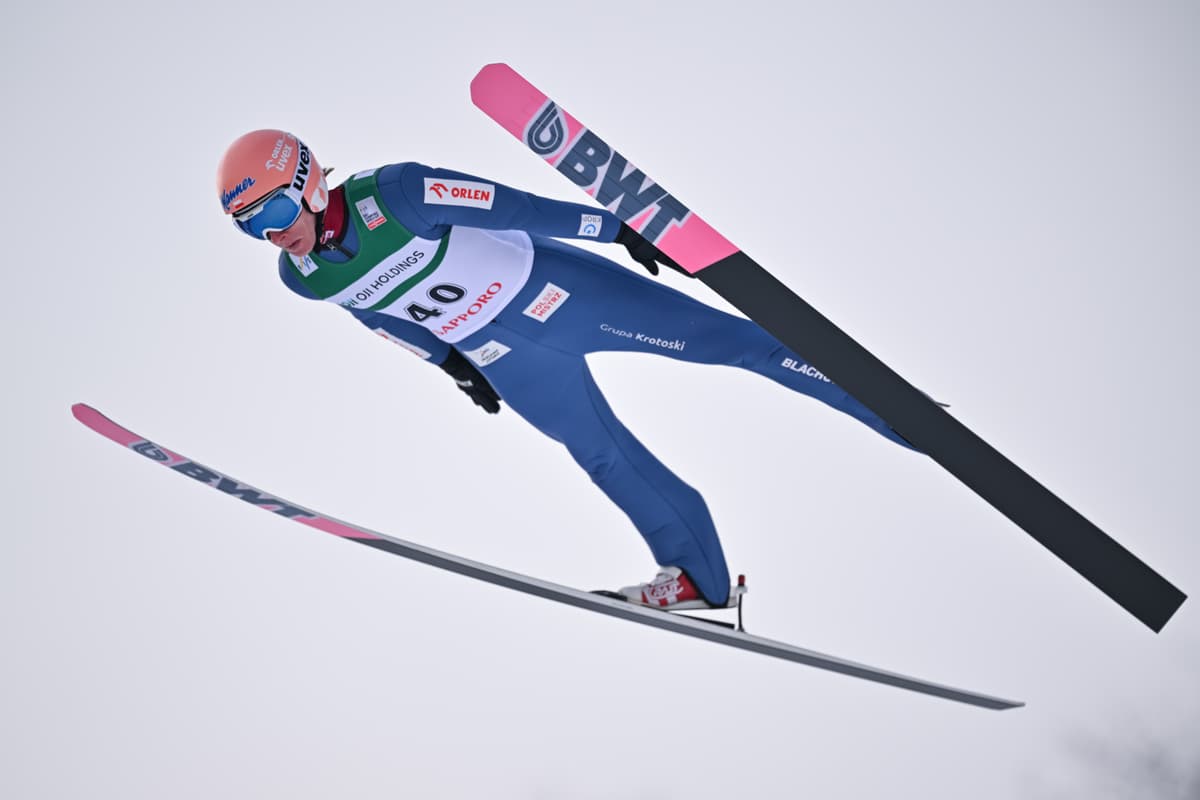
Kenta Harada/Getty Images
A competitor at the FIS Men's Ski Jumping Sapporo in Japan in January. Kenta Harada/Getty Images

A bizarre scandal is threatening the integrity of professional ski jumping as officials investigate claims that athletes are resorting to cosmetic genital injections to gain a competitive edge.

Dubbed “penis-gate,” the controversy centers on allegations that some male ski jumpers are injecting hyaluronic acid — a substance typically used in cosmetic fillers — into their genitals. The goal is reportedly to manipulate official body measurements to secure an aerodynamic advantage ahead of the upcoming Winter Games.

In modern ski jumping, athletes effectively turn themselves into human gliders. Because the surface area of the jumping suit significantly impacts stability, lift, and flight duration, the dimensions of the gear are strictly regulated. 

A jumper’s allowable suit size is determined in part by their stride length, a measurement taken via 3D scanner from the lowest point of the genital area. By artificially enlarging this area, athletes can allegedly register a longer stride measurement. This allows them to wear a slightly larger suit, which acts like a broader wing, reducing the rate of descent and potentially deciding medals in a sport where fractions of a meter matter.

The International Ski and Snowboard Federation is aware of the allegations, which represent the latest evolution in a cat-and-mouse game between regulators and competitors. In previous seasons, athletes have been suspected of using silicone condoms or “crotch stuffing” to manipulate scans.

Matthias Hafele, the equipment manager of the International Ski and Snowboard Federation, acknowledged the difficulty of policing the issue. “Currently, no further [stride length] measurements are planned,” Mr. Hafele told The Sun. “However, we are already working on methods to improve this complex problem.”

Regulators are reportedly weighing new protocols for the 2026 Milano-Cortina Winter Olympics, including using skeletal measurements rather than soft tissue to determine stride length.

While some athletes, such as Norwegian jumper Halvor Egner Granerud, have dismissed the claims as nonsense, the saga follows a chaotic year for the sport, which saw Slovenian jumper Timi Zajc disqualified from the Four Hills Tournament due to suit irregularities.


The New York Sun

© 2026 The New York Sun Company, LLC. All rights reserved.

Use of this site constitutes acceptance of our Terms of Use and Privacy Policy. The material on this site is protected by copyright law and may not be reproduced, distributed, transmitted, cached or otherwise used.

The New York Sun

Sign in or  create a free account

or
By continuing you agree to our Privacy Policy and Terms of Use