
Sudanese Forces Return to Khartoum Despite Crossing Red Line on Chemical Weapons Use
The international community, split on its allegiances, shows no signs of action months after persuasive evidence shows that Sudan’s government forces deployed chlorine gas in its civil war in 2024.
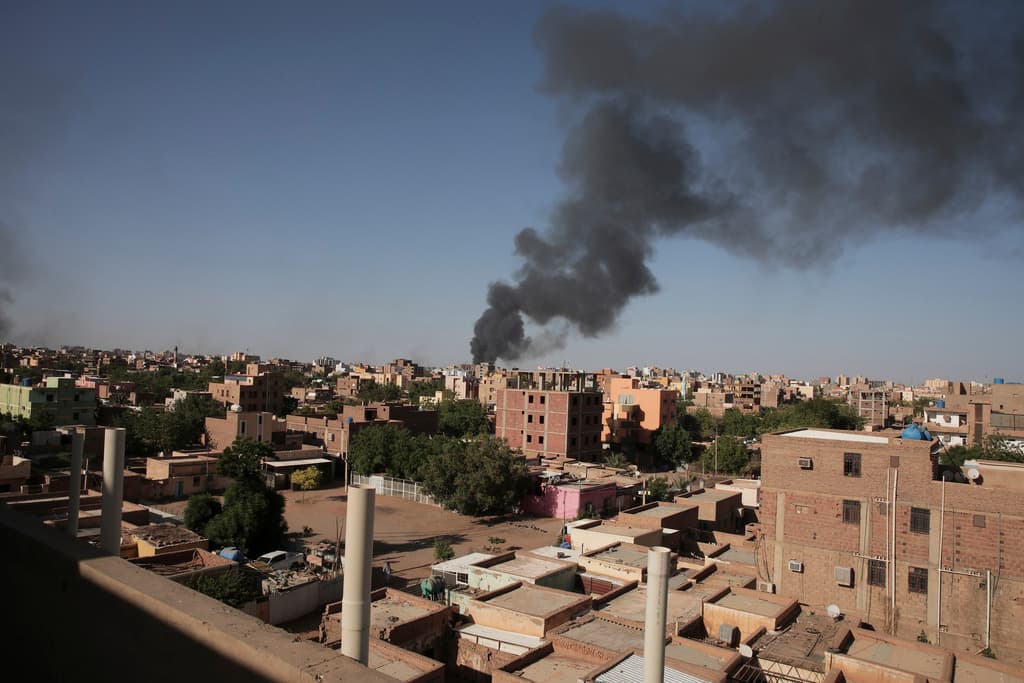
In the ash-choked streets of northern Khartoum, where industrial chlorine barrels once served Sudan’s water infrastructure, death from those containers rained down from the sky.
Geolocation data reveal that the Sudanese Armed Forces conducted at least two chlorine gas attacks in September 2024 near the al-Jaili oil refinery north of Khartoum, where the government was attempting to retake territory from the paramilitary Rapid Support Forces.
The conclusion of independent investigators confirms what the United States first alleged in May: Sudan’s government forces crossed a red line the international community swore would never be erased after the horrors of World War I. Despite the damning revelations, Sudan, whose leaders returned to Khartoum this week after a three-year absence, has faced few to no repercussions.
The failure of the international community to respond decisively reflects a broad international tendency to relegate Sudan’s ongoing civil war — with its massive death toll — to the margins of global concern, analysts say.
“Sudan has been a forgotten genocide,” says the director of the Atlantic Council’s Africa Center, Rama Yade tells The New York Sun.
Violating the Rules of War
The choice of chlorine as a weapon is particularly cynical. As a common industrial chemical used for water purification — a service that was already rare in the nation — chlorine is readily available and difficult to trace.
When weaponized, it becomes a pulmonary irritant that, upon contact with moisture in the human airways, transforms into hydrochloric acid, causing chemical burns to respiratory tissue. According to Physicians for Human Rights, prolonged exposure can result in severe lung damage or death.
What makes revelations of the use of chemical weapons particularly damning is not merely their source, but their substance. Investigations using open-source techniques geolocated photographs and videos showing metal containers used to store chlorine near small craters, alongside footage capturing the telltale yellow-green cloud characteristic of chlorine gas dispersal. Five independent chemical weapons experts confirmed the evidence was consistent with aerial drops of chlorine barrels.
“From the evidence that I’ve seen on open source, I can say that a solid case can be made against the Sudanese Armed Forces for using chlorine gas in its war against the Rapid Support Forces,” a research director at the Foundation for the Defense of Democracies, Hussain Abdul-Hussain, tells the Sun.
“The U.S. and Sudan’s civil society, along with OSINT investigations, have pretty much confirmed the use in 2024,” says the executive director of The American Center for South Yemen Studies, Fernando Carvajal.
On April 24, 2025, the State Department made a formal determination under the Chemical and Biological Weapons Control and Warfare Elimination Act that Sudan’s government used chemical weapons in violation of international law.
The resulting sanctions imposed in June put restrictions on exports to Sudan and limits on access to government lines of credit. The State Department’s spokeswoman at the time, Tammy Bruce, was unequivocal: Sudan must cease all chemical weapons use and uphold its obligations under the Chemical Weapons Convention, to which it is a party.
Sudan’s response was equally categorical. Government spokesperson Khalid al-Eisir dismissed the allegations as false interference lacking any moral or legal basis. He claimed that Washington had forfeited its credibility and closed the door to American influence in Sudan.
The denial sits uneasily alongside mounting evidence. Human Rights Watch independently verified the geolocation of videos showing chlorine deployment and called for a transparent investigation by the Technical Secretariat of the Organization for the Prohibition of Chemical Weapons.
“The United States government rarely accuses another government of using chemical weapons on its people without having ample evidence that can substantiate the accusation with a high degree of certainty,” Mr. Abdul-Hussain says.
Death and Destruction in a Forgotten Region
Sudan’s brutal civil war erupted in April 2023 after a power struggle between the army’s chief, General Abdel Fattah al-Burhan, and the commander of the Rapid Support Forces Mohamed Hamdan Dagalo. What began as an elite rivalry has metastasized into what the United Nations calls the world’s largest humanitarian crisis.
Death toll estimates overall from the two-year conflict range wildly depending on methodology. The Armed Conflict Location and Event Data Project recorded over 28,700 reported fatalities between April 2023 and October 2024, including more than 7,500 civilians killed in direct attacks. Yet these figures are likely to be vastly underestimated.
The former United States envoy for Sudan, Tom Perriello, suggested the actual death toll may reach as high as 150,000 people when accounting for deaths from starvation, disease, and lack of emergency care, all exacerbated by the conflict. A London School of Hygiene and Tropical Medicine study estimated that in Khartoum State alone, over 61,000 people died between April 2023 and June 2024, a 50 percent increase over the pre-war death rate.
More than 11 million Sudanese have been displaced, creating the world’s worst refugee crisis. More than four million have fled to unstable neighboring countries, overwhelming camps in Chad, Ethiopia, and South Sudan. Inside Sudan, 24.6 million people who remain face acute food insecurity, with famine confirmed in multiple regions.
In Zamzam camp, home to half a million internally displaced people, as of a year ago, a child was dying every two hours, according to Doctors Without Borders.
“Sudan has unfortunately been one of the most silent, even if the bloodiest, wars of our time,” Mr. Abdul-Hussain says. “The country had been isolated for decades before the 2019 revolution, so much so that when the two generals toppled the civilian government in a coup in 2021, the world barely noticed.”
The chemical weapons allegations — compounded by the vastness of the death and degradation — have exposed the international community’s impotence in the face of Sudan’s catastrophe. While the United States imposed sanctions and the U.N. Security Council passed resolutions calling for ceasefires, both the Sudanese Armed Forces and Rapid Support Forces continue their campaigns with impunity.
Human Rights Watch has called on all state parties to the Chemical Weapons Convention to support a challenge inspection, a verification procedure that allows any signatory nation to request an on-site investigation into alleged violations by another party. Such a request can only be denied if three-quarters of the 40-member Executive Council vote to overrule it.
Yet no member state has triggered this mechanism, even with the compelling evidence from multiple independent sources. “SAF will not grant access to territory under their control to any investigators,” Mr. Carvajal says. “The U.S. has submitted a request to Burhan and SAF within the Quad framework; Burhan has rejected the requests.”
Ms. Yade points to several factors that explain the lack of a formal investigation.
“Sudan is insecure and risky for inspectors,” Ms. Yade tells the Sun. “Also, their investigation would be made difficult by the lack of cooperation from the authorities, who have always denied the use of chemical weapons.”
This inaction is particularly galling given the Chemical Weapons Convention’s explicit purpose: to prevent the use of weapons that the world deemed too horrific to tolerate after the trenches of World War I claimed nearly 100,000 lives through gas attacks. Sudan’s apparent use of chlorine would place it among the few regimes to have deployed this lethal gas since the Great War, joining a shameful roster that includes Syria’s Bashar el-Assad regime.
Both the Sudanese Armed Forces and the Rapid Support Forces stand accused of war crimes. The United States has determined that the Rapid Support Forces and allied militias committed genocide against non-Arab groups in Darfur. At the same time, the Sudanese Armed Forces have used airstrikes extensively in populated areas, leveraging its aerial dominance. Neither side has shown any willingness to negotiate in good faith.
“In the Syrian civil war, President Obama drew a redline that Assad clearly crossed by using sarin gas on his people,” Mr. Abdul-Hussain says. “In the case of Burhan, he has no chemical arsenal that we know of that the world can ask him to surrender in return for his regime’s survival.”
The Sudanese civil war is not deemed a threat to international security, yet the unpunished use of chemical weapons sends a message to would-be bad actors.
“Every time the likes of Assad and Burhan use chemical weapons and get away with it, the international system put in place to deter such war crimes suffers further erosion,” Mr. Abdul-Hussain observes. “Neither Assad nor Burhan had to pay for their chemical attacks.”
Despite the neglect, Ms. Yade says placing this crisis at the top of the international diplomatic agenda is still possible. Two African countries — the Democratic Republic of Congo and Liberia, which suffered from their own atrocious wars — are now seated on the United Nations Security Council as non-permanent members until the end of 2027. They could influence the agenda of the international body, though it may be difficult to break through the geopolitical forces at work.
“Sudan has never been a priority despite the ongoing genocide because of the strategic interests of the states involved — UAE, Egypt, Saudi Arabia, Turkey, Iran,” she says.
With little interest in justifying its actions and support from nations like Egypt, Saudi Arabia, and Iran, the Sudanese government returned to Khartoum this week, nearly three years after fleeing to Port Sudan. Prime Minister Kamil Idris, appointed by General Burhan, has declared 2026 “the year of peace” in a city that lies in ruins, a lack of basic functions like water, electricity, and access to food, and a paramilitary force that is waiting in the wings.