
Supreme Court Hears Rastafarian’s Religious Abuse Case After His Dreadlocks Were Forcibly Shaved Off

The case isn’t about whether the incident was wrong but whether the former prisoner has the right to sue.
Via Weil, Gotshal & Manges LLP
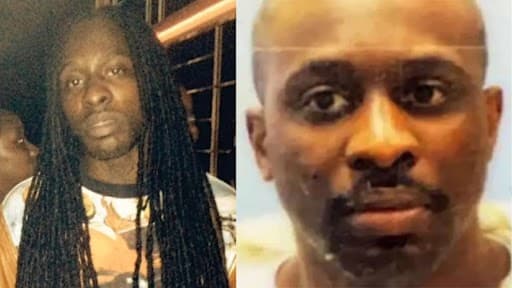
Damon Landor had not cut his hair in nearly two decades and it feel nearly to his knees. Via Weil, Gotshal & Manges LLP

The Supreme Court is deciding whether a Rastafarian who was restrained and had his dreadlocks forcibly shaved off in a Louisiana prison can sue for damages.

Damon Landor claims his religious beliefs were violated and wants state officials to pay up.

But several conservative justices seemed skeptical of his legal argument that he has the right to sue the warden, the head of the Louisiana corrections department, and the guards for damages during oral arguments on Monday.

Mr. Landor had not cut his hair in nearly two decades and it fell nearly to his knees when he was sentenced to serve five months in prison on a 2020 drug possession conviction. For the first four months of his sentence he was housed in facilities that allowed him to wear his hair long or to keep it under a “rastacap.”

That changed when Mr. Landor had three weeks left in his sentence. He was transferred to the Raymond Laborde Correctional Center. When he arrived, Mr. Landor explained to an intake guard “that he was a practicing Rastafarian and provided proof of past religious accommodations,” his brief filed with the Supreme Court states.

The suit claims the guard summoned the warden, who “demanded Landor hand over documentation from his sentencing judge that corroborated his religious beliefs.”

When Mr. Landor said that he could contact his lawyer to get the paperwork, the warden allegedly replied, “Too late for that,” and ordered guards to move Mr. Landor to another room. He was handcuffed to a chair and held down by two guards while another shaved his head to the scalp.

Upon his release, Mr. Landor sued for religious abuse, citing the Religious Land Use and Institutionalized Person Act, which allows for religious exemptions for certain prison grooming rules.

A district court granted a motion to dismiss the case, saying the law does not provide an avenue to seek damages against individual state officials. An appeals court affirmed the decision. 

Mr. Landor’s lawyers claim that if prison officials can’t be held monetarily liable for wrongdoing then there is no incentive for them to follow the law. Several religious groups, including the Christian Legal Society and Agudath Israel of America, filed amici curiae briefs in support of Mr. Landor’s case. The Trump administration also filed a brief in support of Mr. Landor’s case.

Louisiana’s attorney general, Elizabeth Murrill, says the state has already amended its prison grooming policy to ensure that something similar will not happen again.

The solicitor general of Louisiana, Benjamin Aguiñaga, told the justices it would “radically expand congressional power” if they sided with Mr. Landor. Mr. Aguiñaga said it was up to Congress to clarify the law to allow prisoners to sue for damages and not for the court to interpret an unclear law.

But liberal justices questioned whether the law was too vague. “I’m trying to understand how Congress has said it any clearer,” Justice Ketanji Brown Jackson said. “It says a person may assert a violation of this chapter as a claim or defense in a judicial proceeding and obtain appropriate relief against a government.”

Monday’s oral arguments took nearly two hours on Monday. A decision is next expected to be released until near the end of the current term in June.


The New York Sun

© 2025 The New York Sun Company, LLC. All rights reserved.

Use of this site constitutes acceptance of our Terms of Use and Privacy Policy. The material on this site is protected by copyright law and may not be reproduced, distributed, transmitted, cached or otherwise used.

The New York Sun

Sign in or  create a free account

or
By continuing you agree to our Privacy Policy and Terms of Use