Supreme Court To Hear Challenge to Law Limiting When Owners Can Bring Their Firearms Onto Private Property
The case centers on a Hawaii law that prevents people from carrying firearms onto private property without the owner’s oral or written consent.
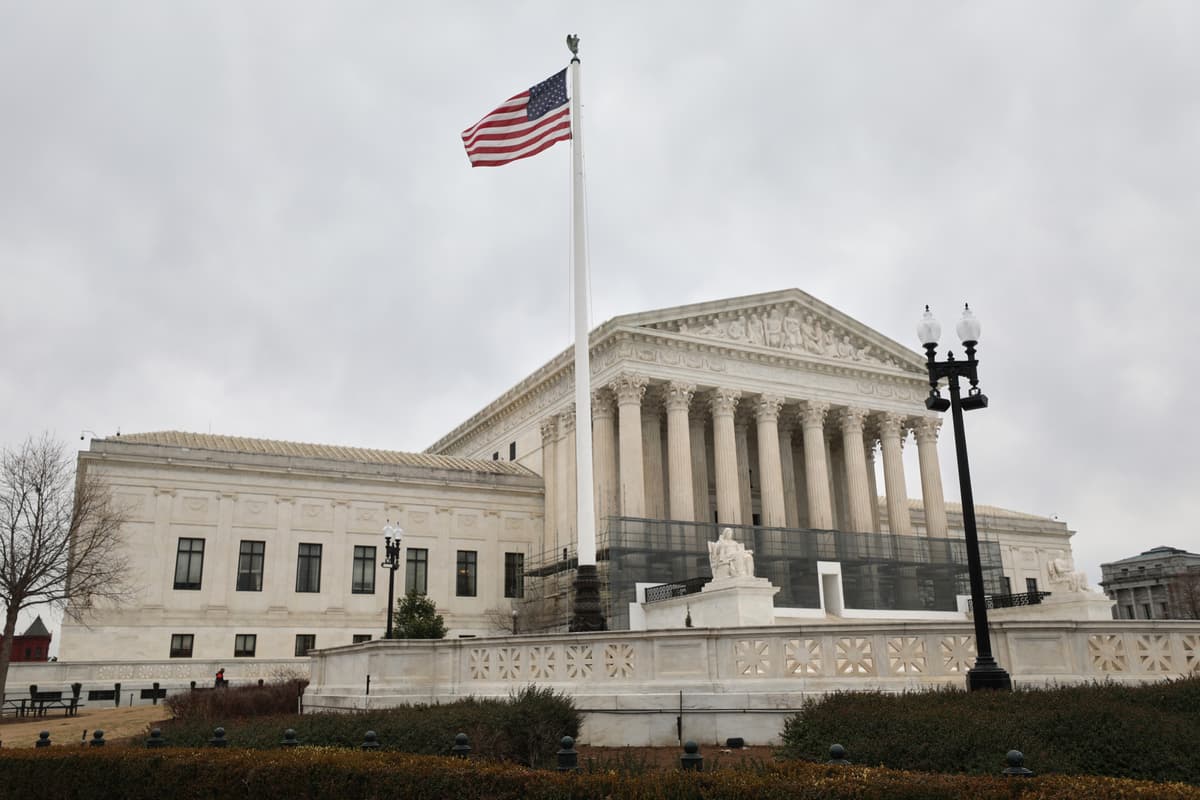

The Supreme Court is set to hear arguments in a challenge to limits on where firearm owners can carry their guns outside of the home.
On Tuesday, the Supreme Court will hear arguments in the case Wolford v. Lopez, which challenges a 2023 Hawaii law that prevents firearm owners from bringing their guns onto publicly accessible private property, such as a restaurant, unless the owner gives their explicit permission.
In a 2022 decision, New York State Rifle & Pistol Association v. Bruen, the Supreme Court struck down New York’s requirement that residents show a special need for self-protection in order to carry firearms outside their home. The court said that the right to carry firearms in public for self-defense was rooted in history and tradition, but said there can be restrictions for “sensitive places.”
Hawaii’s law, passed in 2023, says individuals with concealed-carry permits can bring their firearms onto private property open to the public — such as beaches, parks, and restaurants — only with explicit permission from the owner. Violators can be charged with a misdemeanor and face up to a year in prison. New York, California, Maryland, and New Jersey have passed similar restrictions.
Three Maui residents and the Hawaii Firearms Policy Coalition challenged Hawaii’s law. However, a three-judge panel on the United States Court of Appeals for the Ninth Circuit upheld the law, finding that it “falls well within the historical tradition.” It said a “national tradition likely exists of prohibiting the carrying of firearms on private property without the owner’s oral or written consent,” even though it acknowledged that other courts have disagreed.
The appellate court declined to reconsider the case, and last spring, the plaintiffs asked the Supreme Court to hear the case.
The plaintiffs argue that the Ninth Circuit only looked at regulations from the mid- to late 19th century, and that the court should have looked at precedents dating from the time of America’s founding.
In their brief before the Supreme Court, the plaintiffs say the Second Amendment “simply recognizes a right to bear arms, which is precisely what Petitioners wish to do.” They argue that Hawaii’s law makes it a “crime to carry arms even where the owner of property open to [the] public is merely silent,” and thus “tramples on the Second Amendment.”
“There is a complete absence of laws in our historical tradition broadly banning law-abiding citizens from peaceably carrying firearms on private property open to the public without first getting express permission from the proprietor,” the plaintiffs say.
They argue that one of the laws Hawaii cited was passed by Louisiana as part of its Black Codes after the Civil War, and is “racist legislation.” The other law is a 1771 New Jersey law that prohibited poaching on private property, which the plaintiffs say is not analogous to Hawaii’s law.
In defending the law, Hawaii’s attorneys warn that “[r]equiring evidence of a more extensive and widespread historical tradition would turn the Second Amendment into a ‘regulatory straightjacket.’”
They argue that the law “does not govern conduct protected by the Second Amendment because that Amendment codified the right to bear arms as it existed at the Founding, when there was no right to armed entry onto private property without consent.” They also note that the plaintiffs “agree that the Second Amendment does not override property owners’ right to exclude armed entry.”
Hawaii also argues that the effect of its law is narrower than the firearm owners allege because people can bring their guns onto private property “so long as the owner or one of his agents gives oral or written authorization.”
“That means that, to bring a gun into a shop or convenience store, one need only ask an employee for an ‘okay,’” the state says.
A decision is expected by the summer.