

The $1.6 Billion Gamble: Trump’s Radical Plan To Bypass NGOs for Direct Foreign Aid

The United States will provide up to $1.6 billion while Kenya pledges $850 million in domestic health spending.

AP/Ben Curtis
This is a photo of a 16-year-old HIV-positive Kenyan girl whose mother died from AIDS-related complications AP/Ben Curtis

The Trump administration just inked a $1.6 billion deal to fund Kenya’s health system directly — bypassing American non-government organizations in the biggest shift in U.S. foreign aid in decades. The problem? USAID was gutted months ago, taking with it all its expertise and oversight systems. 

Former officials warn that this rushed pivot to funding corruption-prone governments could trigger rampant fraud, deadly service gaps, and the next pandemic reaching U.S. shores without warning.

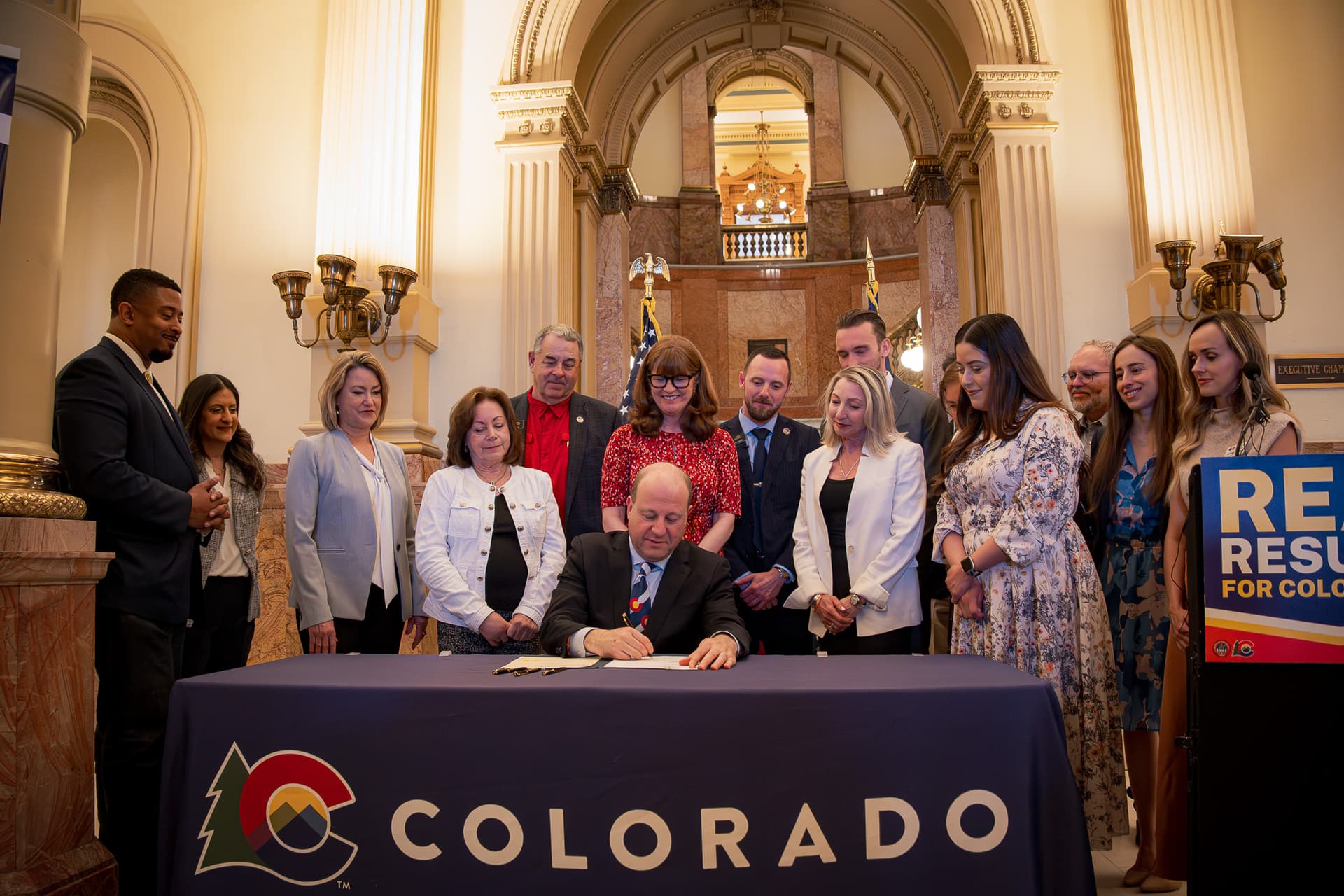
On December 4, Secretary of State Marco Rubio signed a historic agreement with Kenyan President William Ruto that fundamentally rewrites how America delivers global health assistance. Under the five-year Health Cooperation Framework, Kenya became the first nation to receive direct government-to-government funding under the administration’s America First Global Health Strategy. 

The United States will provide up to $1.6 billion while Kenya pledges $850 million in domestic health spending, bringing the total compact to $2.5 billion. According to the State Department, this represents the most significant direct aid to a foreign government in recent decades, excluding major security partners like Israel and Egypt.

The agreement covers critical health programs, including HIV/AIDS treatment, tuberculosis, malaria, maternal and child health, disease surveillance, and infectious disease outbreak response. Unlike previous arrangements in which funds flowed through American nonprofits and contractors, the money will go straight to Kenyan government agencies, including the Social Health Authority, the Kenya Medical Supplies Agency, and the Digital Health Agency. 

The goal, administration officials say, is to build sustainable national health systems rather than perpetuating dependency on foreign NGOs.

A Radical Shift Built on Rubble

The timing, however, raises serious concerns among development experts and former USAID officials. The Trump administration systematically dismantled USAID beginning in January, placing almost all of the agency’s 10,000 employees on forced leave by February and canceling 90 percent of its contracts and grants. 

The 63-year-old agency, which handled $35 billion in the 2024 fiscal year, officially ceased operations on July 1. Elon Musk, leading the Department of Government Efficiency, described USAID as a criminal organization and wrote on social media that officials had “fed USAID into the wood chipper.”

The State Department absorbed the remaining USAID functions, but with a skeleton crew. According to the Center for Global Development, the State Department hired only 30 new overseas positions for global health oversight, compared to approximately 168 health foreign service officers working before January 20. 

Some central USAID country offices previously employed more than 100 staffers plus headquarters support. These positions were eliminated, with perhaps one or two people rehired by local U.S. embassies on short-term contracts.

Global risk analyst Dennis Santiago, who specializes in the nonprofit sector, tells the New York Sun that the concern over staffing levels misunderstands the new approach. 

“The newly hired bilateral agreement negotiating team’s mission is to establish new frameworks for healthcare programs which place a significantly greater emphasis on recipient country infrastructure to carry out the program,” Mr. Santiago explained.

He underscored that “the U.S. state department is not the sole U.S. government actor under this new international healthcare aid regime. There are still personnel from the U.S. Health and Human Services, Centers for Disease Control, and other agencies that are posted in-country at U.S. embassies, who will monitor these agreements.”

Former career USAID officials, however, warn that the State Department lacks the systems to manage billions in grant and contract funding worldwide. They noted that government-to-government programs are more staff-intensive than grants to NGOs, requiring robust oversight mechanisms. The officials called the policy shift promising in theory, but potentially catastrophic in execution, given current staffing levels and ambitious timelines.

The Corruption Question

Kenya’s corruption challenges, however, add another layer of risk to the rushed transition. The country scored 32 out of 100 on Transparency International’s 2024 Corruption Perceptions Index, ranking 121st among 180 nations. The score is below both the Sub-Saharan African average of 33 points and the global average of 43 points. 

A score below 50 indicates serious levels of corruption in the public sector. According to Transparency International Kenya, the country’s performance has remained largely stagnant over the past five years, reflecting persistent corruption challenges in the public sector. Public procurement suffers from widespread corruption and sits at the center of major scandals, while businesses frequently encounter demands for bribes and informal payments.

Mr. Santiago argues that the bilateral structure itself provides critical safeguards. 

“The US demand for serious skin in the game from partner countries is a critical safeguard built into the design of these bilateral agreements,” he said. 

“The Kenyans need to invest $850 million alongside the U.S. investment of $1.6 billion over the five-year term of the agreement. Because it’s their treasure that is at stake and not a free ride from the Americans, we are seeing Kenya debating how the healthcare program’s negotiated terms impact things like Kenyan privacy laws.”

The State Department claims it has included safeguards to prevent misuse or theft of funds, though details remain unclear. The America First Global Health Strategy, released in September, promises oversight through technology solutions and data reporting requirements. Still, as Think Global Health analysts note, these cannot substitute for management staff and proper incentive systems.

The agreement also includes controversial data-sharing provisions that allow the United States extensive access to Kenya’s health management systems and electronic medical records for up to 25 years, even after termination of the agreement. Following concerns from consumer rights groups about privacy and data protection, a Kenyan court temporarily suspended implementation of the memorandum in December, though negotiations continue. 

Opposition lawmakers accused President Ruto’s government of deliberately sidestepping public participation to push the agreement through without proper consultation or constitutional compliance.

Deadly Disruptions Already Underway

The consequences of USAID’s abrupt closure are already manifesting across Kenya and Africa. An investigation by ProPublica found that at least 54 children died this year in a hospital in Kenya’s Kakuma refugee camp with complications from malnutrition, including a surge in spring when families first began rationing food due to USAID cuts. 

The Trump administration froze funding to the World Food Program that fed refugees at the camp, creating widespread panic as rations were eliminated overnight.

Research from the Barcelona Institute for Global Health warns that simultaneous aid reductions by the United States, United Kingdom, France, and Germany could result in more than 22 million preventable deaths by 2030, including 5.4 million children under five. The study marks the first time in 30 years that all four major donors are cutting aid simultaneously.

Analysis conducted shortly after the January stop-work order found that 71 percent of PEPFAR implementing partners reported complete cancellation of at least one category of HIV testing and treatment activities. Partners reported 50 percent staff reductions, with only 14 percent able to maintain operations for one month or longer without PEPFAR funding. 

A World Health Organization survey of 108 country offices documented moderate to severe disruptions to tuberculosis and malaria services across many countries.

The New Model’s Uncertain Future

The State Department aims to finalize bilateral agreements with dozens of countries by year-end, with several African nations, including Rwanda, Uganda, Liberia, Lesotho, and Eswatini, already signing similar deals. Administration officials frame this as an opportunity to eliminate waste and overhead in the “NGO industrial complex” while empowering national governments to build self-reliant health systems.

Regarding pandemic early warning with reduced field staff, Mr. Santiago emphasizes the role of technology. 

“Technological surveillance, including the use of artificial intelligence and information fusion, is not an option in the 21st century; it is a necessity to be more timely and accurate in our ability to respond to crises,” he stressed. 

“You need a lot fewer people to get the same job done these days. Part of the modernization of American foreign aid involvement needs to incorporate the advantages of the last 75 years of American innovation.”

Yet the rushed implementation timeline concerns aid workers and health policy experts. One senior aid worker told CNN the tight deadlines are backing many countries into corners, forcing them to accept terms they might otherwise negotiate more carefully.

Former USAID officials argue the shift needed a decade or more of careful transition, not six months of chaos. They warn that reduced disease monitoring could allow Ebola, mpox, and other potential pandemics to grow and spread more rapidly, reaching the United States faster and without warning.

Mr. Santiago dismisses such concerns as rooted in outdated thinking. 

“The failure point fear is that partner nations are not capable of rising to the challenge of protecting their own people’s health,” he added. “It’s a very ugly American attitude that has no place in a global order based on bilateral trust. The people in the so-called shit hole countries aren’t incapable. We need to stop looking at them as if they are. That is the only true way forward.”


The New York Sun

© 2026 The New York Sun Company, LLC. All rights reserved.

Use of this site constitutes acceptance of our Terms of Use and Privacy Policy. The material on this site is protected by copyright law and may not be reproduced, distributed, transmitted, cached or otherwise used.

The New York Sun

Sign in or  create a free account

or
By continuing you agree to our Privacy Policy and Terms of Use