
The Greenland Purchase?
Is it merely coincidence that Trump’s special envoy to Greenland comes from Louisiana?
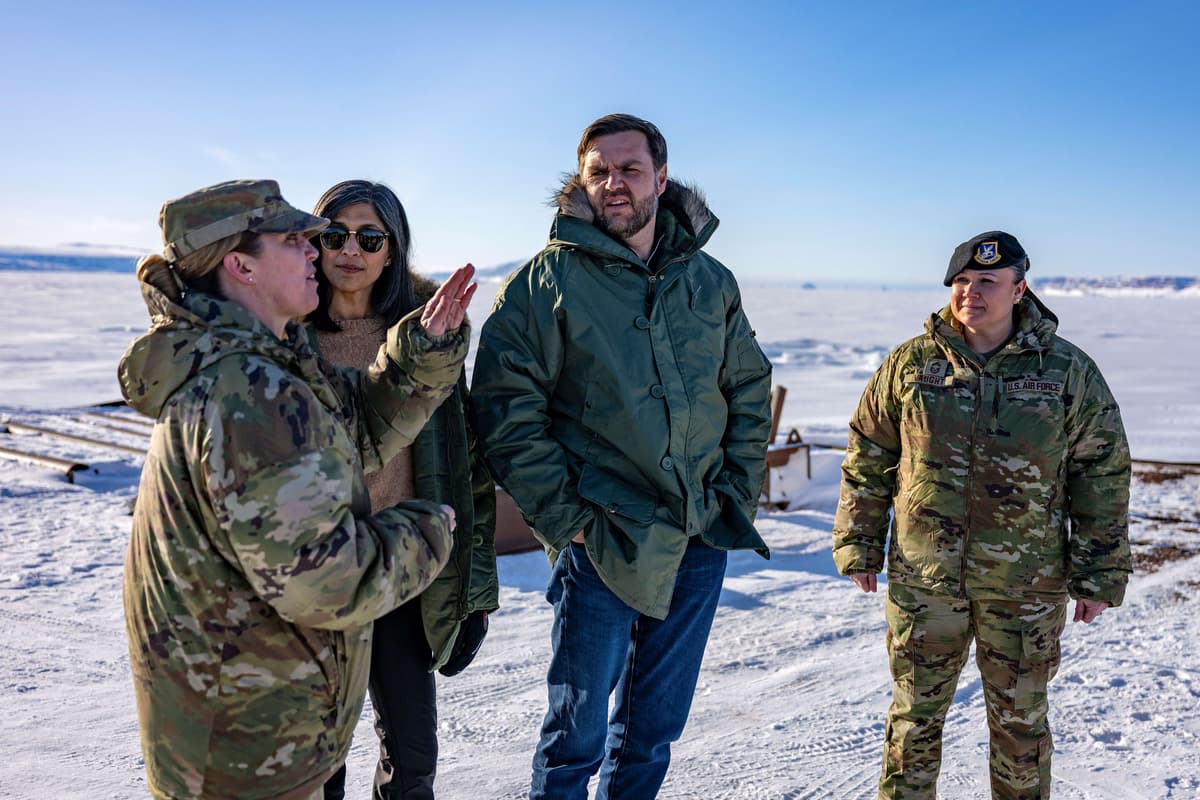
By naming the Pelican State’s governor special envoy to Greenland, President Trump seems to signal that his plans for the world’s largest island are in a league with the Louisiana Purchase. “We lived under more flags than anyone living in the continental United States,” the governor, Jeff Landry, told Fox News on Tuesday. “We ended up settling under the United States of America’s flag, and for that Louisiana has been so much better.”
The French sale in 1803 of land at the rate of $18 a square mile, known as Vente de la Louisiane, contained only a small portion of what is now the state of Louisiana. It was much larger overall, though, stretching to the Dakotas and Montana. It opened a path to all the riches the west had to offer. It is hard to imagine all the good America spread to the world without it. Will Mr. Trump repeat that feat with Greenland?
Greenland’s current owner, Denmark, and bureaucrats at Brussels are livid over plans to plant the Stars and Stripes in Greenland. Until last year no one made hay of the fact that “Russian subs would circle Greenland,” Mr. Landry says, and “the whole time the Chinese would pluck rare earths out of the Western Hemisphere.” Only America, he added, can protect Greenlanders. Can the Europeans who claim ownership defend the resource-rich island?
As Denmark summons the American ambassador for a dressing down, here’s a fun statistic: The New York Police Department has 33,000 cops. The Danish army has 21,000 troops. Plus, too, remember that America was called to action once before, in 1940 when the Nazis occupied Denmark. Amid concerns that the island would fall under Hitler’s sway, America struck an agreement with the Danes and temporarily turned Greenland into a protectorate.
After the allies liberated Europe from the German occupation, America agreed to return Greenland to Denmark. Today the island’s autonomous government runs its internal affairs while Copenhagen is responsible for Greenland’s foreign affairs and defense. A local party won an election in April by promising Greenlanders a gradual separation from Denmark. “Our discussion should be with the actual people in Greenland,” Mr. Landry says.
Annexing “another country” is a stretch “even with an argument about international security,” Denmark’s prime minister, Mette Frederiksen, says. Yet is Greenland doomed to stay Danish? “It’s about an hour away from” America, and “three to four hours from the European continent,” Mr. Landry says. Per the Monroe doctrine, Mr. Trump seeks to protect the Western hemisphere, moving firepower to the Caribbean and now looking into Greenland.
Like Venezuela, Greenland has oil, which for now is the top fuel for the energy-hungry industries of tomorrow, even artificial intelligence. Other energy sources, and everything from iPhones to parts for F-35s, depend on rare earth minerals, which are abundant on the island. Communist China currently dominates that field, with 70 percent of rare earth mining and 90 percent of processing. Its companies are already in Greenland.
One hurdle to a Louisiana Purchase-type acquisition of Greenland would seem to be the objections of the islanders themselves. A poll earlier this year found some 85 percent oppose an American takeover. Too, Jefferson’s acquisition was a commercial transaction with the French, not a military operation. That precedent suggests Mr. Trump would be wise to dial back his assertion that America will “go as far as we have to go” to obtain control of the territory.
The Danes, too, claim international law is on their side. Without Greenland, America could risk being left behind in the competition with the Free World’s foes. America has troops in Greenland, but no sovereignty. Is the island too important to be handled by Eurocrats? It is, after all, a gateway to the North Pole, where global powers compete for dominance. We can imagine Jefferson would have leapt at the opportunity to peacefully acquire the island.