The Growing Scandal in Minnesota
Congress to hear shocking allegations of federal spending in the North Star state — without effective oversight.

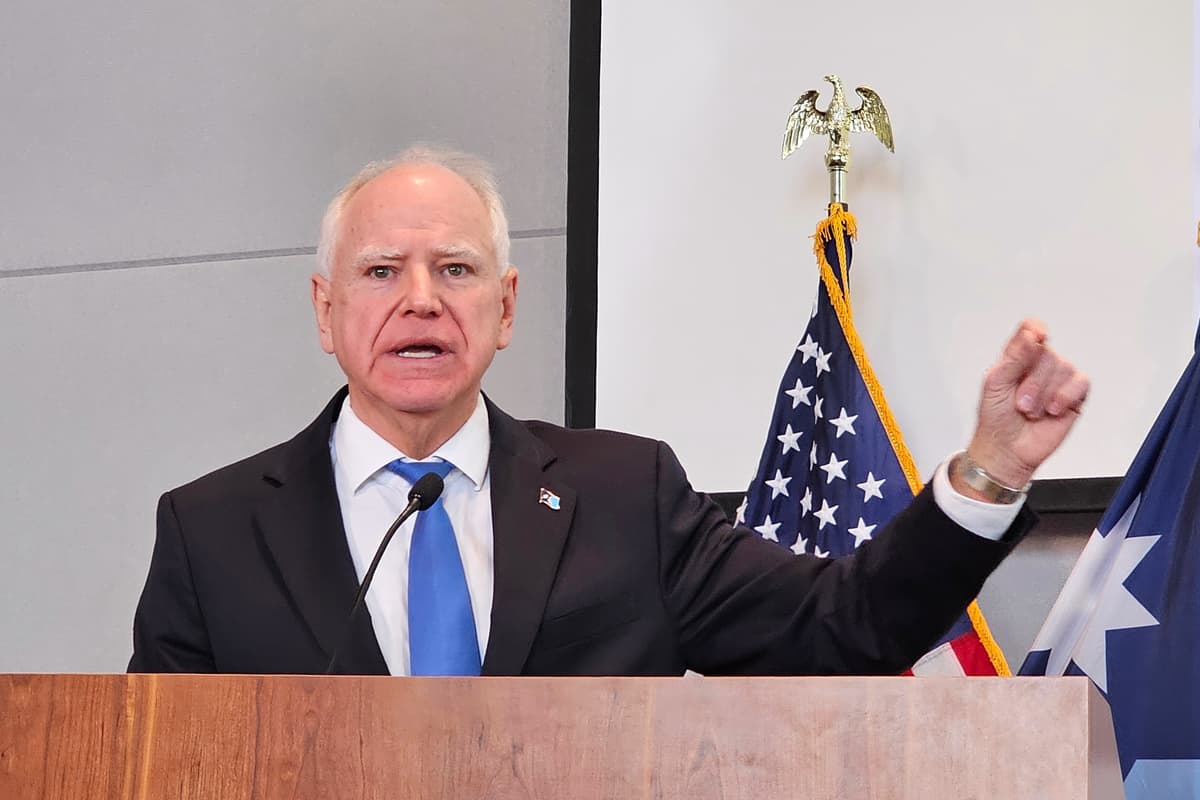
Next week’s hearing by the House Oversight Committee over allegations of fraud in Minnesota’s social spending promises to be a corker. It will be a chance to shed light on claims that taxpayers were swindled of billions of dollars under Medicaid and via daycare centers in the Somali-American community. Congressman James Comer vows to learn why Governor Tim Walz “ignored” warnings from GOP lawmakers “who sounded the alarm on this fraud.”
The growing scandal in the North Star State is shining a spotlight on the cronyism and corruption that can arise when taxpayer-funded social welfare dollars are doled out without effective oversight or safeguards. This problem is not confined to Mr. Walz and his fellow Democrats at St. Paul. It could be seen as being endemic generally to federal spending on social services, as the Government Accountability Office reports.
While the allegations in Minnesota of malfeasance to the tune of ten figures are absolutely shocking, the fraud is worse yet at the national level. Per the GAO the “federal government loses between $233 billion and $521 billion annually to fraud [our italics],” based on data between fiscal years 2018 and 2022. These years spanned both Republican and Democratic administrations, reflecting the fact that the misuse of tax dollars is a bipartisan woe.
When it comes to estimates of “improper payments” by Uncle Sam, as opposed to outright fraud, the GAO finds that since 2003, some $2.8 trillion has gone astray, “and the actual amount may be significantly higher,” only because the estimate “is based on a small number of programs that report these numbers.” Some 16 agencies, the GAO says, “reported a total of about $162 billion in improper payments across 68 programs” in fiscal year 2024.
Medicare and Medicaid are the federal programs in which most of this misuse of money has been detected. Some $54 billion in taxpayer dollars was improperly spent under the Medicare program in fiscal 2024, the GAO says, and $31.1 billion by Medicaid. More than $10 billion was wrongly spent in the Supplemental Nutrition Assistance Program, better known as Food Stamps. Almost $9 billion was wrongly spent in the Restaurant Revitalization Fund.
It calls to mind the old quip by the Illinois Republican, Senator Everett Dirksen, who was obsessed before his death in 1969 with how federal spending had ballooned out of control. “A billion here, a billion there, and pretty soon you’re talking real money,” is his famous phrasing. The misuse of tax dollars speaks, too, to the merit of private entities and individual generosity as more efficacious, and accountable, means to advance charitable goals.
Before the vast expansion of federal welfare spending under the aegis of the New Deal and Great Society, after all, charity was largely viewed as a private responsibility of the citizenry. This outlook was encapsulated by President Cleveland in 1887, when he vetoed a bill that would have sent federal tax dollars to aid drought-stricken farmers in Texas. “I can find no warrant for such an appropriation in the Constitution,” Cleveland growled.
Cleveland added that, in lieu of federal largesse, “the friendliness and charity of our countrymen can always be relied upon to relieve their fellow-citizens in misfortune.” He warned, in words that echo amid the Minnesota social welfare spending scandal and the larger crisis of wasteful federal spending, that government aid “in such cases encourages the expectation of paternal care on the part of the Government and weakens the sturdiness of our national character.”