
The Jerome Powell Probe: Paging Robert Jackson

The investigation of the chairman of the Federal Reserve puts into sharp relief the wisdom of Robert Jackson’s long-ago warning to federal prosecutors.
Library of Congress via Wikimedia Commons
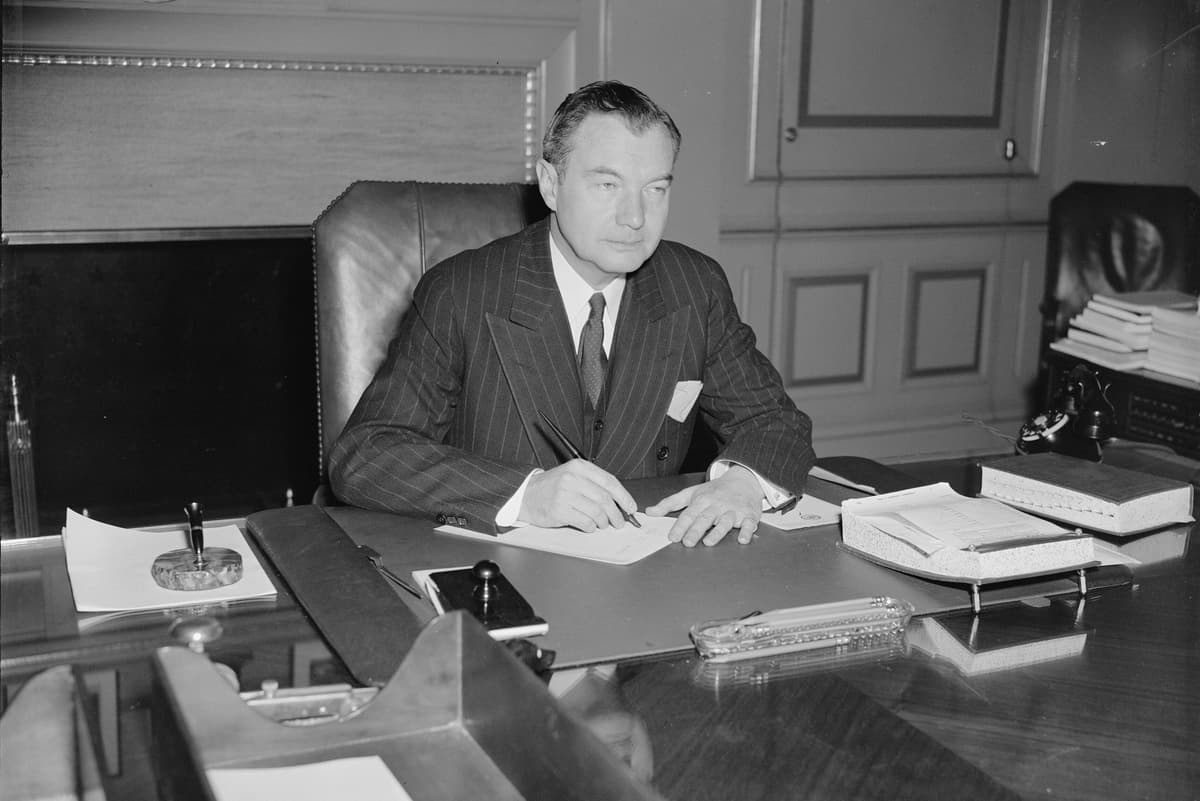
Attorney General Robert Jackson in 1940, the year of his speech to federal prosecutors. Library of Congress via Wikimedia Commons

The prosecutor has more control over life, liberty, and reputation than any other person in America. His discretion is tremendous. He can have citizens investigated and, if he is that kind of person, he can have this done to the tune of public statements and veiled or unveiled intimations. Or the prosecutor may choose a more subtle course and simply have a citizen’s friends interviewed. The prosecutor can order arrests, present cases to the grand jury in secret session, and on the basis of his one-sided presentation of the facts, can cause the citizen to be indicted and held for trial.

* * *

That’s how FDR’s attorney general, Robert Jackson, began his famous speech on the Federal Prosecutor. It’s a warning from 1940 about the great power vested in federal prosecutors and the risk that it can be used recklessly. We went back to read the full speech after the news broke that the chairman of the Federal Reserve, Jerome Powell, is being probed by the federal prosecutor in Washington in respect of outlays by the central bank to renovate its offices.

Jackson’s speech is certainly prescient. His remarks were made before a gathering at Washington of federal prosecutors. He quipped that it was “within the range of that exaggeration permitted in Washington” to call the prosecutors gathered that day “one of the most powerful peace-time forces known to our country.” This reflected, he cautioned, the prosecutors’ “immense power to strike at citizens.”

This power, Jackson averred, was the product not of “mere individual strength,” but “the force of government itself.” That is why, in Jackson’s telling, the position of United States Attorney is “safeguarded by presidential appointment, requiring confirmation of the Senate.” He reminded his audience that they had been “required to win an expression of confidence in your character by both the legislative and the executive branches of the government.”

He urged a “rededication” to the “spirit of fair play and decency that should animate the federal prosecutor.” After all, he explained, the prosecutor is vested with a great deal of discretionary authority. “He may dismiss the case before trial, in which case the defense never has a chance to be heard. Or he may go on with a public trial.” Post-conviction, a prosecutor can “make recommendations as to sentence,” and whether a prisoner is fit for parole. 

So it is, Jackson concluded, that “While the prosecutor at his best is one of the most beneficent forces in our society, when he acts from malice or other base motives, he is one of the worst.” This insight could help to explain the furor that has arisen in the wake of the criminal probe launched by the United States Attorney at Washington, Jeanine Pirro, against Mr. Powell. It’s early yet, but is widely being remarked on as a politically motivated prosecution.

Judge Pirro’s office has reportedly sought to obtain information about congressional testimony made by Mr. Powell over the Fed’s renovation project — an apparent boondoggle that has gone far beyond its budget. Yet the suggestion that the chairman had misled or lied to lawmakers is undermined, the Financial Times reports, by the disclosure that Mr. Powell had written a letter to senators some three weeks after his testimony on Capitol Hill on the renovations.

The letter, not previously public, undercuts, per the FT, “the Trump administration’s claims that he misled Congress.” The Fed, Mr. Powell wrote, aims “to provide transparency for our decisions and to be accountable to the public through the Congress for our work.” Amid the Fed’s broader failings, whether Mr. Powell’s claim satisfies lawmakers is game for debate. It’s hard, though, to think of a case that puts the wisdom of Robert Jackson in sharper relief.


The New York Sun

© 2026 The New York Sun Company, LLC. All rights reserved.

Use of this site constitutes acceptance of our Terms of Use and Privacy Policy. The material on this site is protected by copyright law and may not be reproduced, distributed, transmitted, cached or otherwise used.

The New York Sun

Sign in or  create a free account

or
By continuing you agree to our Privacy Policy and Terms of Use