The Trump-Warren Economic Strategy
The president wants to bar ‘investors’ from buying up single-family homes.
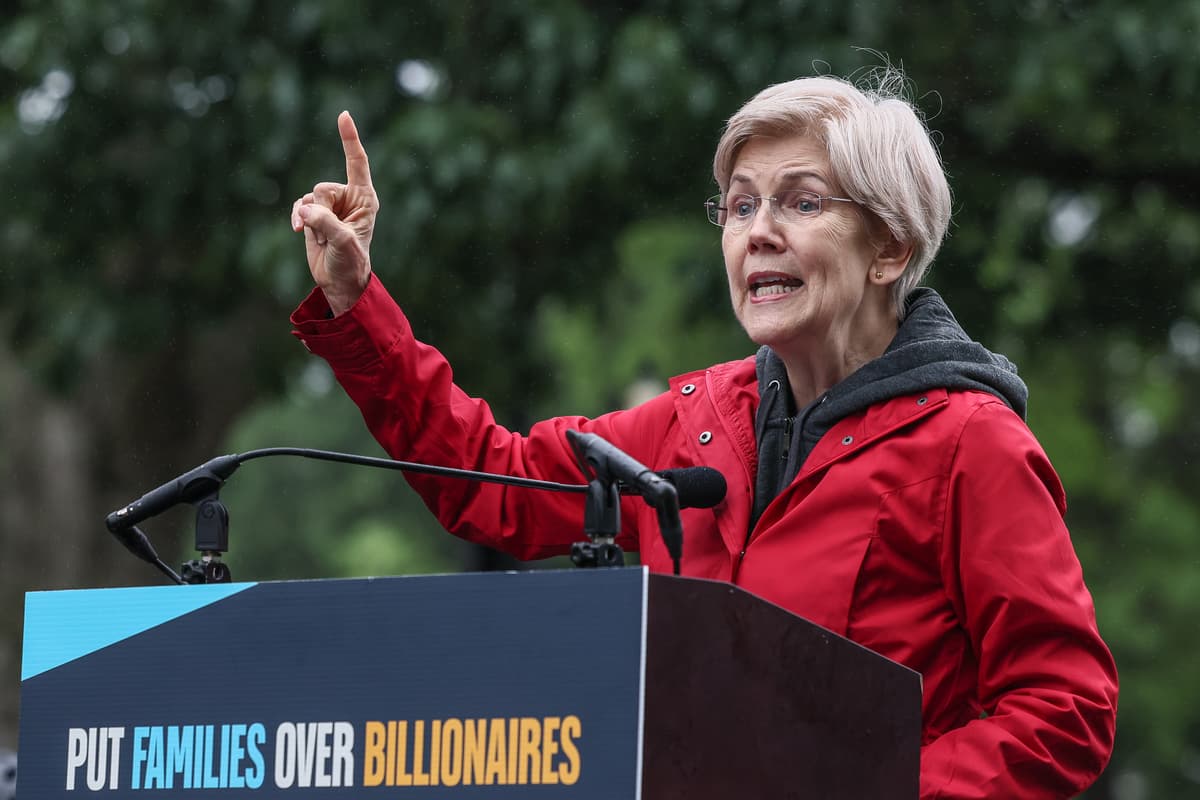
With private property rights besieged at New York City, it’s hardly encouraging to find President Trump taking a page from Senator Elizabeth Warren’s playbook by interfering in the housing market. “People live in homes, not corporations,” Mr. Trump avers today in a Truth Social post, announcing that he will bar investors from buying single-family houses. It’s part of a push to promote affordability. How does meddling in free markets help that?
Plus, too, Mr. Trump, in another swipe at the capitalist system, issued another decree on Truth Social seeking to limit the ability of defense contractors to reward their owners. These enterprises, per the president, are “issuing massive Dividends to their Shareholders and massive Stock Buybacks.” Heaven forfend. Mr. Trump reckons this comes at the “detriment of investing in Plants and Equipment,” and will “no longer be allowed or tolerated!”
This demarche, too, echoes one of Ms. Warren’s hobby horses. In December, she had urged the Treasury secretary to boost output of strategic “deliveries” by “pushing defense companies to limit stock buybacks and increase research and development spending.” Mr. Trump, in an ultimatum befitting a Five-Year Plan, insists that, in all caps, “MILITARY EQUIPMENT IS NOT BEING MADE FAST ENOUGH!”
So, the president relates, “It must be built now with the Dividends, Stock Buybacks, and Over Compensation of Executives,” as opposed to “borrowing from Financial Institutions, or getting the money from your Government.” The context for Mr. Trump’s intrusions into two major sectors of the American economy is, one imagines, the impending midterms and voter frustration over the failure to make headway on the affordability crisis.
The president is justified to pin some of this blame on his predecessor, under whom consumer prices surged some 20 percent. “High Inflation caused by Joe Biden and the Democrats in Congress, that American Dream is increasingly out of reach for far too many people, especially younger Americans,” Mr. Trump laments. Yet these columns have urged, so far in vain, the president to tackle the root of today’s inflation: our system of fiat money.
Restoring honest money, after all, would be the surest method to arrest, and eventually reverse, the surge in prices that has consumers fuming. Doing so, though, would require returning to a convertible dollar defined by law as a fixed weight of specie — i.e., gold or silver. That in turn would warrant a restoration of the fiscal responsibility that prevailed until the end of the gold standard era, when in 1971 Nixon abrogated the nation’s Bretton Woods pledges.
Instead of pursuing the path to honest money, Mr. Trump looks to be following what could be seen as superficial fixes that traverse the free-market principles that have long been the hallmark of the GOP. Before Mr. Trump took office, we cautioned against yielding to “Elizabeth Warren’s Siren Song” of populist interference in the economy. The senator had vowed in an op-ed that she was “ready to work with” Republicans on “policies that rebuild the middle class.”
A centrally-planned economy guided by presidential decree, though, no matter how well-intended, is hardly the right course to induce the economic growth needed to revive middle-class prosperity. Housing and defense are goods like any other in an economy. The production and sale of these products is most efficiently allocated not by orders from the White House but by the invisible hand of free and fair markets.