
Three Group Biographies Explore American Women as Exiles, Divas, and Fame Machine Products

Artists, misfits, and superstars come to life in a triad of new books featuring extraordinary American women.
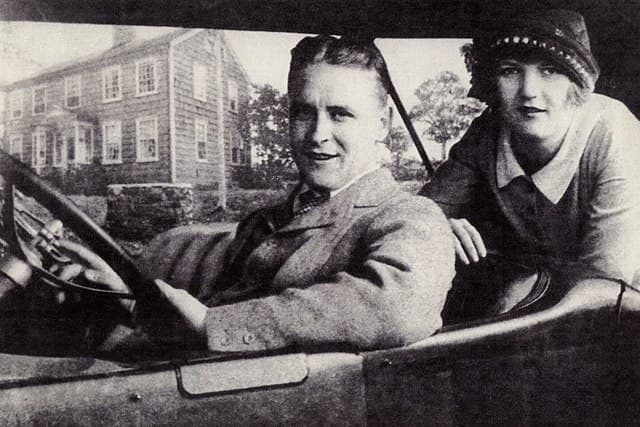
Motor Magazine via Wikimedia Commons
Zelda Fitzgerald with F. Scott Fitzgerald on a road trip in July 1920. Motor Magazine via Wikimedia Commons

‘Brilliant Exiles: American Women in Paris, 1900-1939’
By Robyn Asleson, Zakiya R. Adair, Denean Sharpley-Whiting, Samuel N. Dorf, Tirz True Latimer
Yale University Press, 288 pages

‘Warhol’s Muses: The Artists, Misfits, and Superstars Destroyed by the Factory Fame Machine’
By Laurence Leamer
G. P. Putnam’s, 336 pages

‘American Diva: Extraordinary, Unruly, Fabulous’
By Deborah Paredez
W. W. Norton, 256 pages

Prosopographers — aka practitioners of group biography — have several options: Organize a narrative around like-minded figures (women exiles); choose a megastar (Andy Warhol) around whom a constellation of personalities revolve; or focus on a concept (the diva) which can incorporate an extraordinary range of personalities that, in Deborah Paredez’s case, constitute the core of her own sensibility.

Contributors to “Brilliant Exiles” explore the irony that for several women in the first four decades of the 20th century, Paris was the place where they could feel most American, which is to say they were accepted and honored precisely because they were American.

So it is that painter LoĂŻs Marilou Jones is shown in a photograph watched by six men in rapt attention as she works at her easel outside a cafĂ©. Such a scene “between a Black woman and a group of white men” would have been hard to imagine in the United States, comments Robyn Asleson.

Of course black men experienced a similar liberation in Paris, but as Jones noted: “To be both black and a woman has caused me to create in absolute frustration 
 forced to go abroad to achieve the recognition [my] own society was not willing to give.”

Figuring in this exploration of exile are women like Zelda Fitzgerald, an artist whose own life was claimed by her husband as his literary property, and who sought her own liberation in Paris as a dancer, novelist, and painter. She was unable to sustain a demanding regime of creativity that ended in a mental collapse poorly treated, but she sought refuge, one of her friends said, in “reveries” that often “turned to Paris, which she loved.”

Laurence Leamer, a great prosopographer, begins with a riveting account of sexually abused Valerie Solanas, showing up in front of the home of a female producer, Margo Feiden, demanding that she produce her play, “Up Your Ass.” Solanas spends more than three hours explaining her idea of how men should be treated in a feminist paradise, including putting them in “bullpens” selected by women for their pleasure.

When the patient producer said she could not produce the play, Solanas pulled out a gun saying she would shoot Andy Warhol and become famous and then Feiden would produce the play. In 1968, Solanas carried out her threat, nearly killing Warhol in a shooting at his studio.

As demented as Solanas might seem, her target, in Mr. Leamer’s telling, makes a certain sense; she picks on the creator of an art factory that replaced the ‘artist in a garret’ trope with the ‘artist as celebrity’ in both high and popular culture that few women could attain.

The exiled women of Paris did not conceive of an act as extreme as Solanas’s, but perhaps they would have understood the demands of a diva whom society does not recognize as such.

“I’ve long been training to be a feminist performance critic who’s enthralled by the relationship between divas and feminism and other freedom movements,” declares Deborah Paredez: “I want to know why and how exactly divas have sustained me and so many like me — the brown, the freaks, the feminists, the thespians rarely cast in the lead, the awkward and crooked-teethed, the otherwise shy, the poets — that Gloria AnzaldĂșa described as the atravesados, the squint-eyed, the perverse, the queer, the troublesome, the mongrel, the mulatto, the half-breed, the half-dead.”

In Ms. Paredez’s book, diva definitions (she has a chapter called that) range way beyond Paris and art and politics, to encompass figures ranging from Aretha Franklin to Tina Turner, to Venus and Serena Williams, and to actresses like Rita Moreno, whose performance in “West Side Story” became an obsession for Ms. Paredez and her mother.

Divas have often been thought of as isolated figures, one-offs you might say, but in fact, they constitute a community of performance that becomes a liberating element in many peoples’ lives. That kind of catholicity, uniting the diva to her following, largely unavailable to those women in Paris, and so elusive to those like the frustrated Valerie Solanas, is accorded a rousing reception in Ms. Paredez’s original prosopography.

Mr. Rollyson is the author of “Amy Lowell Among Her Contemporaries.”

_______________

Correction: Valerie Solanas is the feminist playwright who shot Andy Warhol. An earlier version misstated her first name.


The New York Sun

© 2026 The New York Sun Company, LLC. All rights reserved.

Use of this site constitutes acceptance of our Terms of Use and Privacy Policy. The material on this site is protected by copyright law and may not be reproduced, distributed, transmitted, cached or otherwise used.

The New York Sun

Sign in or  create a free account

or
By continuing you agree to our Privacy Policy and Terms of Use