


Too Much Screen Time as Infants Linked to Teen Anxiety and Slower Decision Making, Study Finds

Researchers say brain development in babies is especially sensitive to screen exposure.
John Moore/Getty Images
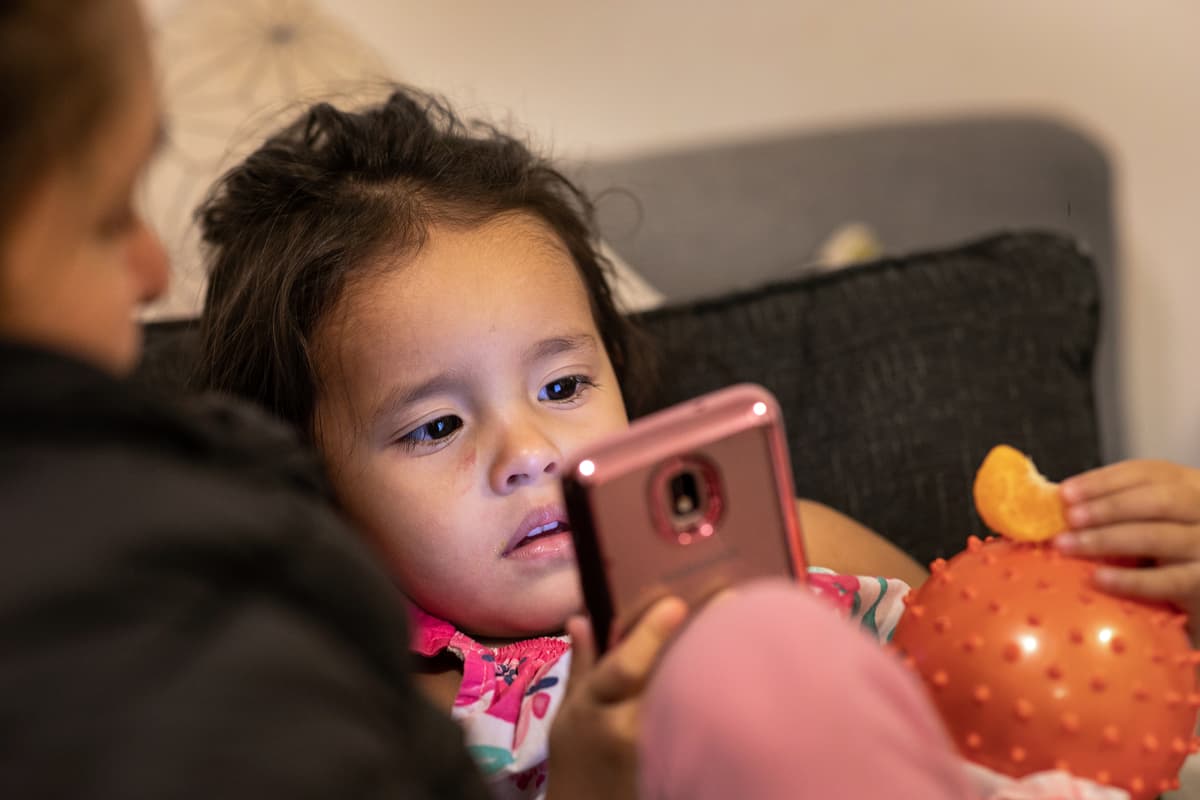
A new study warns that screen time could have a big impact on children. John Moore/Getty Images

As a growing number of schools ban phones because of concerns about how they could affect mental health, a new study warns that screen time years earlier could have a big impact on children.

The study found high levels of screen time under the age of two can bring changes in brain development that are linked to slower decision-making and increased anxiety in teenage years.

Researchers in Singapore tracked 168 children for more than a decade. The children had brain scans at ages 4.5, 6, and 7.5 to map possible effects from infant screen exposure to adolescent mental health. The study tracked how young brains developed over time rather than relying on a single snapshot.

Researchers say brain development is most rapid in infants and they are especially sensitive to environmental influences.

Children with higher infant screen time in infancy showed an “accelerated maturation of brain networks” responsible for visual processing and cognitive control. The researchers suggest this may result from the intense sensory stimulation from screens.

“Accelerated maturation happens when certain brain networks develop too fast, often in response to adversity or other stimuli,” the study’s main author, Dr. Huang Pei, said in a release. “During normal development, brain networks gradually become more specialized over time. However, in children with high screen exposure, the networks controlling vision and cognition specialized faster, before they had developed the efficient connections needed for complex thinking. This can limit flexibility and resilience, leaving the child less able to adapt later in life.”

Children with the altered brain networks took longer to make decisions during a cognitive task at age 8.5, suggesting reduced cognitive efficiency or flexibility. Those with slower decision-making also reported higher anxiety symptoms at age 13.

The same team released a study last year that showed infant screen time is also associated with alterations in brain networks that govern emotional regulation — but that parents reading with their child could counteract some of the brain changes.

Among children whose parents read to them frequently at age three, the link between infant screen time and altered brain development was significantly weakened. The researchers suggest that shared reading may provide a more positive  interactive experience that passive screen use lacks. 

“This research gives us a biological explanation for why limiting screen time in the first two years is crucial,” the study’s senior author, Tan Ai Peng, said. “But it also highlights the importance of parental engagement, showing that parent-child activities, like reading together, can make a real difference.”

The study noted that the amount of screen exposure in infancy is largely determined by parents and caregivers, highlighting a critical window for early guidance.
The American Academy of Pediatrics recommends avoiding screen time for babies under 24 months except for video chatting with family. The organization also recommends limiting screen time to one hour a day for 2- to 5-year-olds.


The New York Sun

© 2025 The New York Sun Company, LLC. All rights reserved.

Use of this site constitutes acceptance of our Terms of Use and Privacy Policy. The material on this site is protected by copyright law and may not be reproduced, distributed, transmitted, cached or otherwise used.

The New York Sun

Sign in or  create a free account

or
By continuing you agree to our Privacy Policy and Terms of Use