Trump Administration Appeals Injunction Blocking National Guard Deployment in ‘Hellhole’ Chicago
A federal judge says the administration’s description of the situation in the state is ‘unreliable.’
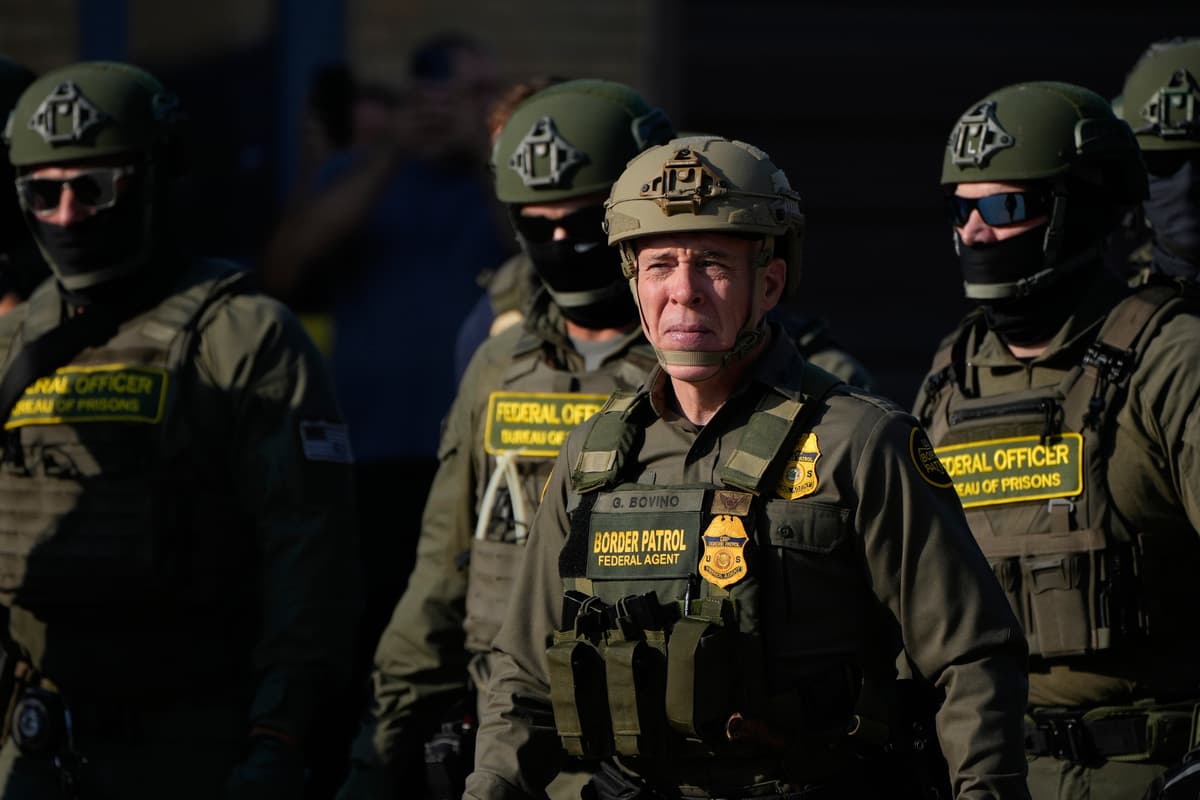

The Trump administration is appealing a temporary restraining order that blocks the deployment of National Guard troops in Illinois.
A federal judge at Chicago on Thursday granted a request by the state to put a 14-day pause on the deployment as a legal battle continues.
The United States Department of Justice is now asking the United States Court of Appeals for the Seventh Circuit to overturn the preliminary injunction.
President Trump has portrayed Chicago as a lawless “hellhole” of crime but local officials say the troops are not needed.
“There is no rebellion in Illinois,” a lawyer from the Illinois attorney general’s office, Christopher Wells, said during a court hearing Thursday hours before United States District Judge April Perry issued the injunction. Mr. Wells added that the deployment was “illegal and lawless.”
Judge Perry called the administration’s description of the situation in the state “unreliable” and said there was no credible evidence of a threat of a rebellion. Judge Perry ordered an October 22 telephone hearing to address whether the temporary restraining order should be continued an additional 14 days.
A Trump administration lawyer had argued that there doesn’t need to be a rebellion for the president to deploy troops. Eric Hamilton told Judge Perry that Mr. Trump’s decision to send in the National Guard was “unreviewable” and was needed to respond to an urgent threat to the safety of federal officers.
National Guard troops from Texas arrived this week to guard an immigration facility just outside of Chicago.
The Chicago hearing was one of two on Thursday over whether the president has the authority to deploy National Guard troops. The other case involves a planned deployment at Portland, Oregon.
The Trump administration is asking a three-judge panel for the United States Appeals Court for the Ninth Circuit at San Francisco to overturn a lower court order that blocks the Portland troop deployment.
United States District Court Judge Karin Immergut had issued a temporary restraining order last Saturday to halt the use of the National Guard at Portland.
Mr. Trump has characterized Portland as “war-ravaged” and “under siege” amid ongoing nightly demonstrations against Immigration and Customs Enforcement and the National Guard is needed to protect the ICE agents. In June, violent protests forced the ICE facility at Portland to close for several weeks.
Oregon officials have resisted the deployment calling it unnecessary and would only raise tensions in the community.
The judges asked a Trump administration lawyer, Eric McArthur, to give his definition of rebellion as it pertained to deploying federal troops. Mr. McArthur cited violence directed at ICE agents at the Portland facility, calling the situation “unsustainable and unsafe.”
The senior assistant attorney general for Oregon, Stacy Chaffin, said a rebellion needs to include the element of people attempting to overthrow the government.
One of the Ninth Circuit judges appeared ready to overturn the temporary injunction blocking the troop deployment. Judge Ryan Nelson questioned the lower court ruling, calling its analysis “wrong.”
“I’m sort of trying to figure out how a district court of any nature is supposed to get in and question whether the president’s assessment of executing the laws is right or wrong,” Judge Ryan Nelson, one of two Trump appointees on the panel hearing the appeal, said.
“It may well be that the forces are used in an improper way, but we don’t have any evidence of that right now. All we have is a document that says, ‘We have a federal facility under attack where violence has forced it to close down, and we want to protect it,'” Judge Nelson told Ms. Chaffin. “That doesn’t strike me as a glaring overuse on its face.”
The judges didn’t immediately issue a ruling in that case.