Trump Looks To Be in Strong Position To Overturn His Felony Hush Money Convictions in Stormy Daniels Case
The 47th president could eventually win a reversal of his status as a felon in New York State
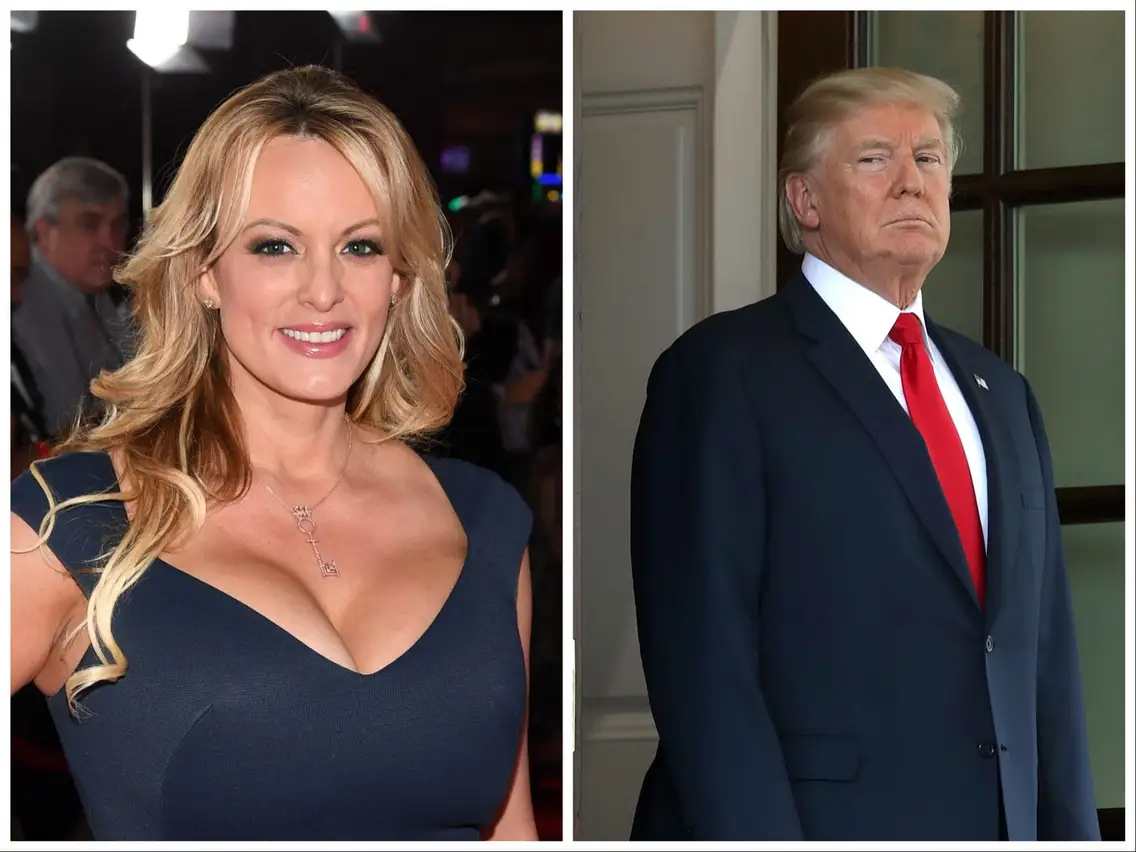
President Trump’s appeal of his 34 New York state hush money criminal convictions to New York’s intermediate appellate court has not yet been heard —but he appears to be well-positioned to overturn his status as the first president to also be a felon in the eyes of the law.
Mr. Trump was convicted in May 2024 on all 34 counts of falsifying business records. The payments related to checks totaling some $130,000 made out to an adult film performer, Stormy Daniels, and were handled by Mr. Trump’s erstwhile attorney, Michael Cohen. He was subsequently convicted in federal court on charges relating to the transactions.
Ms. Daniels, whose real name is Stephanie Clifford, claims that the payments bought her silence during the 2016 presidential election regarding a sexual encounter between her and Mr. Trump in 2006. Mr. Trump denies that such a congress ever transpired, but after federal prosecutors declined to charge Mr. Trump the case was taken up by Manhattan’s district attorney, Alvin Bragg.
Mr. Trump’s appeal was lodged in October, with his attorneys arguing that “this case should never have seen the inside of a courtroom, let alone resulted in a conviction.” They also describe the case as “the most politically charged prosecution in our nation’s history” and contend that “these charges against President Trump were as unprecedented as their political context.”
Mr. Trump’s chances on appeal should not be overstated. The bar for appellate judges to overturn a jury verdict is a high one, and several of Mr. Trump’s challenges to the proceedings were already rejected by the trial judge, Juan Merchan, whose decisions will also be treated with some degree of deference. Winning an appeal is always an uphill climb for defendants.
While the underlying payments were not themselves illegal, prosecutors alleged that they were falsified to look like legal bills. Under New York state law such dissembling only amounts to a misdemeanor, unless it is performed in service of a second crime, in which case the falsifications can be elevated into the lowest level of felonies. Mr. Bragg argued — and Judge Merchan agreed — that while a conviction requires that the jury be unanimous about the falsifications, the jurors need not agree on the nature of the second crime, only that one occurred.
Judge Merchan’s instructions read that “although you must conclude unanimously that the defendant conspired to promote or prevent the election of any person to a public office by unlawful means, you need not be unanimous as to what those unlawful means were.” Unanimous juries in federal cases have been required since 1898, when the high court held that a defendant possessed the “constitutional right to demand that his liberty should not be taken from him except by …the unanimous verdict of a jury.”
Mr. Trump argues on appeal that those jury instructions violated the Supreme Court’s ruling in a case from 2020, Ramos v. Louisiana. It found that the Sixth Amendment requires unanimity for convictions in all serious criminal cases, both state and federal. Prior to that some states — Louisiana and Oregon were the last holdouts — had allowed for convictions even in the presence of dissenting jurors.
The president argues that “permitting the jury to convict President Trump without unanimously agreeing … violated the Due Process Clauses of both the U.S. and New York Constitutions.” That position is shared by a legal scholar, Seth Barrett Tillman, who writes in an amicus brief along with the Landmark Legal Foundation that the instructions violated “the most basic conceptions of traditional American jury rights and due process.”
Mr. Trump also argues that Judge Merchan did not properly account for the power of presidential immunity. Mr. Trump repeatedly contended that the Supreme Court’s ruling in Trump v. United States that official presidential acts are presumptively immune from prosecution barred portions of the case from being tried at all. Judge Merchan, though, ruled that the case was built “entirely from unofficial conduct.”
Judge Merchan’s determination that “If error occurred regarding the introduction of the challenged evidence, such error was harmless in light of the overwhelming evidence of guilt” could be ripe for review — if not by state jurists than by the Supreme Court, which has shown itself to be a jealous defender of presidential prerogative. The Nine declined to intervene to block Mr. Trump’s sentencing in the days before he retook the White House.
Mr. Trump could also be fortunate in his draw of an appellate court. New York’s Appellate Division, First Department is the same tribunal that overturned the $500 million fraud verdict secured by New York’s attorney general, Letitia James, against Mr. Trump, his two adult sons, and their family business. The court found that the judgement violated the Eighth Amendment’s prohibition on “excessive fines” but kept intact the underlying verdict.
Another positive development for Mr. Trump came last month when a panel of the Second United States Appeals Circuit ordered a federal district court judge, Alvin Hellerstein, to reconsider whether the case belongs in a federal rather than a state forum. The circuit riders determined that Judge Hellerstein “did not consider whether certain evidence admitted during the state court trial relates to immunized official acts or, if so, whether evidentiary immunity transformed the state’s case into one that relates to acts under color of the presidency.”
While the panel did not instruct Judge Hellerstein to rule one way or another, the order suggests that Mr. Trump’s claim that the prosecution touched on presidential privileges could have legs. Whatever happens in respect of Mr. Trump’ appeal, he won’t have to worry about prison — Judge Merchan sentenced him to an “unconditional discharge,” meaning no further punishment is ordered.